Master Google Demand Gen: Best Practices & Examples
▼ Summary
– Demand Gen is a Google Ads campaign type focused on generating new awareness and filling the top of the marketing funnel, unlike campaigns that capture existing demand like Search.
– It relies heavily on automation and machine learning, using algorithmic targeting and lookalike audiences to reach potential customers across networks like Discover, Gmail, and YouTube.
– The campaign requires larger budgets to perform effectively, with Google suggesting budgets 15 times the target CPA, making it potentially unsuitable for smaller advertisers.
– It is best used by layering it onto accounts that have already maximized capture of immediate demand through channels like Search, Shopping, or Performance Max.
– Demand Gen represents a continued shift by Google towards automated, algorithm-driven campaigns, moving away from manual controls and changing the fundamental nature of advertising on the platform.
While Google Ads Demand Gen campaigns haven’t captured the spotlight like Performance Max, they represent a significant strategic shift. Moving beyond Google’s traditional strength of capturing existing search demand, this campaign type is engineered to generate new interest and fill the top of your marketing funnel. For advertisers looking to expand their reach and build brand awareness, understanding Demand Gen is becoming increasingly important.
At its heart, Demand Gen relies on sophisticated automation and machine learning, much like Performance Max. However, its core objective is different. Where Performance Max operates across the entire customer journey, Demand Gen focuses primarily on upper-funnel activities like awareness and consideration. It leverages Google’s extensive network, including YouTube, Discover, Gmail, and the Display Network, to present your ads to users who might not be actively searching for your product but show aligned interests.
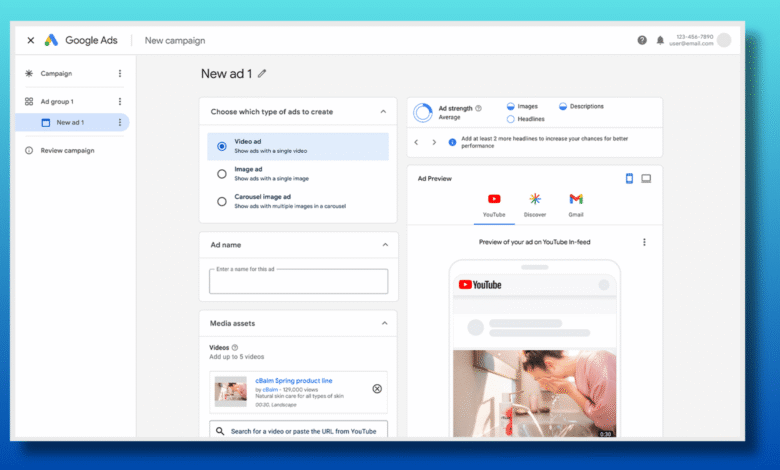
A major evolution from its predecessor, Discovery campaigns, is the inclusion of video ad formats like YouTube Shorts and standard in-stream videos. This, combined with the introduction of lookalike audience targeting, a familiar concept for Meta Ads users, allows advertisers to seed the system with customer lists and find new, high-potential audiences. The interface itself now feels more akin to a social media advertising platform, underscoring Google’s push into demand creation.
It’s crucial to set realistic expectations for performance. Demand Gen will typically report a lower ROAS and higher CPA compared to bottom-funnel campaigns like Search or Shopping. This is the inherent nature of targeting users earlier in their journey. The campaign is designed to drive video views, website visits, and branded search lift, which then feeds into your other marketing efforts. Measuring it with the same strict conversion metrics used for search campaigns will lead to misguided conclusions.
Who should consider using Demand Gen campaigns? They offer flexibility for established accounts in almost any niche, from ecommerce to local services. However, they work best as a strategic layer on top of a mature advertising foundation. The recommended approach is to first maximize your capture of existing demand through Search and Shopping campaigns, then utilize Performance Max, and finally supplement with Demand Gen for top-funnel growth. Jumping straight into Demand Gen with a limited budget risks spending on awareness without a clear path to measurable ROI.
Effective campaign management requires adhering to some specific guidelines. Google suggests setting your Target CPA at twice your standard campaign performance and allocating a daily budget of either 15 times your Target CPA or 20 times your average conversion value divided by Target ROAS. Furthermore, you should plan for a learning period of four to six weeks to allow the algorithm to gather data and optimize. These requirements mean that Demand Gen often necessitates larger budgets to perform effectively, potentially putting it out of reach for smaller advertisers.
When introducing Demand Gen to clients or leadership, frame it as a strategic test for audience expansion. For larger accounts, allocating a portion of the budget (e.g., 10%) to test new opportunities like Demand Gen is a prudent way to uncover new growth channels without jeopardizing core campaign performance. Emphasize that its success is measured in upper-funnel metrics and downstream influence, not immediate sales conversions.
Practical experience with these campaigns reveals several insights. First, accounts with rich historical audience data tend to see better results faster, as the algorithm has more signals to work with. Second, small budgets often struggle to gain traction, even with strong first-party data, due to the financial thresholds needed for the learning phase. Finally, the nature of prospecting for new demand simply requires sufficient investment for Google’s systems to test and learn.
The introduction of Demand Gen is part of a broader, irreversible trend within Google Ads. The platform is steadily shifting toward algorithm-driven, automated campaign types while phasing out manual controls. Advertisers who adapt to this paradigm and learn to leverage these tools for strategic goals, like using Demand Gen for top-of-funnel awareness, will be better positioned for long-term success. While trust in Google’s rollout of new products can be tested, engagement and feedback from the advertising community do lead to incremental improvements and added controls over time.
(Source: Search Engine Land)