Animated “Hello, World” image reveals striking new details
▼ Summary
– NASA released the full archive of over 12,000 images from the Artemis II mission on the Gateway to Astronaut Photography.
– The astronauts used three different cameras on the mission: a Nikon D5, a Nikon Z9, and an iPhone 17s.
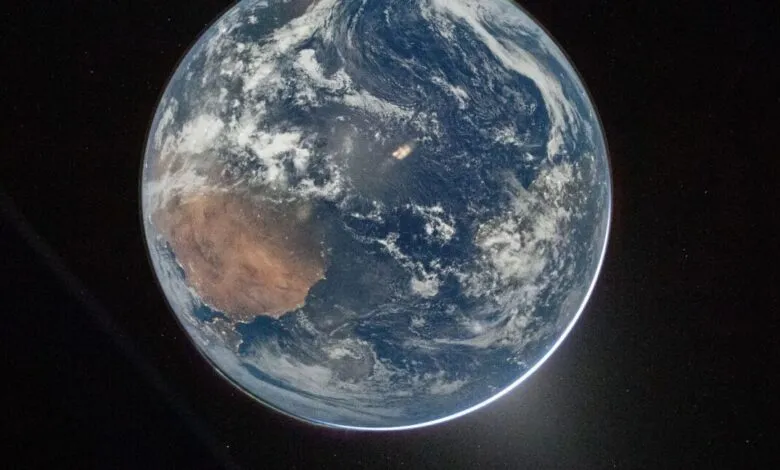
– An early highlight was the “Hello, world” image captured by Commander Reid Wiseman as Orion left Earth.
– The newly released archive contains dozens more images from the “Hello, world” sequence.
– Image processor Andy Saunders created a stunning animated composite from these newly released images.
The Artemis II crew captured far more than the handful of iconic shots that made headlines during their lunar mission last month. While NASA initially released a curated selection of the best images during and shortly after the flight, the full archive of over 12,000 photographs only became available over the weekend, uploaded to the Gateway to Astronaut Photography platform.
Onboard the Orion spacecraft, the astronauts worked with three different cameras: a Nikon D5, a Nikon Z9, and an iPhone 17s. The resulting collection is a mixed bag, with some blurry misfires and missed opportunities, but it also contains a wealth of previously unseen treasures.
One standout moment from the mission was the “Hello, world” image, captured by Commander Reid Wiseman as Orion departed Earth and set course for the Moon. That single shot became an early viral sensation. But the newly released archive reveals that Wiseman shot dozens of frames during that same sequence, offering a far richer view of the moment.
Now, image processing expert Andy Saunders,widely known for his meticulous work restoring and enhancing historic Gemini and Apollo photographs into stunning books,has taken those raw frames and turned them into something extraordinary. On Wednesday, Saunders shared a composite animation created from this sequence, processing and aligning the images to reveal striking new details that were invisible in any single photograph. The result is a breathtaking, dynamic view of Earth receding into the blackness of space, offering a fresh perspective on humanity’s home planet from the beginning of its journey to the Moon.
(Source: Ars Technica)