NASA’s Artemis II Camera: Why an Old DSLR Was Chosen
▼ Summary
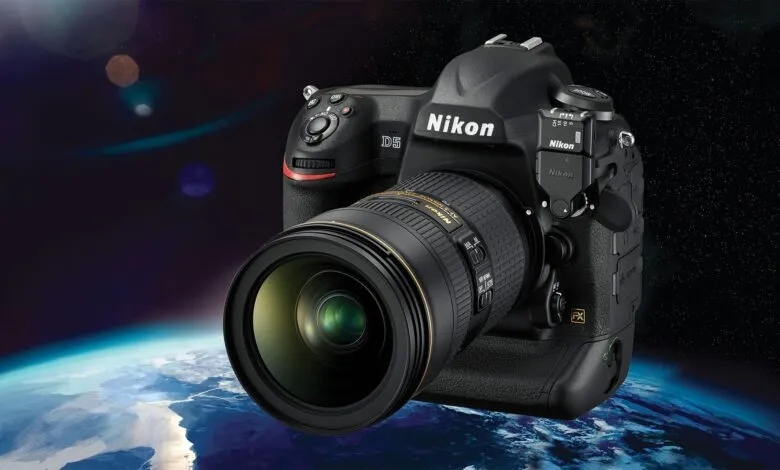
– NASA has selected Nikon cameras, including the D5 DSLR, as the primary equipment for the Artemis II mission, continuing its long-standing partnership.
– The choice is surprising because the D5 is an older DSLR model, not the newer mirrorless Z9 or the more recent D6 flagship.
– NASA favors the D5 due to its proven reliability in space conditions and its exceptional performance in high-ISO, low-light photography.
– The D5 outperforms newer cameras like the Z9 in high-ISO noise levels because its 20.8MP sensor has larger pixels that capture more light.
– The article notes that high ISO image quality in cameras has seen minimal improvement over the last decade, as increased sensor resolution often compromises low-light performance.
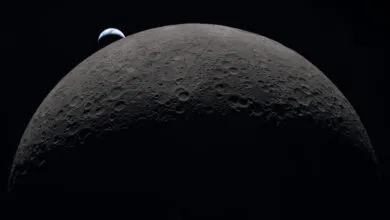
The stunning visuals from the Artemis II mission are captured by a piece of equipment that might seem out of place: a classic Nikon D5 DSLR. While the latest mirrorless technology is available, NASA’s choice underscores a critical principle in engineering for space: proven reliability and specific performance often trump the newest specs. The agency has a long partnership with Nikon, but the selection of this particular model, launched in early 2016, is a deliberate decision based on rigorous testing and mission-critical needs.
Every gram counts for a rocket launch, making the continued use of a heavier DSLR design noteworthy. The rationale becomes clear when examining the unique photographic challenges of space. Ambient light is often scarce, making exceptional high ISO performance a non-negotiable requirement for clear, usable images. In this specific area, the older D5 does not merely compete with modern counterparts, it surpasses them. Laboratory comparisons reveal that the D5 produces lower image noise at high sensitivities than Nikon’s current flagship mirrorless camera, the Z9.
This counterintuitive result stems from a fundamental trade-off in sensor design. Over the past decade, the industry has largely prioritized increasing sensor resolution. Packing more megapixels onto a full-frame sensor means each individual photosite becomes smaller, capturing less light during an exposure. This physical limitation often leads to increased digital noise. While processing algorithms have advanced, they cannot fully compensate for this loss of light-gathering capability. For the extreme low-light conditions of space, a sensor with a lower megapixel count and larger pixels remains the superior tool for minimizing noise.
The 20.8-megapixel D5 is an ideal fit for this profile, but it is not the only capable camera. Nikon’s own D6 DSLR shows a slight noise advantage at the highest ISOs, and Canon’s final flagship DSLR, the EOS-1D X Mark III, outperforms the D5 up to ISO 6400. Even Canon’s new mirrorless EOS R1, with its conservative 24.2-megapixel resolution, would offer marginally better low-light quality than the D5. This highlights that the core advantage lies in the sensor strategy, not merely the age or type of camera.
The takeaway is significant for both engineers and photographers. Technological progress is not linear across all metrics. While cameras have gained incredible speed, autofocus intelligence, and video capabilities, high ISO noise reduction has seen minimal gains. The shift to mirrorless does not automatically render high-end DSLRs obsolete for pure still image quality in challenging light. For NASA, the equation is clear: a thoroughly tested, reliable tool that delivers optically superior results in the mission’s most demanding scenarios is the only choice that makes sense.
(Source: Digital Camera World)