Can Smarter AI Actually Cure Cancer?
▼ Summary
– Over a trillion dollars has been invested in AI, but companies like Meta and OpenAI are pursuing artificial general intelligence (AGI) or superintelligence (ASI) that could match or exceed human performance.
– Emilia Javorsky criticizes the promise that ASI will “cure cancer,” arguing cancer is an individualized disease and medicine has never cured a complex chronic condition.
– Current AI applications—such as drug discovery, toxicity prediction, and early detection—are already making progress in oncology, but this is often overshadowed by hype about future superintelligent systems.
– Javorsky contends that investment is overly focused on intelligence and computing power, while underfunding the creation of high-quality biological datasets and measurement tools.
– Her proposed roadmap includes scaling existing AI tools in oncology, investing in promising biology research, and addressing systemic bottlenecks in medical progress.
By some estimates, over a trillion dollars has already flowed into artificial intelligence. Yet major tech players like Meta and OpenAI remain unsatisfied, aiming for something far more ambitious: a powerful, general-purpose intelligence that could match or even surpass human capability across a wide range of tasks. Massive resources are now dedicated to developing artificial general intelligence (AGI) and the even more advanced artificial super intelligence (ASI).
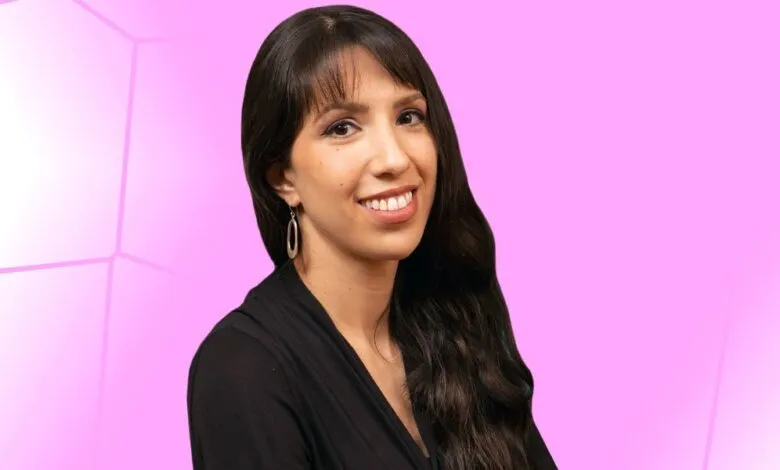
This excitement frequently comes paired with bold claims about what such technology could achieve. One promise in particular,curing cancer,caught the attention of Emilia Javorsky, director of the Futures program at the Future of Life Institute, a think tank that studies the risks and rewards of transformative technologies like AI.
In March, Javorsky published an essay titled “AI vs. Cancer,” drawing on her background as a doctor, scientist, and entrepreneur. The piece critiques the tendency to place faith in future ASI as a cure-all for disease, especially when many barriers to progress have nothing to do with intelligence. AI cannot analyze patient data that was never collected, and any treatment is flawed if patients cannot afford it without financial ruin. But Javorsky also intends her essay as a source of optimism, highlighting how existing AI tools are already making a real difference in oncology.
Javorsky recently spoke with IEEE Spectrum about her work. This conversation has been edited for clarity and length.
What it means for AI to “cure cancer”
What do you mean when you say “cure cancer”? And what do you think others mean when they claim ASI could do it?
Emilia Javorsky: “Curing cancer” is how the problem gets framed in popular discussions about AI, and also in promises coming directly from labs building AGI and ASI. If I was going to challenge that promise, I needed to use the same frame. But honestly, the framing itself is flawed.
Cancer isn’t one universal disease that a single treatment could cure. It’s a highly individualized, co-evolutionary process. Each person has a different set of mutations driving their cancer. Even within a single tumor, different cells have different mutations shaping their biology. Solutions will almost certainly need to be personalized.
And if we’re honest with ourselves in medicine, we have never actually cured a complex chronic disease. We have excellent ways to treat and manage conditions like diabetes and heart disease, but we haven’t cured them. So I push back on the “cure” frame entirely.
I think the medical community’s real hope is to develop highly effective personalized treatments that manage cancer so well it becomes a chronically manageable condition, no longer a death sentence.
How should we distinguish between AI and AGI or ASI in the context of cancer?
Javorsky: When people make those promises to cure cancer, they’re often using the term AI to actually mean AGI or ASI,a future superintelligent genie that will magically grant our wishes. That should be separated from the AI we already have, which is solving real problems right now.
We hear a lot about AI in drug discovery, predicting drug toxicity, defining new biomarkers, speeding up clinical trials, and detecting diseases earlier. All of those applications are already in the clinic, accelerating innovation today. Companies and academics are working on all of them. Many AI scientists are hard at work unlocking the technology’s potential in the here and now.
I believe real progress often gets overshadowed by the promise of future AI systems, when the most effective way to solve the problem is probably with the tools already available.
Investing in finding cures
I read parts of your essay as a case for collecting more health data. But you’re not against AI or investing in it. You’re trying to balance innovation with pragmatism, right?
Javorsky: In a world with finite capital, and with curing cancer being arguably the most noble use of that capital, we need to figure out where the real return on investment lies. Where should we invest to actually solve the problem?
I argue we are overinvesting in intelligence and computing power while underinvesting in tools to measure biology and in creating large-scale, high-quality datasets.
Our healthcare system is fundamentally a “sick care” system. We only start measuring people when they become ill. When you ask, “What data do you need? How do you measure it?” it forces you to take a bigger-picture view of medicine and biology.
In an ideal world, we could pursue every path. But that’s not how capital works. I am very bullish on AI, but I want to spend money on the right types of AI and on the pieces that are actually the bottleneck.
What AI applications related to cancer excite you right now?
Javorsky: We’re already seeing AI detect cancer earlier. It’s helping us run clinical trials better. There are amazing things happening with in silico modeling,virtual cells and digital twins. How can we create a high-fidelity digital representation of you, to figure out what would work best for your biology and truly unlock personalized medicine?
You end the essay focused on solutions. Can you briefly outline that roadmap?
Javorsky: Part of the essay was diagnosing where we’re going wrong. But with the roadmap, I wanted to offer my view on what we actually need to do. What will it take to cure cancer? Let’s get serious about what that could look like.
I break it down into three buckets. First, resourcing and scaling the AI tools already making progress in oncology. Second, doubling down on investment in promising areas of biology related to cancer. And third, tackling the institutional and systemic bottlenecks that misalign medical progress.
I wanted people to realize the reality is actually quite hopeful.
(Source: Ieee.org)