Recycling Industry Loses 40% of Workers Yearly, Turns to VR-Trained Robots
▼ Summary
– The recycling industry faces a labor crisis with a 40% annual staff turnover rate at waste sorting facilities.
– The fatality rate in recycling is eight times higher than the national average across all industries.
– Work-related injury and ill-health in the sector are 45% higher than in other industries.
– The job requires workers to stand beside sorting lines, contributing to high physical strain and risk.
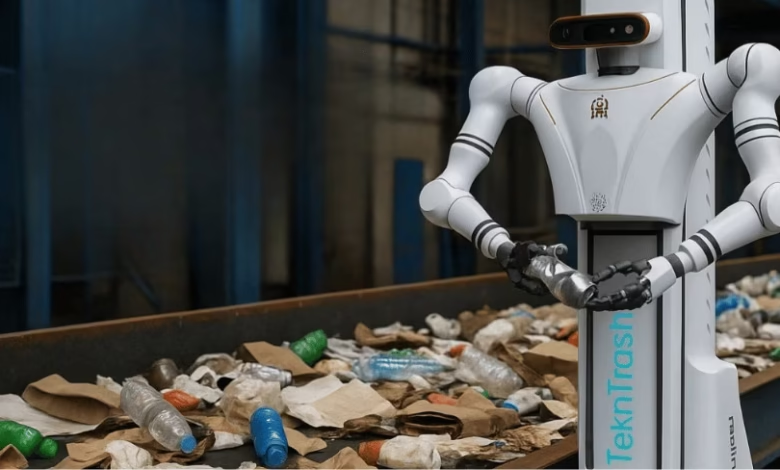
– Humanoid robots are being explored as a potential solution to address the labor shortage and safety issues.
The recycling sector is facing an acute labour crisis, with staff turnover at waste sorting facilities reaching a staggering 40% annually. The fatality rate in this industry is eight times higher than the national average, while work-related injury and ill-health are 45% more common than in other sectors. The core of the problem is simple: the job requires workers to stand for long hours sorting through waste, a task that is both physically demanding and hazardous.
To combat these alarming statistics, the industry is turning to an unlikely solution: VR-trained robots. These humanoid machines are being programmed using virtual reality simulations, allowing them to learn how to identify and sort different materials without putting human workers at risk. This approach not only addresses the safety concerns but also tackles the chronic labour shortage, as traditional recruitment efforts have consistently failed to fill the roles.
The shift toward automation is driven by the need for a stable, reliable workforce that can handle the high-volume, repetitive tasks inherent to recycling. By deploying robots trained in a safe, virtual environment, companies hope to drastically reduce turnover rates and improve overall operational efficiency. The technology promises a future where the most dangerous and monotonous aspects of waste sorting are handled by machines, leaving human workers for more skilled and less hazardous roles.
(Source: The Next Web)