6 Science Stories You Missed This Year
▼ Summary
– April’s list of overlooked science stories includes topics like Roman ship repairs, mushrooms detecting human urine, and the physics of dolphin swimming.
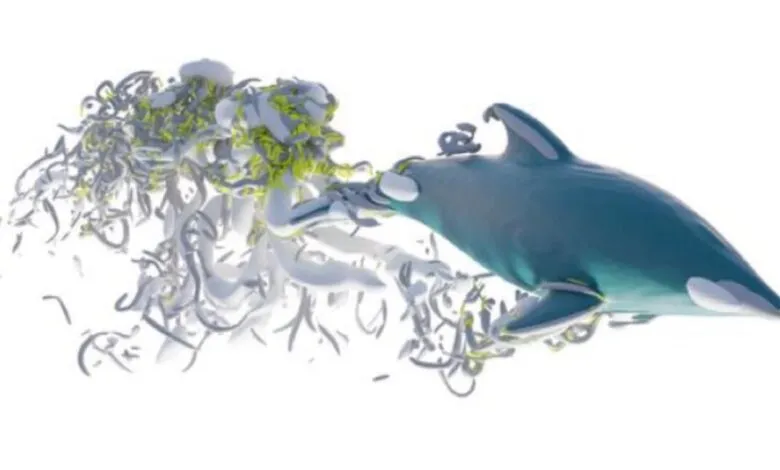
– Japanese scientists used supercomputer simulations to study how dolphins achieve speed, finding it relates to vortices from their tail kicks.
– Large vortex rings from initial tail oscillations generate thrust, while smaller vortices are byproducts that do not aid forward motion.
– The hierarchy of vortices is crucial: largest ones propel dolphins, smaller ones result from turbulence.
– The research aims to apply these insights to design faster, more efficient underwater robots.
It’s an unfortunate fact of journalism that there simply isn’t enough room to cover every fascinating scientific discovery that crosses our desk. Each month, we shine a light on a few of the most intriguing stories that almost flew under the radar. April’s selection includes everything from ancient Roman ship repairs to mushrooms that can detect human urine, the physics of crushing soda cans, and the surprising science behind dolphin speed.
Why dolphins swim so fast
Dolphins are renowned for their speed and grace in the water, but the precise physics behind their agility has long puzzled researchers. A team from the University of Osaka in Japan turned to powerful supercomputer simulations to crack the code. Their findings, published in the journal Physical Review Fluids, reveal that the secret lies in the vortices, or swirling eddies, created by a dolphin’s tail kicks.
When a dolphin flaps its tail up and down, the motion pushes water backward and generates a cascade of swirling currents. The simulations allowed scientists to dissect these currents by size. They discovered that the initial tail oscillations produce large vortex rings that generate the primary thrust for forward movement. Those big rings then break apart into many smaller vortices, but those tiny swirls do little to propel the dolphin forward.
“Our results show that the hierarchy of vortices in turbulence is crucial for understanding dolphin swimming,” said co-author Susumu Goto. He explained that the largest vortices are responsible for most of the propulsion, while the smaller ones are essentially byproducts of turbulent flow. The team hopes this insight into underwater propulsion mechanics can be applied to designing faster, more efficient underwater robots.
(Source: Ars Technica)