Scientists Create Ultra-Black Car Paint That Warps Reality
▼ Summary
– BMW used Vantablack on a 2019 concept car, making objects appear two-dimensional like a hole or void, but it never reached commercial vehicles.
– Nipsea Group developed a more resilient ultra-black coating absorbing 99.9% of visible light, targeting China’s demand for deep-black luxury cars.
– The coating uses a carbon black and carbon nanotube structure with pi-interactions, achieving 0.08% average reflectance, comparable to Vantablack’s 0.04-0.05%.
– To address safety and aesthetics, the team added a glossy overcoat to preserve 3D appearance and passed humidity and heat tests at 104°F for 10-14 days.
– Further work is needed on practical processability of carbon-nanotube nanomaterials before the coating can be used on commercial vehicles.
In 2019, BMW stunned the automotive world by showcasing a concept X6 coated in Vantablack, a material so dark it seemed to erase depth and dimension. The German automaker described the effect as objects appearing two-dimensional, with the human brain interpreting the surface as “staring into a hole or even a void.” That striking visual trick never made it to production cars, instead finding a home in satellite glare reduction and stealth submarines. Now, a Singapore-based coatings developer called Nipsea Group has stepped up with a more durable alternative, aiming to satisfy China’s growing appetite for ultra-black luxury vehicles.
Nipsea’s research division has unveiled a blacker-than-black paint inspired by Vantablack, capable of absorbing an average of 99.9% of all visible light wavelengths. In a new paper published in Matter & Light, the team described this “ultra-black coating” as “notably stable” even after rigorous humidity and water resistance tests, making it suitable for automotive applications. “In China, car color has become a key selling point,” said Nipsea research chemist Zhiwei Liu. “Deep black finishes have long been the premium choice and signature color for luxury cars due to their elegant appearance, powerful visual impact, and luxurious undertone.”
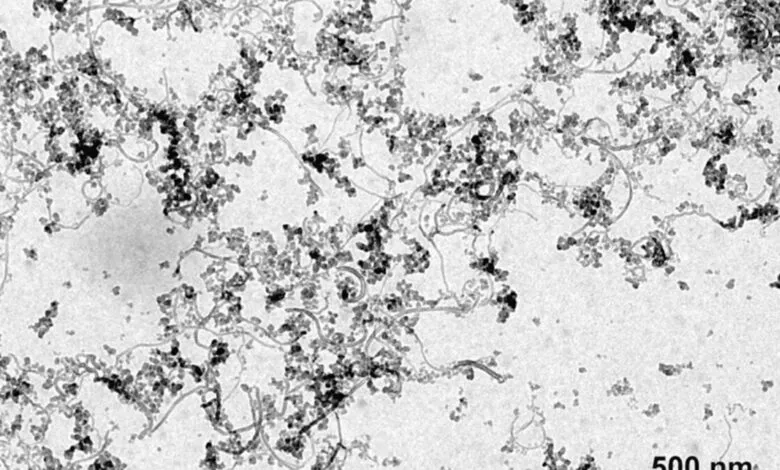
The breakthrough relies on a natural chemical attraction between carbon black and carbon nanotubes, known as a pi-interaction. This forces the particles to align in a “connecting-the-dots” structure within the paint mixture, creating a unique light-trapping morphology. The team claims this CB-CNT ultra-black coating delivers superior light absorption and a higher level of blackness compared to conventional carbon black coatings. It also holds its own against Vantablack, which uses vertically aligned carbon nanotube arrays. While Vantablack achieves an ultra-low reflectance of 0.04% to 0.05%, the new paint registers an average reflectance of just 0.08% across the visible spectrum.
Of course, applying such an optical black hole to a road-going vehicle raises concerns. As one Reddit user described the effect of matte ultra-black finishes, “it feels like your brain has been hacked.” BMW warned in 2019 that the coating “blots out virtually all the design details and highlights,” making a car appear flat and disorienting. To counter this, Nipsea added a glossy overcoat for its automotive tests, helping the model retain a three-dimensional appearance. The team also addressed the adhesion issues that have plagued CNT-only paints like Vantablack, subjecting two CB-CNT-coated panels to 104°F heat in a water bath for 10 days and another in 95% humidity for 14 days. The coating showed “no significant visual paint defects” and passed a standard adhesion test.
Still, Liu acknowledges that more work remains before these eerily dark sedans hit the streets. “There is still room for improvements in practical processability of carbon-nanotube-containing nanomaterials,” he said. For now, the paint remains a fascinating glimpse into a future where luxury cars might literally warp perception.
(Source: Gizmodo.com)