Butt Breathing Breakthrough: IgNobel Idea Nears Medical Reality
▼ Summary
– Enteral ventilation is a new medical concept that delivers oxygen through the colon using a super-oxygenated liquid to support the bloodstream.
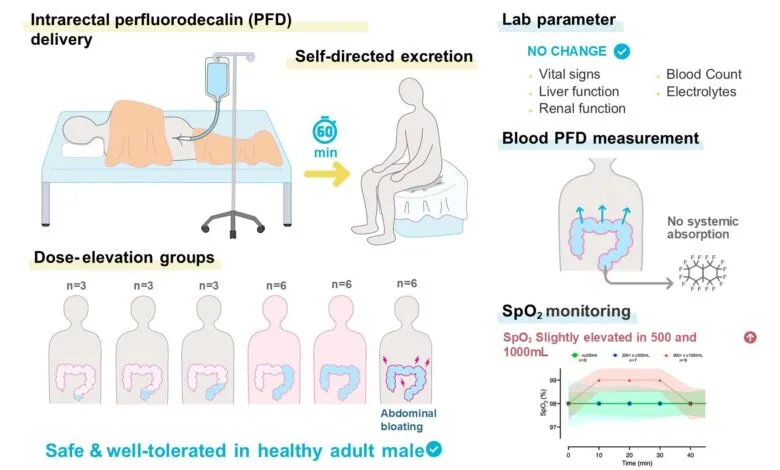
– The first human clinical trial demonstrated the procedure’s safety and tolerability in 27 healthy men, with no serious adverse events reported.
– This technique could potentially rescue patients with blocked airways or severely limited lung function due to injury, inflammation, or infection.
– The inspiration for the method comes from observing loach fish and builds on historical research involving perfluorocarbon liquids like Oxycyte.
– Future steps include testing the oxygenated liquid’s effectiveness and expanding the technology for newborn care, pending fundraising progress.
A groundbreaking medical approach that once earned an IgNobel prize is now moving closer to potential clinical application. The concept of enteral ventilation, delivering oxygen through the colon, has demonstrated promising safety results in its first human clinical trial. While the technique might sound unconventional, it represents a serious scientific effort to develop emergency oxygen delivery methods when traditional breathing becomes impossible.
Researchers recently published findings in the journal Med detailing the safety evaluation of this procedure in human volunteers. The study represents the initial step toward determining whether this method could effectively deliver oxygen to the bloodstream during medical emergencies.
Dr. Takanori Takebe, a leading organoid medicine specialist with positions at both Cincinnati Children’s and Japan’s University of Osaka, explains the significance of these early results. “This marks our first human data, showing the procedure’s safety rather than its effectiveness,” he notes. “Having established tolerance, our next phase will assess how well the process oxygenates the bloodstream.”
The technique functions similarly to an enema but utilizes a specially formulated, oxygen-rich liquid that can be absorbed through the colon’s lining. This method could potentially rescue patients whose airways are blocked by trauma or inflammation, or whose lung function is severely compromised by infection.
Interestingly, the scientific foundation for this approach draws from multiple sources. Researchers observed how certain fish species, particularly the loach, can absorb oxygen through their digestive systems when water oxygen levels drop. The concept also builds upon decades-old research involving perfluorocarbon liquids originally developed as potential artificial blood substitutes.
The recent human trial involved 27 healthy male participants in Japan who received varying volumes of non-oxygenated perfluorocarbon liquid. Most participants successfully retained the liquid for the full 60-minute trial period, with some holding up to 1,500 milliliters. While participants reported abdominal bloating and discomfort at higher volumes, no serious adverse events occurred.
Future research will focus on using oxygenated liquid to determine optimal dosage and duration for improving blood oxygen levels. Dr. Takebe has established EVA Therapeutics to advance this technology, with eventual applications potentially extending to newborn care. The timeline for subsequent clinical trials will depend on securing necessary funding.
(Source: Medical Xpress)