Topic: medical innovation
-

Tiny Chips Ride Immune Cells to Fight Inflammation
MIT researchers led by Deblina Sarkar have developed microscopic electronic devices that can be injected into the bloodstream to treat brain inflammation non-invasively, combining electronics with biological cells for natural navigation. The project faced significant initial skepticism and 35 gra...
Read More » -

AI Embryologist: The Future of Fertility Jobs
AI tool CHLOE, developed by Fairtility, is the first FDA-approved system for embryo assessment, using millions of data points to identify embryos with the highest implantation potential and improve pregnancy success rates. Traditional IVF faces challenges like costly and time-consuming genetic te...
Read More » -

Dyson Award Winners: AI Water Sensor and Smart Parkinson's Keyboard
The 2025 James Dyson Award recognized two global winners: WaterSense, an AI-powered autonomous water quality monitoring system, and OnCue, a smart keyboard designed to assist individuals with Parkinson's disease by reducing tremors and typing errors. WaterSense, created by Filip Budny, uses recyc...
Read More » -

A Butcher’s Bold Decision That May Have Changed Childbirth
In 1500, Swiss butcher Jacob Nufer reportedly performed a cesarean on his wife, saving both her and their child. Though debated by historians, the story remains a powerful symbol of courage and a possible turning point in the history of childbirth
Read More » -

Boy's £1.8m drug treatment gives him new lease of life
A five-year-old boy with spinal muscular atrophy (SMA) has experienced transformative results, including independent walking, after receiving the groundbreaking one-time gene therapy Zolgensma through the NHS. The treatment, which addresses the root genetic cause, has a publicly listed price of £...
Read More » -

A Doctor's Odyssey: Dr. Philip Salem and the Quest for Personalized Cancer Care
From a small Lebanese village to a global pioneer in oncology, Dr. Philip Salem’s journey is one of relentless innovation. He’s changing the lives of terminally ill cancer patients with a highly personalized treatment protocol that fuses immunotherapy, chemotherapy, and targeted therapy.
Read More » -
Why AI Feels Alien & The Future of Head Transplants
Modern AI systems are so large and complex that their internal logic is opaque, leading scientists to study them like alien organisms to understand their unpredictable behaviors. Researchers use mechanistic interpretability, a neuroscience-like method, to map AI neural networks, discovering that ...
Read More » -
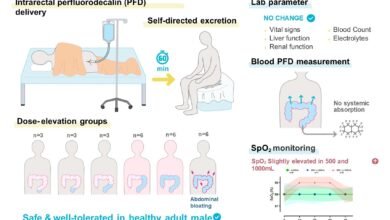
Butt Breathing Breakthrough: IgNobel Idea Nears Medical Reality
Enteral ventilation, a method of delivering oxygen through the colon, has shown promising safety results in its first human clinical trial and could serve as an emergency oxygen delivery method when traditional breathing is impossible. The technique uses an oxygen-rich liquid absorbed through the...
Read More » -
Microsoft's AI Stance: Erotic Content & Hype Mystery
OpenAI is modifying GPT-5 to handle sensitive mental health concerns from users more appropriately, without restricting access, amid reports of AI interactions affecting well-being. Elon Musk launched Grokipedia, a conservative-leaning alternative to Wikipedia that faced technical issues shortly ...
Read More » -

The Future of Gene Editing: Curing Disease Without Limits
David Liu announced a new disease-agnostic gene-editing strategy that could treat multiple unrelated illnesses using a unified molecular framework. Current gene therapies are expensive and tailored to rare conditions, whereas Liu's approach aims to be a universal, scalable platform for broader ap...
Read More » -

Leonardo da Vinci's Wood Charring Method Predates Japanese Shou Sugi Ban
Leonardo da Vinci documented the wood-charring technique now known as Yakisugi, noting its protective benefits against decay and pests over a century before it was formally recorded in Japan. His notebooks contain remarkably prescient concepts, including designs for flying machines, geared mechan...
Read More »