Half of Europe’s youth use AI to discuss intimate topics
▼ Summary
– Journalists covering tech must examine what AI systems take away from users, not just report on development and regulation.
– The article focuses on young Europeans using AI chatbots for emotional support and the potential consequences of this trend.
– The full story continues on The Next Web, indicating the provided text is an excerpt.
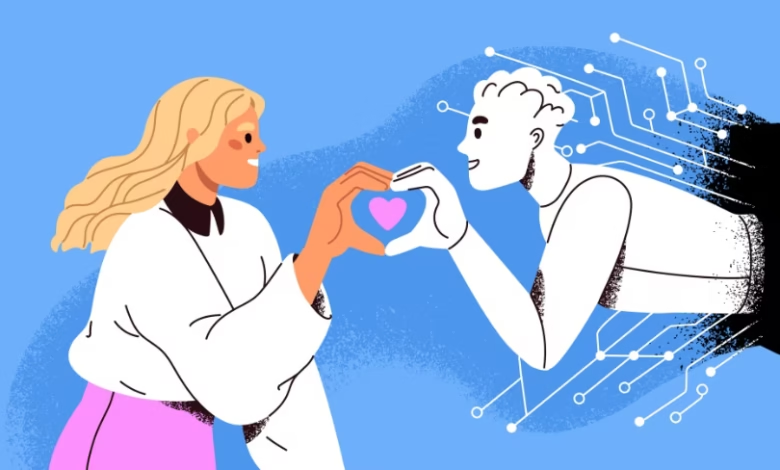
Half of Europe’s young people are now turning to artificial intelligence to discuss deeply personal and intimate topics. This finding, drawn from recent surveys, signals a profound shift in how a generation seeks emotional support and connection. Before examining the technology itself, we must ask what it is taking from us or teaching us to give away.
As journalists covering the tech landscape, our role extends beyond chronicling what is built, funded, launched, or regulated. We must also pay attention to how these systems reshape human behavior. The data reveals that AI chatbots have become a common confidant for many young Europeans, handling conversations about relationships, mental health, and private fears that were once reserved for friends, family, or therapists.
This trend raises urgent questions about digital intimacy and the erosion of human connection. Are these tools filling a genuine gap in emotional support, or are they conditioning us to outsource our most vulnerable moments to algorithms? The answer likely lies somewhere in between. For some, AI offers a judgment-free space to explore difficult feelings without fear of stigma. For others, it may replace the messy, rewarding work of building trust with real people.
The implications are far-reaching. If half of Europe’s youth regularly rely on AI for emotional guidance, we must consider the long-term effects on social skills, empathy, and mental health. The technology is not neutral: it shapes us as much as we shape it. As this trend accelerates, the conversation must move beyond efficiency and convenience to ask what we are sacrificing in the process.
(Source: The Next Web)