Ancient Land Animals Evolved Without Tadpole Stage
▼ Summary
– Early tetrapods were long assumed to develop like modern amphibians, starting as aquatic tadpoles and metamorphosing into terrestrial adults.
– This assumption was based on the “scala naturae” idea of linear evolution from fish to amphibians to reptiles, not on direct evidence.
– A new study by Jason Pardo and Arjan Mann suggests that basic assumptions about early tetrapod life cycles may be incorrect.
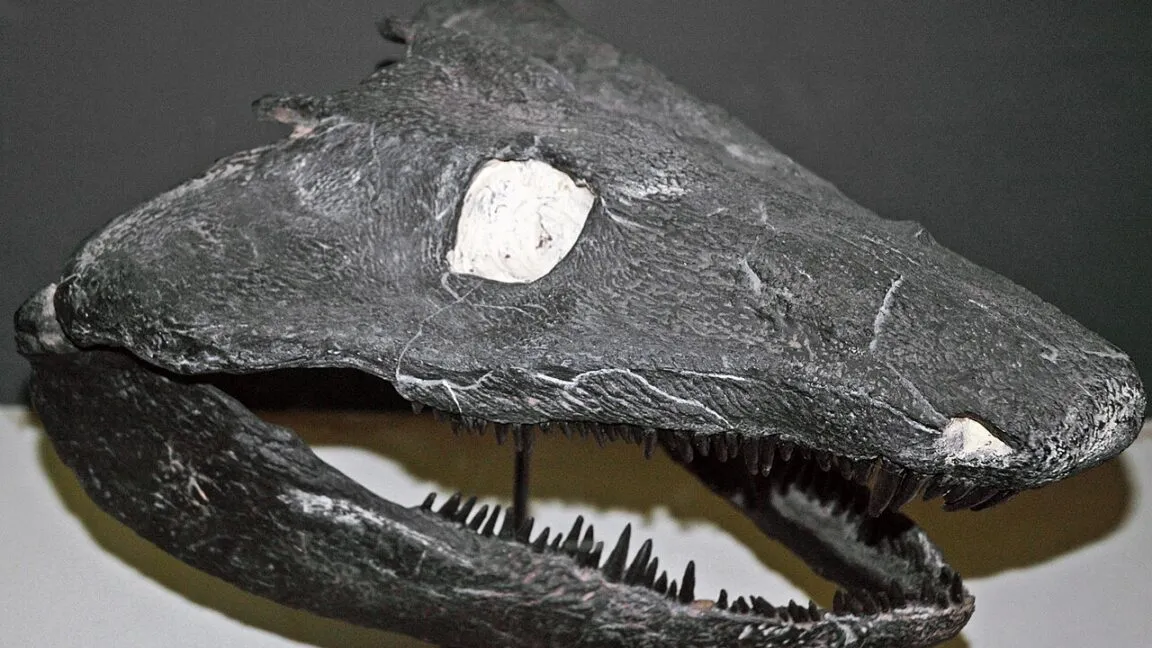
– The study focused on embolomers, extinct crocodile-eel-like predators that lived 300 million years ago and could reach over three meters in length.
– Embolomers had short, stocky limbs suited for paddling in water and clumsy land excursions, indicating a partial transition from water to land.
For decades, the prevailing view among biologists held that early tetrapods,the ancient vertebrates that first ventured onto land more than 300 million years ago,followed a developmental path similar to modern amphibians. The assumption was that these creatures began life as fully aquatic tadpoles before undergoing metamorphosis into terrestrial adults. “A lot of that comes from this old ‘scala naturae’ idea that you had fish that evolved into the next stage up, which were amphibians, and then amphibians evolved into the next stage up, which were reptiles that evolved into birds and mammals,” explained Jason Pardo, a research associate at the Field Museum.
The truth is, we never actually possessed evidence that early tetrapods lived like amphibians. We simply assumed it because it seemed logical. “It’s easier to make the transition from water to land if you’re already making that transition as part of your life cycle,” Pardo noted. However, a new study published in Science, co-authored by Pardo and Arjan Mann (the Field Museum’s assistant curator of early tetrapods), challenges this foundational belief about the first land-dwelling vertebrates.
The researchers focused their investigation on embolomers, an extinct group of large predators that roamed the Earth roughly 300 million years ago. These creatures resembled a hybrid between a crocodile and an eel, featuring massive skulls filled with sharp teeth attached to long, serpentine bodies. Their short, sturdy limbs were primarily designed for paddling through water, though they could also support brief, clumsy movements on land. Embolomers are considered among the first vertebrates to make a partial shift from an aquatic to a terrestrial existence. While adults could exceed three meters in length, the key to unlocking their early life history lay in examining their centimeter-scale offspring.
(Source: Ars Technica)