Waymo’s cheaper robotaxi now available in 3 cities

▼ Summary
– Waymo has launched its next-generation Ojai robotaxi for all riders in Los Angeles, Phoenix, and San Francisco, with plans to expand to Denver, Las Vegas, and San Diego later this year.
– The Ojai, built on Zeekr’s SEA-M platform, is designed to be cheaper to build, operate, and maintain than the Jaguar I-Pace, featuring Waymo’s sixth-generation self-driving system and Google’s Gemini AI assistant.
– Waymo currently has about 300 Ojai vehicles in its commercial fleet, and riders will eventually be able to choose between the Ojai and the older Jaguar I-Pace once supply increases.
– Imported from China, the Ojai faces steep U.S. tariffs that raise costs, but base vehicles arrive without Chinese connected-car tech and are outfitted with the self-driving system at Waymo’s Arizona factory.
– MoffettNathanson projects Waymo will import 5,000 Ojai vehicles to the U.S. by end of 2026, more than doubling its current Jaguar fleet, with 725 vehicles entering in July alone.
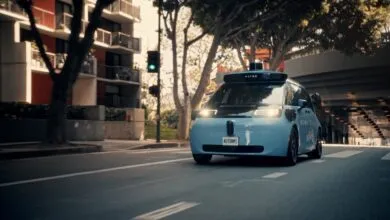
Waymo has officially extended access to its next-generation autonomous vehicle across Los Angeles, Phoenix, and San Francisco, marking a pivotal step for the Alphabet-owned company as it accelerates toward a fleet built for affordability and scale. The new robotaxi, known as the Ojai (pronounced oh-hi), will now appear in ride-hail matches for customers in those three metros, though riders won’t be able to specifically request it just yet. That option will arrive once Waymo’s inventory of Ojai units grows large enough to offer a choice between the new model and the familiar Jaguar I-Pace robotaxi. Currently, the company has roughly 300 Ojai vehicles operating in its commercial fleet, a spokesperson confirmed.
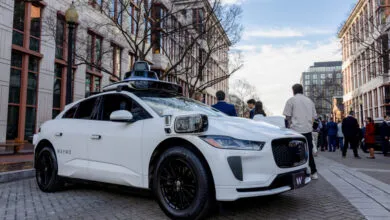
Looking ahead, Waymo announced Wednesday that the Ojai is slated to debut in Denver, Las Vegas, and San Diego later this year. The rollout represents a strategic pivot from the Jaguar I-Pace, which has served as the backbone of Waymo’s operations across its 11 U. S. cities but was always viewed as a bridge to something more scalable. The white, sensor-packed hatchback has become a common sight in places like San Francisco, yet its role was more about proving the technology than perfecting the economics. The Ojai, by contrast, is engineered to move the needle on both fronts.
Under the hood, the Ojai runs on Waymo’s sixth-generation self-driving system, a modular platform designed to adapt across different vehicle types, a key component of the company’s cost-reduction strategy. It also features a refreshed user interface and integrates Google’s Gemini AI as an in-car assistant for passengers. But strip away the advanced tech, and the Ojai is fundamentally a minivan produced by Zeekr, the Chinese brand under Geely Holding Group. Waymo first partnered with Zeekr in 2021, spending years testing a prototype and later a production-ready version of the vehicle. Built on Zeekr’s SEA-M platform, an evolution of the automaker’s Sustainable Experience Architecture, the minivan was designed with robotaxi duty in mind: accessible, durable, and inexpensive to manufacture and maintain.
The Ojai largely delivers on those objectives, though trade policy has complicated the cost picture. Imported vehicles from China currently face steep tariffs under U. S. trade rules, adding expense to every Ojai Waymo brings stateside. The base Zeekr units arrive without any Chinese connected-car systems on board; they’re then shipped to Waymo’s Arizona facility, where the self-driving hardware and software are installed. According to MoffettNathanson, a New York-based research firm that tracks Ojai imports through detailed customs receipts, Waymo is on track to bring roughly 5,000 Ojai vehicles into the U. S. by the end of 2026. That figure would more than double the current Jaguar fleet size. July alone saw 725 Ojai units enter the country, a clear signal of the pace and ambition behind Waymo’s expansion push.
(Source: TechCrunch)