Mouse hibernation triggers widespread synapse loss
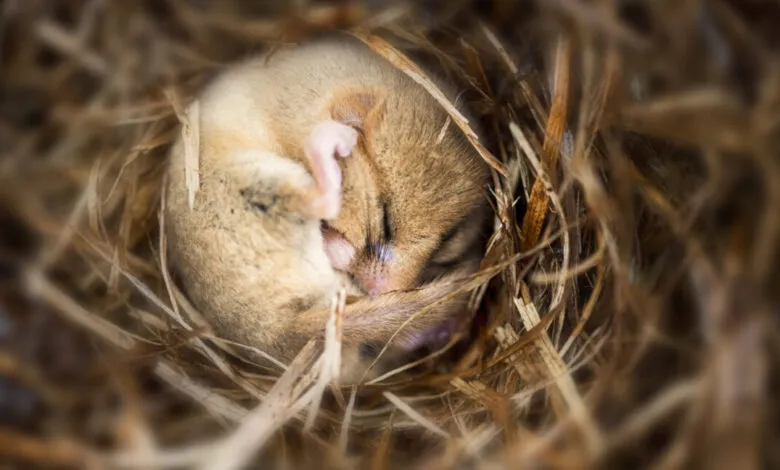
▼ Summary
– Memories are stored through strengthened and enlarged connections between neurons, but these connections are plastic and change significantly over a few days.
– Kazumasa Tanaka’s team induced a hibernation-like state in mice, erasing over half of their synapses, yet the mice retained their memories.
– The hibernation circuit is conserved across mammals and can be artificially activated in mice by stimulating Q neurons in the hypothalamus.
– This artificial state, called QIH, lowers mice’s body temperature to about 20°C and reduces heart and breathing rates.
– Artificial hibernation falls between bear hibernation, which keeps body temperature stable, and deep squirrel hibernation, which nears freezing.
The prevailing theory of memory storage holds that learning physically strengthens and enlarges the connections between neurons, and that structural change is the memory itself. But these connections, known as synapses, are far from permanent. They are constantly shifting and remodeling.
“If you compare the arrangement of these connections on day one with the same on day four or five, it’s very, very different,” says Kazumasa Tanaka, a neuroscientist at the Okinawa Institute of Science and Technology Graduate University in Japan. To understand how a memory that endures for years can persist on hardware that changes in a matter of days, Tanaka’s team decided to make that instability far more extreme. In a recent study published in Science, they triggered a hibernation-like state in mice that wiped out more than half of the animals’ synapses. Remarkably, the mice still retained their memories.
Hibernation on demand
True hibernation is a hallmark of squirrels, hamsters, and bears, yet the neural circuitry that drives it is shared across all mammals, including species like mice that never naturally hibernate. In June 2020, a team led by Takeshi Sakurai, a neuroscientist at the University of Tsukuba and a collaborator on Tanaka’s study, devised a method to switch this circuit on artificially. The approach involves activating a specific group of neurons, called Q neurons, located in the hypothalamus.
The outcome is a condition the researchers call QIH, short for Q-neuron-induced hypothermia and hypometabolism.
“With our protocol, we can bring mice’s body temperature down to somewhere around 20° Celsius, and their heart rate and breathing rate decrease significantly as well,” Tanaka explains. Whether this state qualifies as genuine hibernation depends on which animal serves as the benchmark. Bears, for instance, slash their metabolic rate during hibernation but keep their body temperature near normal, hovering around 36° or 37° Celsius. At the opposite extreme, certain squirrel species enter such deep torpor that their body temperature approaches the freezing point. “Artificial hibernation sits somewhere in the middle of that spectrum,” Tanaka says.
(Source: Ars Technica)