Thunder and fiber optics improve seismic imaging
▼ Summary
– Seismic waves reveal Earth’s interior by varying speed based on rock properties like solidity, water content, and fracturing, with data often sourced from earthquakes or human-made explosions.
– Penn State scientists propose thunderstorms as a middle-ground seismic source, as thunder’s energy enters the upper crust and triggers “thunderquakes.”
– Thunderquake signals are highly complex due to lightning’s plasma beads generating multiple, interfering shock waves along a non-linear path.
– The team developed a model to decode this complexity and used it to reconstruct terrain beneath their campus.
– The article highlights three seismic data sources: natural earthquakes, intentional explosives, and the newly explored thunderstorm option.
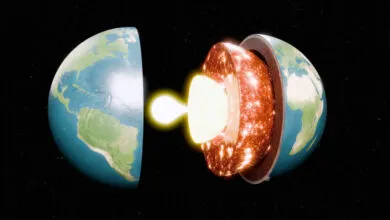
Most of our understanding of the Earth’s interior comes from tracking seismic waves. These waves travel at varying speeds depending on the composition of the rock they pass through, including whether it is solid, semi-molten, water-saturated, or fractured. By collecting enough data from a sufficient number of seismic events, researchers can gradually reconstruct what lies at different depths beneath the surface.
In many cases, this data comes from natural events like earthquakes. In other situations, scientists deliberately generate waves using explosives to image specific areas without waiting for a temblor. Now, a research team at Penn State has identified a middle-ground option between waiting for an earthquake and setting off your own seismic source: thunderstorms.
A portion of the energy carried by thunder penetrates the Earth’s upper crust, producing what are known as “thunderquakes.” However, due to various physical factors, the seismic signals from these events are exceptionally complicated, making it difficult to extract clean data. The Penn State team says it has now developed a model that can decipher this complexity, and it has used that model to map the subsurface beneath its own campus.
Why thunderquakes are so difficult to interpret
The complexity of thunderquakes begins with the very process that creates thunder. Lightning generates thunder by forming superheated plasma bubbles along its path, creating a structure often compared to a string of beads. Each of those beads can produce an acoustic shock wave, resulting in a cascade of expanding shock waves that follow the lightning’s irregular trajectory. These waves can also interfere with one another as they spread outward. Additionally, although the shock waves initially strike the ground at a single point, they rapidly expand from that location, though with steadily decreasing intensity.
(Source: Ars Technica)