How Volcanoes Shaped History
▼ Summary
– The 1883 eruption of Krakatau was the first natural disaster documented in near real-time thanks to Victorian-era telegraph technology.
– The catastrophic event obliterated islands and killed over 36,000 people, primarily through devastating tsunamis generated by the explosion.
– Scientific observations following the eruption laid the foundational knowledge for the modern science of volcanology.
– Volcanic aerosols containing sulfur reflected sunlight, causing a measurable drop in average summer temperatures in the Northern Hemisphere.
– Atmospheric particles from the eruption created vivid global sunsets that influenced contemporary art, such as Edvard Munch’s The Scream.
The first telegram to reach Singapore originated from Batavia, the capital of the Dutch East Indies (present-day Jakarta, Indonesia). The message arrived on a Monday with urgent warnings: “Terrific detonations from Krakatau (volcanic island),” it stated. Reports quickly followed describing stones raining down and villages near Anjer being swept away. As the telegraph wires continued to transmit news of destroyed bridges, smashed boats, and vanished lighthouses, the full scale of the catastrophe became apparent by Tuesday noon. The final dispatch summarized the devastation succinctly: “Where once Mount Krakatau stood the sea now plays.”
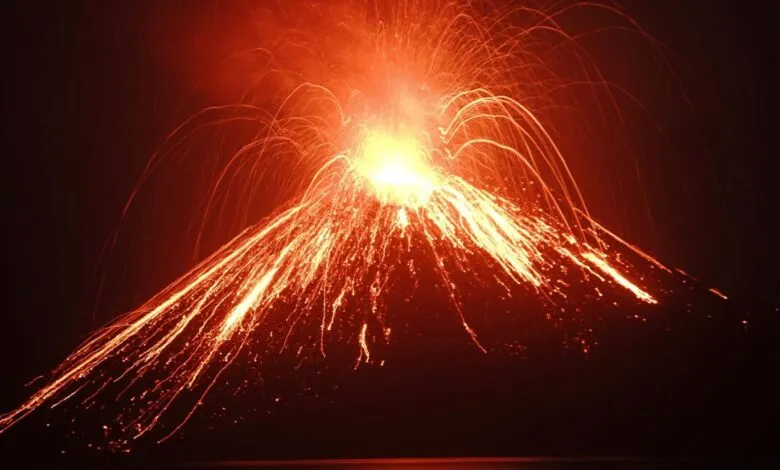
By the following days, the world understood the source of this destruction. On the morning of August 27, 1883, a massive volcanic eruption obliterated two islands in the strait between Java and Sumatra and partially destroyed a third. The disaster claimed more than 36,000 lives, with the majority of fatalities caused by devastating tsunamis generated by the colossal explosion.
This event marked a historical turning point. Thanks to Victorian-era telecommunications, it was the first time humanity could document the immediate and long-term effects of a catastrophic eruption in near real-time. The data gathered in the subsequent years established the foundations of modern volcanology. It also provided critical insights into how major eruptions can alter global climate patterns, impact agriculture, and shift the trajectory of human history.
In the months following the blast, volcanic particles dispersed through the upper atmosphere, creating intensely colored sunsets that inspired contemporary artists. These atmospheric phenomena may have influenced visual works such as Edvard Munch’s The Scream. However, the primary driver of the volcano’s climatic impact was sulfur emitted from the molten rock feeding Krakatau. When sulfur enters the atmosphere, it forms aerosols that reflect sunlight and cool the planet. Consequently, average summer temperatures in the non-tropical Northern Hemisphere dropped by 0.6° Celsius (1.1° Fahrenheit) in the years following the eruption.
(Source: Ars Technica)