Volkswagen and Uber test self-driving minibuses in LA

▼ Summary
– Volkswagen’s MOIA America and Uber have begun testing approximately 10 autonomous ID. Buzz vehicles in Los Angeles, with plans for commercial rides by late 2026 and fully driverless service in 2027.
– The autonomous ID. Buzz is equipped with a 27-sensor suite and uses Mobileye’s Drive platform for its decision-making software and hardware.
– Before charging fares in California, the service must obtain a commercial deployment permit from the DMV and a ride-hailing permit from the CPUC.
– Los Angeles presents a competitive market, as Waymo already operates fully driverless rides there, setting a performance benchmark for the new service.
– Uber’s strategy is to act as a platform for autonomous vehicle partners like MOIA, providing its app and logistics rather than developing the self-driving technology itself.
The streets of Los Angeles are now home to a new fleet of autonomous vehicles, marking a significant step in the commercial rollout of self-driving technology. Volkswagen’s MOIA America subsidiary, in partnership with Uber, has initiated on-road testing with approximately ten autonomous ID. Buzz vans. This initial phase is the precursor to a planned commercial ride-hailing service with human safety operators by late 2026, with the goal of launching a fully driverless service in 2027. Los Angeles serves as the inaugural U.S. city for what both companies envision as a multi-city expansion over the next ten years.
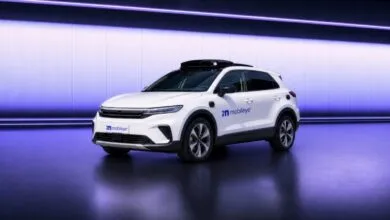
These vehicles are not the standard consumer models. The ID. Buzz AD is a purpose-built autonomous variant equipped with a sophisticated 27-sensor suite. This system integrates 13 cameras, nine LiDAR units, and five radars. All data is processed by a computer running the Mobileye Drive platform, a partnership formed after Volkswagen shifted from its earlier investment in Argo AI. Mobileye now supplies the crucial software, hardware, and mapping that constitute the vehicle’s decision-making brain. The vehicle itself, which seats up to six passengers and features powered sliding doors, is designed for shared rides and is built by Volkswagen Commercial Vehicles in Hanover.
Before offering paid rides, the venture must navigate California’s stringent regulatory landscape. It requires both a commercial deployment permit from the state’s DMV and a ride-hailing permit from the Public Utilities Commission. The current testing, with a safety operator in every vehicle, functions as both a technical proving ground and a safety demonstration for regulators. The planned scaling is aggressive: testing will expand to over 100 vehicles with operators ahead of the 2026 commercial launch, targeting a transition to completely driverless operations in 2027. MOIA America aims to have over 500 autonomous vehicles in Los Angeles by the third quarter of 2027, with plans to deploy more than 1,000 vehicles across other U. S. cities thereafter.
Executives highlighted the strategic reasoning behind the Los Angeles launch. Paul DeLong, MOIA America’s president of commercialization, noted the city’s history of shaping car culture and adopting new mobility technologies. He emphasized that integrating with the Uber platform provides immediate access to a vast, trusted user base. Sascha Meyer of Volkswagen Autonomous Mobility pointed to strong momentum for real-world deployment, while Uber CEO Dara Khosrowshahi called the move a major milestone reflecting a shared dedication to transportation’s future.
Choosing Los Angeles presents a deliberate challenge, as it is not a new market for autonomous rides. Waymo has operated fully driverless services there since 2024, completing over 250,000 paid trips weekly across its U. S. markets. This established presence sets a clear performance benchmark for the new entrants. However, MOIA brings valuable experience from its ride-pooling service in Hamburg, launched in 2019, which has moved over ten million passengers and provided operational data that informs its current model.
This partnership exemplifies Uber’s broader strategy following its exit from in-house self-driving development. The company now positions itself as a distribution layer for autonomous vehicles, partnering with various technology providers in different markets. Beyond MOIA, Uber has relaunched services with Motional in Las Vegas and announced a pilot with Wayve and Nissan in Tokyo. In each case, Uber supplies demand, brand recognition, and fleet logistics infrastructure, while partners like MOIA provide the vehicles and core self-driving technology. The arrival of the ID. Buzz in Los Angeles represents the latest piece in Uber’s expanding, city-by-city platform for autonomous mobility.
(Source: The Next Web)