Waymo founder Sebastian Thrun launches stealth robotics startup

▼ Summary
– Sebastian Thrun, a self-driving car pioneer, has launched a new stealth robotics startup called Dulo, revealed briefly at the Actuate conference.
– Dulo’s stated mission is developing “foundation models for hardware design” to enable “manufacturing at lightspeed.”
– The team includes leaders from Waymo, Google Brain, and Stanford’s AI Lab, signaling strong credibility in AI and autonomy.
– The startup focuses on hardware design and manufacturing, a different layer than most robotics startups that build machines directly.
– Thrun’s background includes founding Google Brain, Google X, and Udacity, though his flying-car venture Kittyhawk failed, highlighting both potential and risk.
Sebastian Thrun, the engineer who helped ignite the self-driving revolution, has quietly launched a new robotics venture called Dulo. The company remains in stealth mode, and Thrun offered only a sliver of information during a keynote at the Actuate robotics conference in San Francisco on Tuesday, as first reported by Business Insider. He closed his talk by naming the startup, then quickly pivoted, telling the audience of founders and engineers, “I am not speaking about the company yet. It’s under stealth, it’s very small. But it’s in robotics.”
That was nearly the entirety of his public disclosure. No funding figures, no product details, no launch timeline. The venue was fitting for the announcement, since Actuate draws heavily from the robotics community, and Thrun used his closing moments to plant a flag rather than deliver a pitch. Business Insider’s report, filed by its physical-AI correspondent, stands as the only detailed account of the venture to date.
What little is known about Dulo
Public information on Dulo is scarce. A minimalist website hosted by Stanford describes the company as developing “foundation models for hardware design,” with the stated ambition of enabling “manufacturing at lightspeed,” according to Business Insider. The concept targets a clear bottleneck: foundation models have transformed text, imagery, and code, yet the physical design of hardware remains a sluggish, manual process. Dulo appears intent on applying those same AI techniques to how machines and their components are conceived and produced, though the company has not spelled out the practical mechanics.
The team lineup offers the strongest signal so far. The website lists leadership drawn from Waymo, Google Brain, and Stanford’s Artificial Intelligence Laboratory (SAIL), which Thrun once directed. Those institutions sit at the core of modern AI and autonomy, lending immediate weight to the startup’s credentials.
The focus also sets Dulo apart from most robotics plays. Much of the capital flooding into physical AI has gone toward humanoids and machines that act in the world. Dulo’s stated mission, by contrast, targets the design and manufacturing of hardware itself, a step earlier in the value chain. If that one-line goal holds, the company would be selling to the builders of machines, not building the machines directly.
A launch timed to a robotics boom
Thrun is entering a market awash in money and momentum. The robotics surge is fueled by declining hardware costs, persistent labor shortages, and a political push to reshore manufacturing, as Business Insider noted. Investors are responding in kind. Physical AI startups raised a record $16.3 billion across 492 deals in the first quarter of 2026, according to PitchBook data cited in the report. That is the kind of environment where a founder with Thrun’s history can move fast.
The broader trend backs him up. Swiss firm Gravis recently secured a $200 million round led by SoftBank for autonomous construction equipment. Chipmakers are placing their own bets, including onsemi’s $7 billion acquisition of Synaptics, built around physical AI. Meanwhile, China now manufactures nearly every humanoid robot shipped worldwide, a fact that intensifies the reshoring pressure American founders repeatedly cite. The enthusiasm has lifted established companies as well, but it has also raised expectations for newcomers.
A founder with a long track record
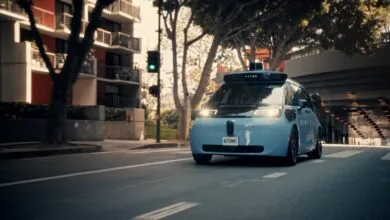
Thrun is hardly a novice. He first caught Google’s attention in 2005 after his Stanford team won a landmark autonomous-vehicle race, navigating a 132-mile desert course without a human driver. That victory proved autonomy could function outside the lab and made Thrun a marquee name in the field. Google co-founder Larry Page soon recruited him to lead the company’s self-driving car project, which eventually became Waymo, now the most visible robotaxi operator in the US.
His résumé extends well beyond vehicles. Thrun co-founded Google Brain, the search giant’s early AI lab, as well as the Google X moonshot unit and the online education company Udacity. He also led Kittyhawk, a flying-car startup that has since shut down. Each endeavor chased a large, hardware-heavy problem, the same terrain Dulo now occupies.
That history cuts both ways. It grants Dulo instant credibility and an unusually smooth path to capital in this market. It also includes at least one high-profile failure, a reminder that a decorated founder does not guarantee a hard robotics bet will succeed.
More question than answer
For now, Dulo is closer to a name than a product. There is no disclosed funding, no product, no timeline, and no customers, only a one-line mission, a stealth label, and a roster of experienced hands. Thrun made clear he was not ready to elaborate, and Business Insider noted that little else about the company is publicly available.
What is clear is the shape of the wager. Dulo aims to bring the foundation-model approach that reshaped software to the slower, more stubborn world of physical manufacturing. The open question is whether that strategy can accelerate production the way Thrun’s desert-race car once accelerated the timeline for self-driving. The stealth startup has yet to begin answering, but the bet is set.
(Source: The Next Web)