Waymo’s new Chinese-built robotaxi is now carrying riders
▼ Summary
– Waymo has launched the Ojai, an all-electric Zeekr-made minivan, to select riders in Los Angeles, Phoenix, and San Francisco for free feedback rides, with plans for wider expansion.
– The Ojai is designed to lower costs and improve durability, featuring Waymo’s modular sixth-generation system with 13 cameras and four lidar sensors for scalability across vehicles.
– The vehicle includes rider-friendly features like a flat floor, low step-in, gondola doors, charging ports, grab bars, braille, and adaptive screens for route and climate control.
– Waymo is scaling production of the Ojai at its Arizona factory to tens of thousands of units annually, aiming to grow its fleet beyond the current 3,700 Jaguar I-Pace vehicles.
– The launch comes amid challenges, including suspended freeway services in multiple cities to address construction zone and flooding issues, but offers Waymo a path to scale and revenue.
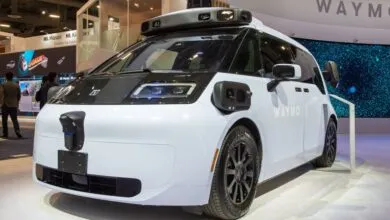
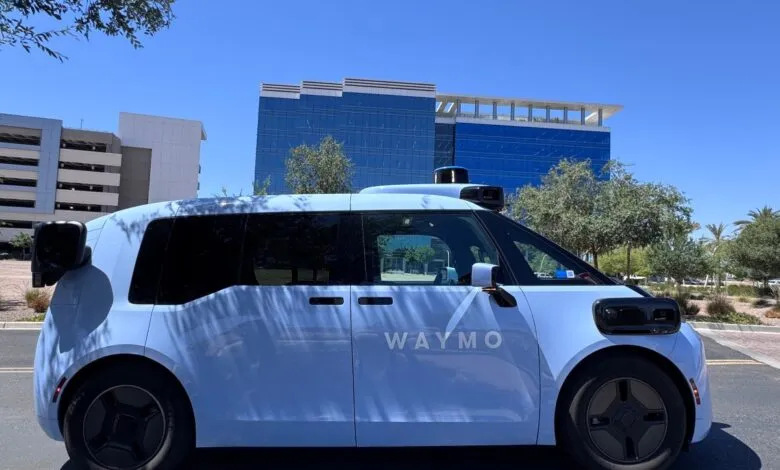
Waymo has quietly begun offering select passengers in Los Angeles, Phoenix, and San Francisco rides in its newest robotaxi: a fully electric, minivan-style vehicle built to cut costs and endure the heavy wear and tear of hundreds of thousands of trips. The Alphabet-owned company announced Thursday that access to the modified Zeekr minivan, called the Ojai (pronounced oh-hi), will eventually expand to more riders and cities. For now, a limited group of customers is receiving free rides in the Ojai to provide feedback and help fine-tune the overall experience.
This launch follows years of development and testing, all focused on creating a vehicle that is accessible, comfortable, easy to maintain, and critically, cheaper to build and operate. Yet the Ojai’s debut arrives during a turbulent period for Waymo. The company recently paused robotaxi operations on freeways in Los Angeles, Miami, Phoenix, and San Francisco to improve vehicle behavior in construction zones. Service was also suspended in Atlanta, Georgia and San Antonio, Texas to address flooding-related problems.
The arrival of the blue-hued minivan may not erase these challenges, but it offers Waymo a genuine opportunity to achieve scale and generate meaningful revenue. While the vehicle relies entirely on Waymo’s own hardware and software, its foundation comes from Zeekr, a brand owned by China’s Geely Holdings. The two companies partnered in 2021 and unveiled a concept of the purpose-built robotaxi in late 2022. Waymo has spent nearly two years testing the prototype and a production-intent version on public roads.
Designed in Sweden, the minivan is built on the SEA-M architecture, a refined version of Zeekr’s original Sustainable Experience Architecture tailored for “future mobility products” such as robotaxis and logistics vehicles. The Ojai is equipped with Waymo’s sixth-generation system, which includes 13 cameras, four lidar sensors, six radar units, and an array of external audio receivers. This modular system is central to Waymo’s commercial strategy because it can be adapted to multiple vehicle types, including the Zeekr minivan and the Hyundai Ioniq 5, both already announced.
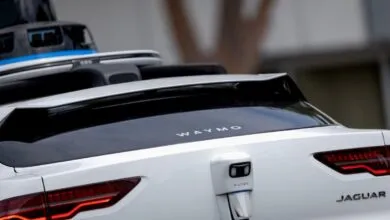
The Ojai reflects the technological progress and lessons learned from delivering more than 500,000 paid robotaxi rides each week. It is also designed to accelerate fleet growth, which currently stands at about 3,700 Jaguar I-Pace vehicles. Stripped-down Zeekr vehicles are shipped to Waymo’s Arizona factory, where they are outfitted with all the robotaxi features. The company says it is now scaling toward a capacity of tens of thousands of units annually, starting with the Ojai and followed by the Hyundai Ioniq 5.
The result is a vehicle with a flat floor, low step-in height, and gondola-style doors on both sides for easy entry and exit. Additional rider-friendly features include charging ports, cup holders, increased leg and head room, grab bars, braille above various buttons, and three large adaptive screens for controlling the route, music, climate, and rider tips. The interior is easier to clean, and the vehicle offers faster charging, a modular design, and increased battery capacity , all details aimed at reducing costs and improving maintenance and repair efficiency.
(Source: TechCrunch)