Startup’s super metals target military drones, luxury watches, and knives
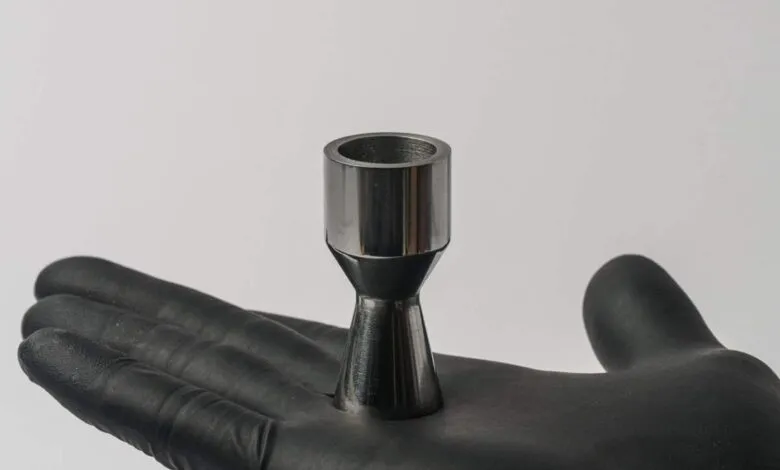
▼ Summary
– Foundation Alloy has developed a solid-state alloying technique that smashes metal powder particles together instead of melting them, using around an order of magnitude less energy.
– The startup is selling bespoke metals in small batches and running pilots with automotive, aerospace, semiconductor, defense, and consumer goods industries.
– Foundation Alloy raised a $22 million Series A round led by Voyager Ventures to scale production to several tons per week by 2027.
– The technology emerged from 20 years of scientific research on metals at the nanometer scale, led by Tim Rupert and Chris Schuh, who previously co-founded Desktop Metal.
– The solid-state process creates homogeneous alloys that solve age-old tradeoffs, enabling metals that withstand both heat and mechanical stress, such as tooling parts for automakers and drone components for defense.
The fundamental process of creating metal alloys has remained largely unchanged since the Bronze Age: melt different metals together in a pot and stir until they combine into something stronger. But an early-stage startup called Foundation Alloy is rewriting that ancient recipe with a completely different approach.
Instead of applying heat, the company beats metal powders into submission using a specialized milling process. “We’re actually smashing metal powder particles together instead of melting them,” said Jake Guglin, co-founder and CEO of Foundation Alloy. “We can create properties that other people can’t.”
So far, the startup has been selling its custom alloys in small quantities, but demand is far outpacing supply. “We’re constrained by our ability to make stuff, not by the people that want to take it,” Guglin told TechCrunch. That appetite spans industries from automotive, aerospace, and semiconductors to defense, luxury watches, and chef’s knives. The company is currently running pilots with partners in all these sectors.
“We can save them tons of money and tons of tons of waste,” Guglin added.
To scale production to several tons per week by 2027, Foundation Alloy has raised a $22 million Series A round led by Voyager Ventures. The round also includes Trust Ventures, Yamaha Motors, America’s Frontier Fund, Overlap Holdings, Material Impact, Engine Ventures, El Cap, and Kanematsu Corporation, which will distribute the startup’s metals in Japan and Southeast Asia.
The technology behind Foundation Alloy stems from two decades of scientific research. Tim Rupert and Chris Schuh led studies on how metals behave at the nanometer scale, laying the groundwork for the company’s solid-state alloying method. Schuh previously co-founded Desktop Metal and Xtalic, so he knows the startup terrain well.
While nearly all commercial alloys today are made by melting, Foundation Alloy uses a special mill that repeatedly slams different metal powders together until they fuse into a single new material. By skipping the melting step, Guglin says the process uses roughly ten times less energy.
The goal of any alloying process is to create a uniform crystalline structure that blends two or more metallic elements. A perfect alloy would be completely homogeneous, with every crystal pattern replicated consistently throughout. Traditional melting does a decent job, but it leaves microscopic voids that can make the metal more brittle or less heat-resistant. It also fails for metals with vastly different melting points, leaving entire classes of potentially useful alloys unattainable.
Foundation Alloy’s solid-state process overcomes these limits, allowing it to create materials that solve longstanding tradeoffs between heat tolerance and mechanical strength. Metals designed for high heat tend to be brittle, while tough metals used in tooling degrade quickly under thermal stress. The startup has produced alloys that can handle both.
Some of the first products include tooling parts for automakers, aerospace firms, and defense contractors. In the defense sector, one early application is drone components. Many supply chains for these parts were originally built for F-35 fighter jets. “They think about making 100 perfect parts per year,” Guglin said, while drones need closer to 10,000 per month.
Guglin compares alloying to cooking. Two chefs can use the same ingredients but end up with vastly different results depending on technique. “The quality of the output of a dish is not just based on the ingredients, it’s how you cook it,” he said. “We have a new way to cook.”
(Source: TechCrunch)