Ex-Intel CEO Pat Gelsinger Invests in PowerLattice’s Power-Saving Chiplet
▼ Summary
– Major tech companies face compute capacity shortages for AI, driving demand for more data centers and making energy efficiency critical for chip manufacturers.
– PowerLattice, founded in 2023 by engineers from Qualcomm, NUVIA, and Intel, claims its technology reduces chip power needs by over 50%.
– The startup raised $25 million in Series A funding led by Playground Global and Celesta Capital, with Pat Gelsinger endorsing its team and approach.
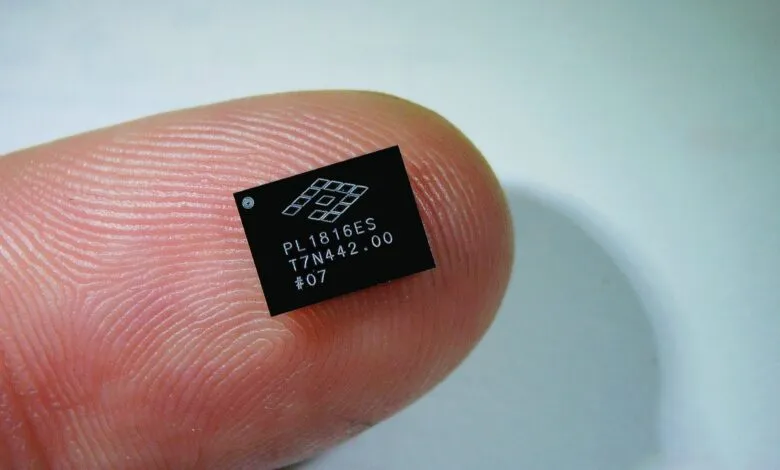
– PowerLattice’s innovation involves a tiny power delivery chiplet that minimizes energy loss by bringing power closer to the processor.
– Initial chiplets are being produced by TSMC, with plans for broader customer testing in 2026 targeting companies like Nvidia, AMD, and AI chip developers.
The soaring demand for artificial intelligence is placing immense pressure on global compute capacity, driving an urgent need for more energy-efficient semiconductor solutions. As tech giants scramble to build additional data centers for training and running large language models, power consumption has become a critical bottleneck for the entire industry. This challenge has created a significant opportunity for innovations that can drastically reduce the energy footprint of advanced computing.
Enter PowerLattice, a semiconductor startup founded in 2023 by a team of seasoned engineers from Qualcomm, NUVIA, and Intel. The company claims its technology can slash the power requirements of computer chips by more than half. Emerging from stealth mode, PowerLattice recently announced a $25 million Series A investment. The funding round was led by Playground Global and Celesta Capital, bringing the startup’s total raised capital to $31 million.
Pat Gelsinger, a general partner at Playground Global and the former CEO of Intel, expressed strong confidence in the team. “This is the hard stuff: How do you get power into the device? There are very few teams and people that can do it,” Gelsinger stated. “We have assembled what I’d argue is the dream team of power delivery.” His involvement provides a powerful endorsement, given his considerable influence and deep expertise within the semiconductor sector.
The initial meeting between the PowerLattice founders and Playground Global proved memorable. Gelsinger recounted that CEO Dr. Peng Zou and his team were so impressed by his presence that they requested a selfie. The feeling was mutual, as Gelsinger himself came away genuinely convinced by the potential of PowerLattice’s technological approach.
The company’s innovation is conceptually straightforward yet promises profound impact. It involves a miniature power delivery chiplet engineered to position power sources much closer to the processor core. This proximity dramatically cuts down on energy loss that typically occurs across longer distances on a chip.
After two years of development, PowerLattice has hit a major milestone. Its inaugural batch of chiplets is currently in production at TSMC. In partnership with an undisclosed manufacturer, the startup is now undergoing functional testing of its product, according to Gelsinger.
Looking ahead, PowerLattice intends to make its technology available for testing by other potential clients during the first half of 2026. These trials will be crucial, as the company’s target customer base includes industry heavyweights like Nvidia, Broadcom, and AMD, alongside specialized AI chip developers such as Cerberus, Grok, and other Playground-backed firms like d-Matrix and NextSilicon.
While most major chip companies maintain internal teams dedicated to power efficiency, Gelsinger believes PowerLattice’s novel solution will capture their attention. He anticipates that clients might initially adopt a dual-sourcing strategy, allocating some volume to PowerLattice’s method while continuing with their traditional approaches. “But we think our ability to capture meaningful share will quickly emerge,” he added.
PowerLattice is not alone in tackling the semiconductor energy crisis. Its closest competitor appears to be Empower Semiconductor, which secured a $140 million Series D round led by Fidelity Management & Research Company last September.
Nevertheless, Gelsinger remains confident, describing PowerLattice’s claimed 50% efficiency improvement as an “extraordinary” achievement. He expects the company will soon pursue a substantially larger funding round to scale manufacturing operations. “The idea is bold, the benefits are large, and I expect others will be saying, ‘That’s a great idea. Let me try as well,'” Gelsinger remarked.
(Source: TechCrunch)