Neanderthals Used Rhino Teeth as Hammers, Experiments Show
▼ Summary
– Experimental archaeology, where researchers replicate ancient activities, was used to test if Neanderthals used rhino teeth as tools.
– At Neanderthal sites like Panxian Dadong and Payre, rhino teeth make up 74–91% of rhino remains, far more than expected.
– Many teeth showed markings like pits, cracks, and scratches, consistent with being used as hammers to make stone tools.
– Researchers created similar markings by using rhino teeth to knap stone tools, supporting the idea Neanderthals used them.
– Obtaining rhino teeth for the experiment was difficult due to rhinos being threatened and trade heavily regulated.
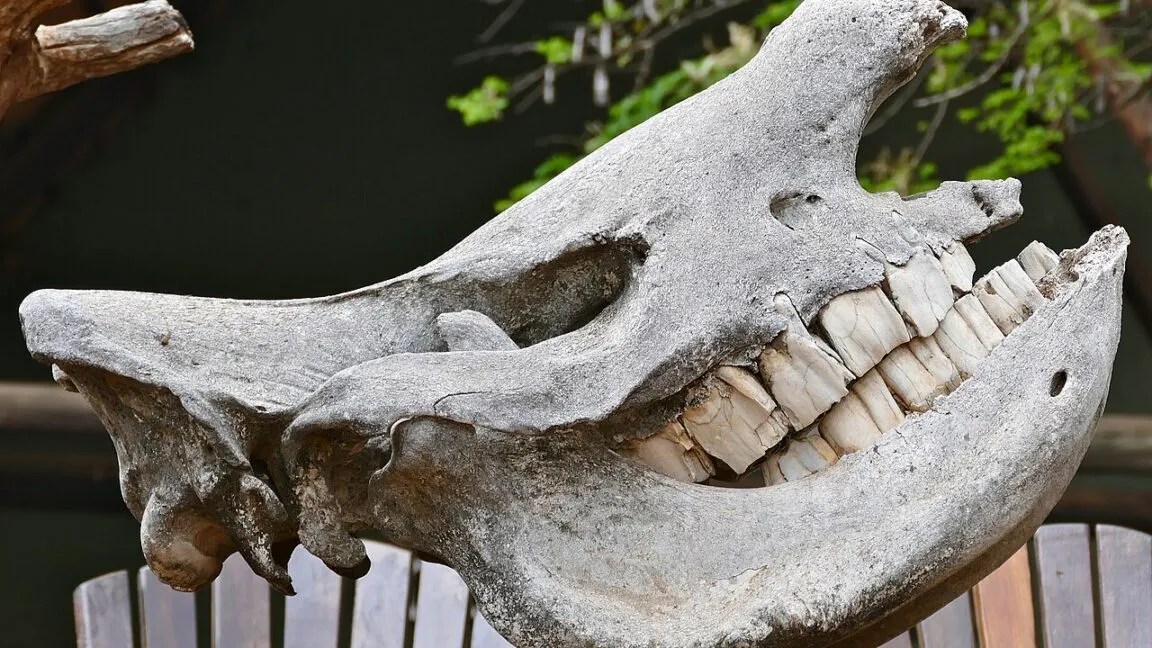
Experimental archaeology often requires researchers to get their hands dirty. In this case, they had to get destructive with some of the most tightly regulated animal parts on the planet. A new study suggests that Neanderthals routinely used rhinoceros teeth as hammers, and to prove it, scientists had to replicate that ancient behavior by smashing stone tools against real rhino molars.
The investigation began when archaeologists noticed an unusual abundance of rhino teeth at certain Neanderthal sites across Europe and Asia. While Neanderthals are known to have hunted a now-extinct species of rhinoceros, the sheer volume of teeth left behind seemed deliberate. At Panxian Dadong, a cave site in southern China dating back between 300,000 and 130,000 years, a staggering 74 percent of all rhino remains are teeth, not bones. Similarly, at Payre, a rock shelter in southeast France, teeth account for 91 percent of the rhino fossils found.
Those teeth bore distinct markings that looked like tool-use damage: clusters of shallow pits and overlapping cracks, consistent with repeated pounding in the same area. Thin, shallow scratches also appeared, likely from contact with the sharp edges of stone tools. To confirm whether these marks were indeed the result of human activity, University of Aberdeen archaeologist Alicia Sanz-Royo and her team needed a baseline for comparison. That meant they had to knap stone tools using actual rhino teeth.
The challenge? Rhinos are a threatened species, and international law strictly regulates the trade of their parts. Acquiring the teeth required navigating complex legal and ethical hurdles. Once obtained, the researchers put the teeth through rigorous testing, striking them against stone to create tools. The resulting damage closely matched the patterns seen on the ancient fossils, providing strong evidence that Neanderthals intentionally collected and used rhino teeth as hammers.
This discovery expands our understanding of Neanderthal toolkits, which already included stone, bone, and wood. It also highlights the resourcefulness of these ancient hominins, who repurposed every part of the animals they hunted. The study underscores that Neanderthals were not just scavengers but sophisticated toolmakers who adapted their materials to fit specific tasks.
(Source: Ars Technica)