AMD invests $10B+ in Taiwan AI ecosystem with ASE, SPIL, Helios
▼ Summary
– AMD announced over $10 billion in investments across Taiwan’s semiconductor ecosystem to expand partnerships and scale advanced packaging for AI infrastructure.
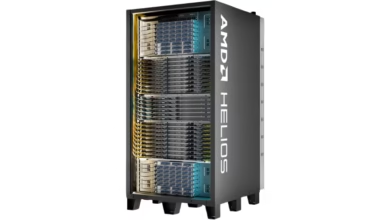
– The investment supports the rack-scale Helios platform, scheduled for customer deployment in the second half of 2026.
– Partnerships include ASE and SPIL for next-generation 2.5D bridge interconnect technology, with other unnamed Taiwan suppliers.
– The commitment positions AMD alongside Nvidia in securing foundry and packaging capacity for H2 2026 and H1 2027 production windows.
– AMD did not disclose the allocation schedule, specific customer contracts, per-rack costs, or the opex versus capex breakdown of the investment.
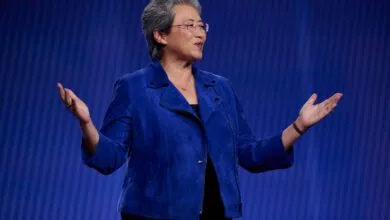
AMD has unveiled a sweeping commitment exceeding $10 billion across Taiwan’s semiconductor ecosystem, targeting advanced packaging, silicon innovation, and manufacturing capacity for its upcoming Helios rack-scale platform. The investment, announced Wednesday by Chair and CEO Lisa Su, is slated to support customer deployments in the second half of 2026.
The multi-year initiative focuses on scaling next-generation 2.5D bridge interconnect technology through partnerships with ASE and SPIL, as well as other undisclosed Taiwan-based suppliers. This infrastructure push is designed to underpin the Helios platform’s full-rack architecture, which AMD has been positioning as a direct competitor to Nvidia’s GB200 and GB300 NVL72 systems over the past three quarters.
Su framed the announcement squarely around surging demand for AI compute. “As AI adoption accelerates, our global customers are rapidly scaling AI infrastructure to meet growing compute demand,” she stated, signaling that the Taiwan capacity build is tied to a customer pipeline AMD has not publicly detailed.
The timing is strategic. With the Google-Blackstone $25 billion TPU-cloud joint venture and broader hyperscaler capital expenditure commitments for 2026, a procurement window has opened where non-Nvidia accelerator suppliers can credibly compete for market share,provided the manufacturing and packaging supply chain can deliver. Taiwan’s foundry and packaging capacity remains the critical bottleneck for the entire frontier AI silicon supply chain, regardless of which U. S. accelerator brand a customer ultimately chooses.
AMD’s investment positions the company alongside Nvidia’s own multi-year commitments with TSMC and packaging partners, securing a front-row slot in the foundry queue for the H2 2026 and H1 2027 production windows. The geopolitical dimensions of this supply chain dependency, however, remain unaddressed in the official materials.
This announcement lands amid a flurry of activity in the Nvidia-alternative compute landscape. Over the past three weeks, Tenstorrent’s takeover talks with Intel and Qualcomm, and Alibaba’s T-Head Zhenwu M890 announcement, have highlighted two visible non-Nvidia paths: one from the U. S. and Western ecosystem, the other from China’s domestic supply chain. AMD represents the third leg,the established U. S. challenger with the production-line credibility to ship into hyperscaler deployments at scale.
AMD did not disclose the multi-year allocation schedule for the $10 billion-plus commitment, specific customer contracts for the Helios platform, per-rack cost economics relative to Nvidia’s NVL72 systems, or the split between operating and capital expenditure within the investment. The headline figure was filed in an 8-K with the announcement.
This marks the largest single-country AI infrastructure commitment AMD has ever disclosed. The next major proof point will be the first named Helios deployment under the H2 2026 timeline, where both the customer logo and production shipment volumes will become public.
(Source: The Next Web)