Google fixes its most annoying design flaw
▼ Summary
– Google’s 2020 Workspace icon redesign used identical four-color outlines, making apps like Gmail and Calendar hard to distinguish at a glance.
– Google is now revamping Workspace icons with gradients, glow effects, and rounded shapes to improve distinctiveness.
– The new icons reduce harsh angles and align with Material 3 Expressive design, making apps softer and more enjoyable to look at.
– The Gmail icon retains a less distinct ‘M’ outline instead of returning to the classic envelope, but the Meet icon is drastically improved.
– AI-generated app icons on Pixel devices worsen the problem of app identification and clash with the phone’s UI, highlighting the need for thoughtful design.
Remember when minimalism actually felt fresh? When Windows 7 peeled away the clutter of Windows XP, and Android finally stopped looking like a hobbyist project? That era was a breath of fresh air. But somewhere along the way, we realized that maybe, just maybe, we actually missed the chaos. Those solid blocks of color? They turned out to be a terrible way to communicate. That rigid, featureless UI? It drained the life out of our digital experiences. We’re not going back to the garish 90s or 00s, but minimalism clearly went too far. And Google, arguably the biggest offender, is finally fixing its most annoying design flaw.
Identical app icons aren’t helpful, and six years of confusion are coming to an end. Back in 2020, as part of G Suite’s rebranding to Google Workspace, the company unveiled a dramatic redesign for five core apps: Gmail, Calendar, Drive, Docs, and Meet. While the Docs icon was swapped out quickly, the others stuck around, and they’ve been a source of frustration ever since. Instead of distinct colors and shapes, these icons all followed the same rigid template. The four-color outlines did help identify them as Google apps, but they made it nearly impossible to tell which app was which at a glance. That’s a fundamental failure of icon design. You had to squint and focus to know what you were tapping. And it wasn’t just those five; Maps, Podcasts, Home, and Google One all suffered from the same problem.
To me, this was the pinnacle of useless minimalism. I don’t mind a clean interface, but when design choices actively make a system harder to use, I have a problem. So Google’s return to the classics isn’t just welcome; it’s necessary. The new icons aren’t perfect, but they’re a vast improvement over the current mess.
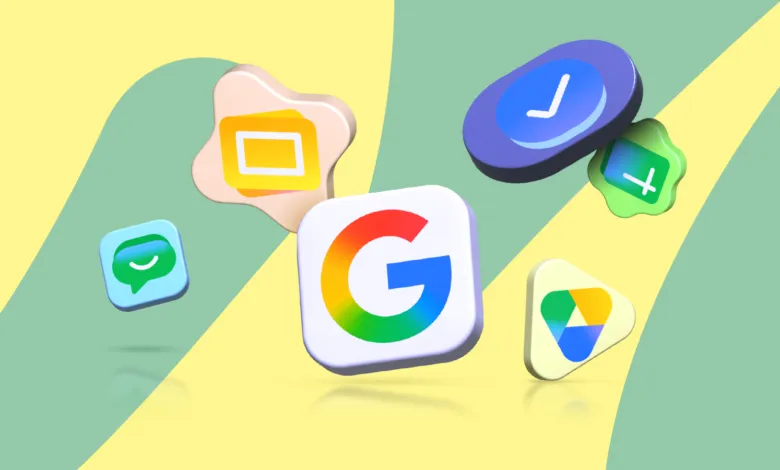
According to a report from 9to5Google, the Workspace icons are getting a major visual revamp. Instead of flat, blocky colors, Google is embracing gradients, glow effects, and rounded shapes. We’ve already seen new Gemini-inspired icons for Photos, Maps, and Home appear on our devices, and the new Gmail icon fits right in. But the rest of the changes feel like a return to the previous, more distinctive generation. Meet, Chat, and Calendar are switching from the four-color block design to single-color icons with gradient effects. Drive is ditching its red in favor of a simpler three-color look. And Docs, Sheets, Slides, Tasks, and Keep have simply been rounded out and given the gradient treatment. The result? Icons that are far more distinct than their predecessors. While some similarities remain, it’s nowhere near as problematic as before.
These new icons also feel softer and more enjoyable to look at. The harsh angles that defined early Material You designs are being replaced with natural, fluid shapes. I’ve always been frustrated by those sharp corners, so this shift toward Material 3 Expressive is a welcome surprise. The Gmail icon still uses that ‘M’ outline, which is inferior to the classic envelope of pre-2020 Gmail. I wish Google had gone further there. But the Meet icon is drastically improved, and the pronounced lightbulb effect for Keep is a nice touch.
Overall, this change is a positive one. I love the return to gradient effects, and I’d be even happier to see it spread across the entire Android UI. Google recently launched a tool on Pixel devices that creates AI-generated app icons for all your apps. While it technically solves the inconsistency problem among themed icons, the result makes it even harder to tell which app is which, and they clash with your phone’s UI, widgets, and app drawer. It’s obvious why Google launched that feature, but it’s not what we need. AI isn’t capable of creating good UI. We need carefully thought-out designs that make it easy to identify apps at a glance. While Google’s upcoming changes could use more work, they are nevertheless a huge step in the right direction.
(Source: Android Police)
