Google’s AI agent struggle signals industry-wide challenge
▼ Summary
– Google announced new AI agents at I/O 2026 that can run continuously in the background and integrate with its own tools and external ones.
– The open-source AI agent platform OpenClaw, which gained millions of users since November, drove industry interest in agents by allowing chat-based interaction and 24/7 operation.
– Google’s consumer agent Gemini Spark is cloud-based, runs 24/7 without a laptop, and will work across Google services and over 30 external partners.
– Google is expanding its Antigravity developer platform for building autonomous agents and introducing Gemini 3.5 Flash, a faster, cheaper model for long-running tasks.
– Google’s Gemini app now serves over 900 million monthly users, giving it scale and financial ability to subsidize costs, positioning it as a key contender to make AI agents widely useful.
For years, the tech industry has promised that artificial intelligence would deliver a capable personal assistant for everyone. What we got instead was something closer to a well-meaning but clueless intern. Over the last six months, however, that narrative has started to shift, largely thanks to the viral, open-source AI agent platform OpenClaw. Now, among the leading AI labs racing to replicate that success, one company appears uniquely positioned to make AI agents work at scale: Google.
At its I/O 2026 conference, Google unveiled a suite of new AI agents designed to gather information, plan events, summarize your inbox and calendar, and more. These agents can run continuously in the background, and the company promises they will integrate seamlessly with Google’s own tools as well as external services. Google is also expanding its developer tools and revamping Search with additional generative AI capabilities. Some features roll out this week, while others will arrive in the coming months. The strategy is clear: borrow the features that fueled OpenClaw’s success and amplify them using Google’s deep understanding of our digital lives.
“Before this, I think AI agents were more of an idea in research,” Koray Kavukcuoglu, CTO of Google DeepMind and Google’s chief AI architect, told The Verge. This year, he hopes, they will be “really in our lives.”
OpenClaw made every AI lab sit up and take notice. Since the launch of ChatGPT in late 2022, AI agents had been a buzzword, but they remained largely science fiction until OpenClaw gained millions of users after its debut last November. The platform allowed people to chat with their agents through everyday apps like WhatsApp and Telegram, and as long as a laptop was open, the agents could run 24/7. They handled basic tasks reliably, though with clear flaws.
OpenAI was one of the first to act, acquiring OpenClaw in February (though it remains open-source) and hiring its creator, Peter Steinberger. But Google’s existing empire of services gives it a significant advantage. Where OpenClaw drove adoption by integrating with tools people already used, Google can do the same via MCP , and build even deeper links into its own products, including Gmail, Drive, Docs, Photos, and Search. If anything, it’s surprising Google took this long.
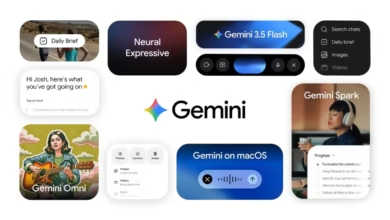
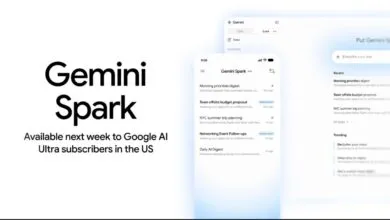
One of Google’s biggest bets this year is Gemini Spark, its new consumer AI agent. Google promises Gemini Spark can handle tasks across its own services and more than 30 external partners coming soon, including Dropbox, Uber, and Spotify. It’s cloud-based, can run 24/7 without keeping a laptop open, and syncs across the web, Android, and iOS. The agent rolls out to trusted testers this week, with a beta available in the US next week on Google’s Ultra plan.
Google highlights typical uses for Gemini Spark, like shopping, researching, and coordinating schedules. But the company also hopes people will find their own creative applications. Josh Woodward, Google’s Gemini app lead, says he’s been using Gemini Spark to plan a neighborhood block party, deploying agents to track RSVPs and what attendees are bringing, send reminders, and figure out when his homeowners’ association allows placing a giant inflatable. Outside Spark, Google is also introducing the Daily Brief, a morning update similar to OpenAI’s ChatGPT Pulse.
If Gemini Spark works as advertised, it could mark a major step forward for traditional tech companies’ AI agents. Google’s earliest agentic experiments were painfully slow and hijacked your browser. By last year’s Gemini 3 release, its agents worked well for some tasks , like cleaning out an inbox , but still failed at others. Now, Google is mirroring key elements of OpenClaw: long-running agents that operate around the clock in the background, giving them more context about their tasks and allowing users to text or email their agents directly.
Starting this summer, Google’s AI search is also getting agents , and promising to do more than just eat up screen space and recommend pizza with glue. Its “information agents” will perform continuous background research, like tracking stock market shifts or finding the best picnic day based on weather.
If Google can’t make AI agents useful, it won’t have many excuses to fall back on.
Google also announced an expansion to Antigravity, the agentic development platform it introduced about six months ago. A new standalone Antigravity desktop app will serve as a central hub for agent interaction, and the entire system is now designed as a platform to build and manage autonomous agents. This expansion follows similar tools from OpenAI and Anthropic, which have tried to broaden their successful coding services into more approachable tools for non-programmers.
All of this will be powered by a new model series: Gemini 3.5. The initial entry, Gemini 3.5 Flash, should be available next month. The model is expected to have significantly better coding capabilities than Gemini 3, which launched to great fanfare last November. It’s clearly designed to leapfrog updates from Anthropic, known for its coding prowess, and OpenAI. Gemini 3.5 Flash is especially good “when deploying multiple agents simultaneously and completing long-running tasks,” Kavukcuoglu told reporters Monday. It’s also supposed to be four times faster than other frontier models and less than half (or in some cases, one third of) the price , a critical factor for 24/7 AI agents, where token costs add up quickly.
In the world of AI agents, Google will still be playing catch-up with the one-man team behind OpenClaw. But it’s a long-standing frontrunner in the AI race, and its app now serves more than 900 million users per month, executives told reporters Monday, across more than 230 countries and 70 languages. Compared to dedicated AI companies under increasing financial pressure, Google can at least temporarily subsidize costs to attract users. And while its agents haven’t yet faced the real world, they’re headed in a promising direction. If any AI company can make agents truly useful, it’s Google. If it can’t, the whole idea might need a rethink.
(Source: The Verge)