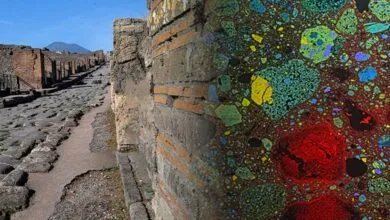
Alternative Rock Could Clean Up Cement Emissions
▼ Summary
– Cement production accounts for about 8% of global CO₂ emissions, with direct process emissions from limestone conversion being larger than emissions from heating kilns.
– A new paper in Communications Sustainability proposes eliminating direct emissions by removing the assumption that limestone must be used for cement.
– Portland cement, developed in the 1800s, is made by heating limestone, which releases CO₂ when oxygen is pulled from calcium carbonate.
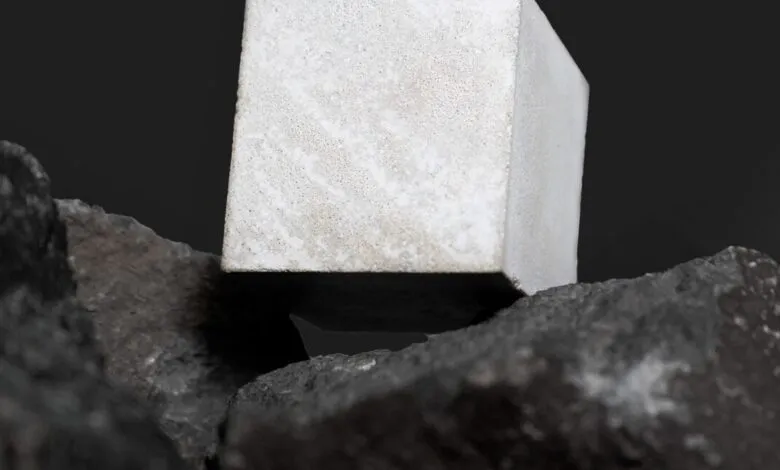
– The authors have made Portland cement from silicate rocks like basalt at lab scale, which contains calcium but no carbon.
– This process uses acid to leach calcium from basalt, then precipitates it as calcium hydroxide, requiring less heat and releasing only water vapor.
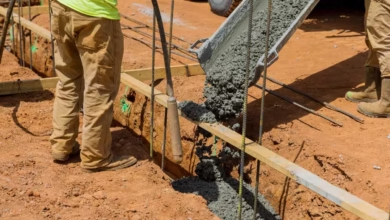
Cement production alone is responsible for roughly 8 percent of global CO₂ emissions, a staggering figure that has spurred widespread efforts to reduce its environmental footprint. While improving efficiency and switching to cleaner energy sources can help, a stubborn problem remains: the chemical process of turning limestone into lime releases CO₂ gas as a direct byproduct. These direct process emissions actually surpass the emissions generated by burning fuel to heat the kilns.
A new study published in Communications Sustainability proposes a way to eliminate these direct emissions altogether by challenging a fundamental assumption. The key question: What if we simply stop using limestone cement?
Rethinking Portland Cement
The material we know as Portland cement has remained largely unchanged since its development in the 1800s. The traditional recipe requires heating limestone, or calcium carbonate, and mixing it with clay or coal ash. This yields calcium oxide, the essential lime, but it also forces the release of CO₂ when an oxygen atom is stripped from the carbonate molecule.
The researchers behind the new paper include a CEO and an engineer from a company that claims to have produced Portland cement from silicate rocks like basalt at the lab scale. Basalt contains a mix of minerals rich in calcium, aluminum, iron, magnesium, sodium, silicon, and oxygen. Notably, carbon is absent from that list. The core insight is that limestone is not the only viable source of calcium oxide.
Extracting these components from basalt is more complex than the simple, single-step limestone process. It resembles a refining or recycling operation. Acid can leach elements like calcium out of the rock, and then a chemical or energetic process precipitates that calcium as calcium hydroxide. This material can then be fed into a kiln with selected additives. Because it requires less heat than limestone processing, the result is genuine Portland cement with only water vapor as a byproduct.
(Source: Ars Technica)