US races to halt AI recreations of dead pilots’ voices
▼ Summary
– Internet sleuths used software and AI to re-create pilots’ voices from a fatal cargo plane crash.
– The NTSB suspended public access to its accident database because federal law prohibits releasing cockpit audio.
– The NTSB stated that advances in image recognition allowed reconstruction of cockpit audio from sound spectrum imagery.
– UPS Flight 2976 crashed in Louisville on November 4, 2025, killing three pilots and 12 people on the ground.
– A 1990 federal law bans the NTSB from releasing cockpit voice recordings to protect crew privacy.
The US government has moved to block public access to its crash investigation database after online sleuths used AI tools and software to reconstruct the final cockpit voices of pilots killed in a cargo plane disaster. The National Transportation Safety Board (NTSB) confirmed on May 21 that its online docket system is now “temporarily unavailable” while officials review what materials allowed individuals to recreate audio from cockpit voice recorders,a direct violation of federal privacy law.
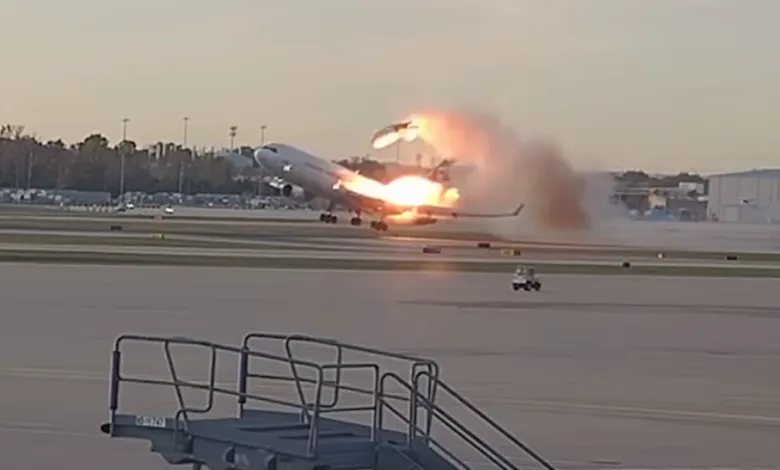
The controversy centers on the November 4, 2025, crash of UPS Flight 2976, an MD-11F cargo aircraft that broke apart shortly after takeoff from Louisville, Kentucky. A structural failure caused an engine to detach as the plane left the runway, killing all three pilots aboard, including a relief officer. Twelve people on the ground also died, and 23 others were injured. In the aftermath, internet investigators used sound spectrum imagery released by the NTSB to approximate the cockpit audio from the doomed flight.
“The NTSB is aware that advances in image recognition and computational methods have enabled individuals to reconstruct approximations of cockpit voice recorder audio from sound spectrum imagery released as part of NTSB investigations,” the agency stated, specifically citing the ongoing probe into the UPS crash. “The NTSB does not release cockpit audio recordings.”
Congress enacted a federal law in 1990 that explicitly prohibits the NTSB from publicly sharing any part of a cockpit voice or video recorder, a measure designed to protect air crew privacy. That legislation followed a heated backlash from airline pilots after a Dallas TV station aired cockpit conversation from the August 1988 crash of Delta Air Lines Flight 1141 at Dallas-Fort Worth International Airport. Now, nearly four decades later, the same privacy concerns are being tested by the rapid evolution of AI reconstruction technology.
The NTSB has not indicated when the database will be restored, but the move underscores a growing tension between public transparency and the legal safeguards meant to shield the final moments of those who die in aviation disasters.
(Source: Ars Technica)