DoorDash expands into drone delivery
▼ Summary
– DoorDash launched DoorDash Air, a drone delivery service, after receiving FAA Part 135 certification to legally operate commercial drone deliveries in the U.S.
– The service will start with limited pilot programs using short-distance, line-of-sight flights, with no detailed timeline for broader use.
– For autonomous long-distance flights, DoorDash needs FAA approval for Beyond Visual Line of Sight technology, a certification already held by Amazon, Wing, and Zipline.
– DoorDash Air was developed by DoorDash Labs, which also created the autonomous sidewalk delivery bot Dot, now operating in several U.S. cities.
– DoorDash’s strategy involves an operating system that coordinates humans, drones, and sidewalk bots to determine the best delivery method for each order.
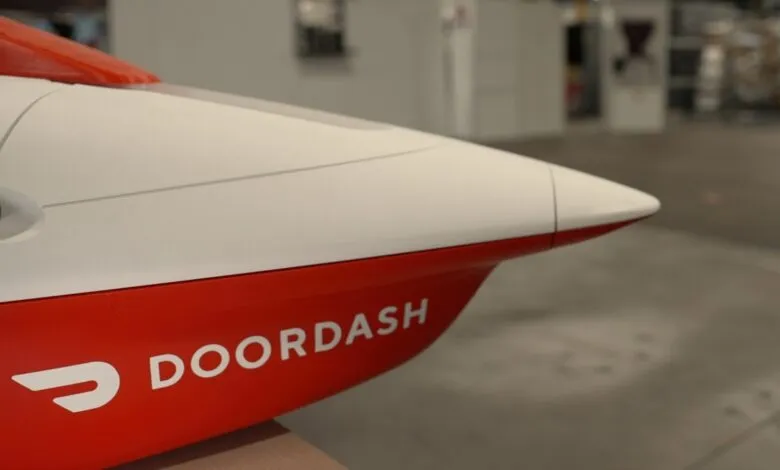
DoorDash is making a serious push into aerial logistics with the launch of DoorDash Air, a new drone delivery division that includes the development of its own custom unmanned aircraft. The initiative, spearheaded by the company’s robotics and autonomy team, is designed to eventually integrate directly into the DoorDash app alongside traditional delivery options.
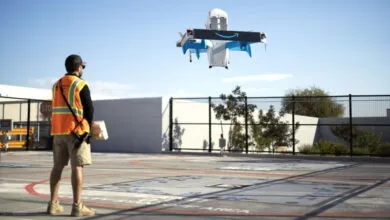
The company announced the new venture after securing a Part 135 air carrier certification from the U. S. Federal Aviation Administration (FAA). This critical approval legally permits DoorDash to operate a commercial drone delivery service across the United States. However, don’t expect to see the company’s proprietary drones dropping off lunch orders tomorrow or even next month. DoorDash has not provided a concrete timeline for when its aircraft will enter active service. Instead, the rollout will likely begin with small-scale pilot programs where the drones fly short distances while staying within the operator’s line of sight.
Scaling up to longer, fully autonomous flights will require the FAA to sign off on DoorDash’s Beyond Visual Line of Sight (BVLOS) technology. This is a certification that industry peers like Amazon, Wing, and Zipline have already obtained in recent years.
Despite building its own hardware, DoorDash is not abandoning its existing partnerships. The company continues to work with Wing and Flytrex. DoorDash first teamed up with Alphabet’s Wing in 2022 for a drone delivery trial in Australia, and that collaboration expanded to select U. S. cities, including Dallas-Fort Worth, in 2024.
DoorDash Air was born inside DoorDash Labs, the same research and development team that created Dot, the autonomous sidewalk delivery bot launched in September 2025. Dot is now operating commercially in several Phoenix suburbs,Tempe, Mesa, Gilbert, and Chandler,as well as in Fremont, California.
While side bots and drones might seem far removed from DoorDash’s core business,a marketplace app that connects customers with independent contractors,co-founder and chief product officer Stanley Tang argues there is a clear logic behind the shift. “We didn’t start with the question, ‘What’s the coolest autonomous tech we could make?’ We started from first principles: What’s the actual customer problem that needs to be solved?” Tang wrote in a blog post announcing DoorDash Air.
From DoorDash’s perspective, drones and sidewalk bots are simply different tools within the same broad delivery network. The physical hardware, whether a 350-pound bot or an aerial drone, is only part of the equation. Tang emphasizes that the operating system,the software that determines the best way to get a burrito, sushi, or pad thai to a customer,is equally vital.
DoorDash Labs has already built a software platform called the Autonomous Delivery Platform to manage these complex decisions. According to Tang, this system already works with Dot and human drivers, and it will soon incorporate the drone. The company is tackling the full stack of challenges, from hardware and embedded systems to real-time routing algorithms that decide whether to dispatch a human driver, a drone, or a sidewalk bot.
This complexity was central to Tang’s recruitment pitch in the blog post. “Most autonomy companies work on one layer. At DoorDash, you’re working on all of them simultaneously; nobody else is running all these systems on one network,” he wrote. “DoorDash is where the most interesting problems in autonomy are being solved today.”
(Source: TechCrunch)