Russia’s Soyuz 5: Will Anyone Want to Fly on It?

▼ Summary
– Russia’s new Soyuz 5 medium-lift rocket is nearing its debut launch from Baikonur Cosmodrome by year’s end after nearly a decade of development.
– The rocket was shipped to Kazakhstan’s launch site in November after final processing in Russia, as shown in Roscosmos-released images.
– Soyuz 5 is a conventional response to Western commercial boosters and Russia’s war in Ukraine rather than a major technological advancement.
– Development began to replace the aging Proton rocket and compete with SpaceX’s Falcon 9 for geostationary satellite launches.
– Russia aimed to create a domestically-built medium-lift vehicle as tensions with Ukraine grew, replacing the Ukrainian-designed Zenit rocket.
Following nearly ten years of development, Russia’s Soyuz 5 rocket is preparing for its inaugural flight, anticipated to lift off from the Baikonur Cosmodrome before this year concludes. This medium-lift launch vehicle represents a significant step for the Russian space program as it aims to modernize its fleet and secure a stronger position in the global launch market.
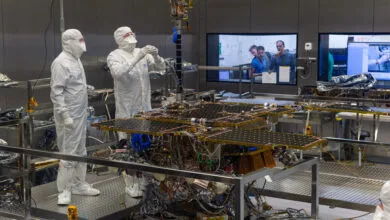
The Russian space corporation, Roscosmos, recently shared photographs showing the final assembly stages of the Soyuz 5 at the Progress Rocket and Space Center located in Samara. After completing these preparations earlier this month, the rocket was transported to its launch site in Kazakhstan, arriving on November 12. These images provide a rare glimpse into the advanced processing phase of a new launch system.
Rather than introducing groundbreaking innovations, the Soyuz 5 is largely seen as a pragmatic response to contemporary challenges. It reflects a strategic shift influenced by the competitive pressure from Western commercial rockets and the geopolitical realities stemming from the ongoing conflict in Ukraine. The success of this conservative design approach in attracting international customers is still an open question.
Work on the Soyuz 5 began almost a decade ago, with the preliminary design phase finalized back in 2017. Russia’s primary objective was to phase out the older Proton booster, which had become less dependable over time. The new rocket is engineered to deliver payloads of up to 20 metric tons to low-Earth orbit, enhancing the country’s launch capabilities significantly. Another driving factor was the desire to offer more competitive pricing in the geostationary satellite launch sector, a market increasingly dominated by SpaceX’s Falcon 9.
The design philosophy behind the Soyuz 5 draws heavily from the Zenit-2 rocket, which remained in service until the 2010s. Originally a Soviet-era design, the Zenit-2 was developed by the Yuzhnoye Design Bureau in Dnipro, Ukraine, with its first and second stages manufactured there. By creating the Soyuz 5, Russia not only sought to match the efficiency and performance of Western alternatives but also to achieve greater industrial independence. As political tensions with Ukraine intensified, establishing a robust, domestically produced medium-lift launch vehicle became a clear national priority.
(Source: Ars Technica)