AI-Designed Thermoelectric Generator Cuts Design Time by 90%
▼ Summary
– Researchers in Japan developed an AI tool called TEGNet that designs thermoelectric generators 10,000 times faster than conventional methods.
– The AI-optimized prototypes achieved conversion efficiencies of about 9% under typical industrial waste heat conditions, ranking among the best for that temperature range.
– TEGNet is a neural-network framework trained on physics equations that can screen thousands of device configurations in milliseconds.
– The tool identified designs that can be made with simpler fabrication and cheaper materials, potentially reducing reliance on expensive bismuth telluride.
– Thermoelectric generators convert temperature differences into electricity without moving parts, but high costs and modest performance have limited their use to niche applications like spacecraft.
Waste heat is everywhere, from car engines and industrial machinery to kitchen appliances and even the human body. Thermoelectric generators can convert some of that lost energy into electricity using compact, solid-state devices that produce power directly from temperature differences, without turbines or moving parts. However, designing materials that make these systems efficient has traditionally been a slow, labor-intensive process requiring lengthy simulations and painstaking experiments to find combinations that conduct electricity while blocking heat.
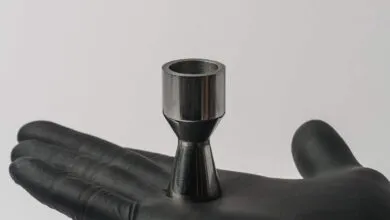
Now, researchers in Japan have developed an AI-powered tool that designs thermoelectric generators 10,000 times faster than conventional methods. Prototypes built based on the tool’s recommendations performed comparably to today’s leading thermoelectric devices, according to a study published 15 April in Nature. The breakthrough could accelerate a long-promised clean-energy technology by dramatically speeding the search for affordable materials and device designs that efficiently convert heat into electricity.
Takao Mori, deputy director of the Research Center for Materials Nanoarchitectonics in Tsukuba, Japan, led the research. “It’s a solid piece of work and points to the future role that AI will play in the design” of such technologies, says Zhifeng Ren, director of the Texas Center for Superconductivity at the University of Houston, who was not involved in the study.
Thermoelectric generators have been around for decades, quietly powering spacecraft, supplying electricity to gas pipelines in remote locations, and running sensors where battery changes are impractical. But high costs and modest performance have largely confined them to niche uses. Broader deployment in oil refineries, steel mills, and other heavy industries has yet to materialize, leaving vast amounts of waste heat untapped.
Large power plants typically rely on steam-driven systems that boil water to spin turbines, which are highly efficient at large scales but require moving parts, maintenance, and high operating temperatures. Thermoelectric generators are better suited for harvesting smaller amounts of heat from surfaces like engine exhaust pipes, factory boilers, server racks, and high-performance electronics.
The slow design process has long hindered progress in thermoelectric generators (TEGs) . Researchers must hunt for materials that conduct electricity efficiently while blocking heat flow, a rare pairing essential for harnessing the Seebeck effect. Traditionally, evaluating a single configuration could take days or weeks using slow physics simulations.
The new AI-based approach, called TEGNet, is a publicly available tool built on a neural-network framework trained to approximate the complex physics equations governing heat flow and electrical transport in thermoelectric materials. Instead of solving these equations from scratch, the model learns how materials behave and treats them as modular components that can be combined in many ways. This allows researchers to rapidly screen thousands of potential device architectures and estimate their performance in milliseconds.
“This speed enables exhaustive exploration of design parameters, uncovering optimal device configurations that might otherwise be overlooked,” wrote materials scientists Jing Cao from Singapore’s Agency for Science, Technology and Research (ASTAR) and Ady Suwardi at Chinese University of Hong Kong in a commentary published in Nature*.
To test the approach, Mori’s team used TEGNet to optimize two types of generator designs. One, a segmented unicouple, stacks multiple thermoelectric materials so each operates efficiently within a specific temperature range. The other pairs two complementary semiconductors, known as n-type and p-type materials, that generate electricity when heat flows across them.
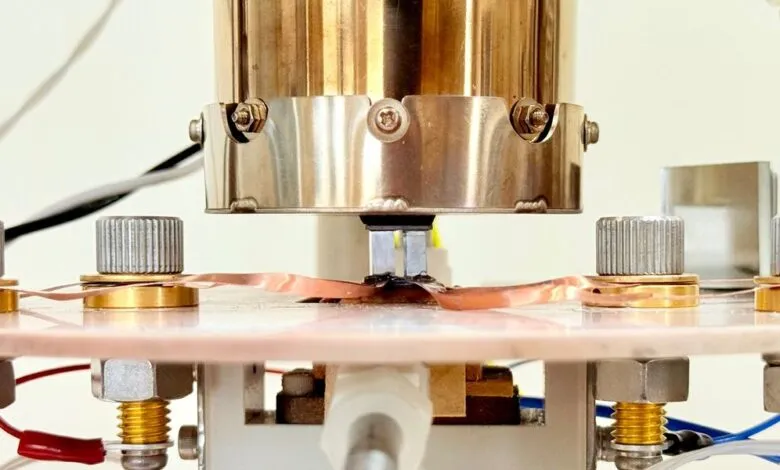
After scanning thousands of possible configurations, the AI identified device geometries predicted to deliver strong performance. The researchers then fabricated prototype generators using spark plasma sintering, a method that rapidly compresses powdered materials into dense components using electric current pulses. Both designs achieved conversion efficiencies of about 9 percent under temperature conditions typical of industrial waste heat, where thermoelectric devices are most commonly deployed.
That number might not sound spectacular, but any technology converting heat into electricity faces a built-in efficiency ceiling determined by the temperature difference between its hot and cold sides, known as the Carnot limit. Within those bounds, the new designs rank among the better-performing thermoelectric generators reported for this temperature range. Even modest gains matter in thermoelectrics, as small efficiency improvements can determine whether recovering waste heat is economically worthwhile.
Another limitation in thermoelectrics is the cost of materials and fabrication. The field has long depended on bismuth telluride, a semiconductor that contains relatively scarce tellurium and often requires carefully controlled crystal growth and microstructural alignment for high performance, increasing manufacturing complexity and expense.
By contrast, Mori says some of the AI-designed devices identified by TEGNet can be made using simpler fabrication approaches and, in some cases, avoid bismuth telluride altogether. Although full details remain confidential due to ongoing industry collaborations, preliminary cost estimates suggest the designs could move thermoelectric generators closer to economic viability for industrial waste heat applications. “From the estimated cost,” Mori says, “we can project an industrially competitive power-generation cost for the first time in thermoelectric history.”
(Source: Ieee.org)