European Mars Rover Secures Launch After Delays
▼ Summary
– NASA announced SpaceX will launch ESA’s Rosalind Franklin Mars rover on a Falcon Heavy rocket, potentially in late 2028.
– The mission’s history involves a complex partnership shift, originally planned as a joint US-Europe endeavor starting in 2009.
– NASA withdrew from the ExoMars program in 2012 due to budget constraints, including costs from the James Webb Space Telescope.
– The initial plan included a 2018 dual-rover launch with a US rover and a shared sky crane landing system from NASA.
– ESA’s original partner for launch was Russia, using a Soyuz rocket, prior to the collaboration with the United States.
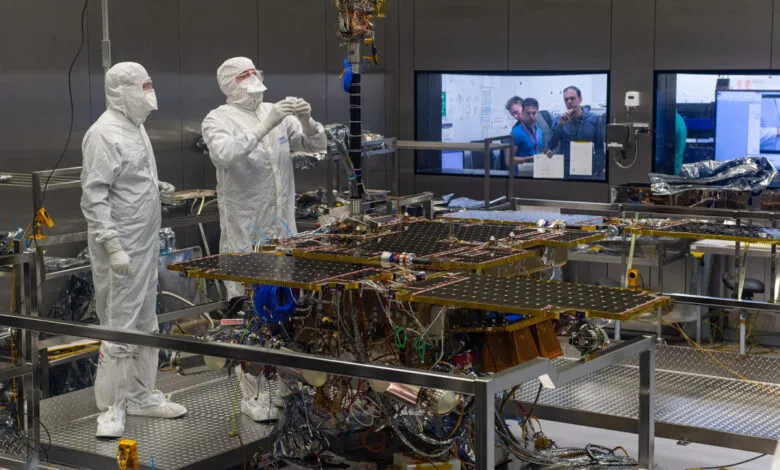
NASA has announced that SpaceX will use its Falcon Heavy rocket to launch the European Space Agency’s Rosalind Franklin rover to Mars, with a potential launch window opening in late 2028 from Florida. This decision marks a critical step forward for a mission that has faced a complex and turbulent two-decade journey, a path shaped by shifting international partnerships, budget crises, and geopolitical conflict.
The mission’s origins date back to the early 2000s, shortly after NASA’s first rover success. The European Space Agency formulated its own plan for a mobile Mars robot under the Aurora program, initially targeting a 2009 launch on a Russian Soyuz rocket. As ESA officials later noted with considerable understatement, “delays ensued and plans changed.” The project, rebranded ExoMars, evolved into a major partnership with NASA in 2009, aiming for a joint US-European exploration campaign.
The revised strategy involved a European orbiter launching in 2016 to study atmospheric methane, followed by a dual-rover mission in 2018. The plan called for a US-supplied landing system, based on the innovative sky crane architecture, to deliver both rovers simultaneously. NASA committed to providing launches for both missions on Atlas V rockets. This ambitious collaboration collapsed in 2012 when the Obama administration, facing budgetary constraints including overruns on the James Webb Space Telescope, withdrew most of NASA’s support. ESA, confronting its own funding limits, could not independently replace the lost American contributions for the launch and complex landing system.
(Source: Ars Technica)