The Search for a More Precise Value for Big G Continues
▼ Summary
– The gravitational constant “Big G” describes the strength of gravity, but its value is known far less precisely than other fundamental constants.
– Measurements of Big G vary by roughly one part in 10,000, causing frustration for physicists focused on precision metrology.
– Gravity’s weakness and background noise from Earth’s gravitational field make it difficult to measure Big G accurately in a laboratory.
– Scientists at NIST spent a decade replicating one of the most divergent experimental results for Big G.
– The new NIST paper does not resolve the discrepancy but provides an additional data point for determining a more precise value of Big G.
The gravitational constant, known affectionately as Big G, remains one of the most stubborn puzzles in modern physics. It quantifies the strength of gravitational attraction between two masses , or, in relativistic terms, how mass warps space-time. Scientists have a rough working value for Big G, but for over 200 years, every attempt to refine it has produced slightly different results. And by “slightly,” we mean variations of about one part in 10,000.
That might sound minuscule, but other fundamental constants are measured with far greater precision. This makes Big G the proverbial black sheep of physical constants, a source of persistent frustration for researchers in precision metrology. The root of the difficulty? Gravity is extraordinarily weak , the feeblest of the four fundamental forces. In a lab setting, its signal is easily drowned out by the overwhelming background noise of Earth’s own gravitational field, often called “little g.”
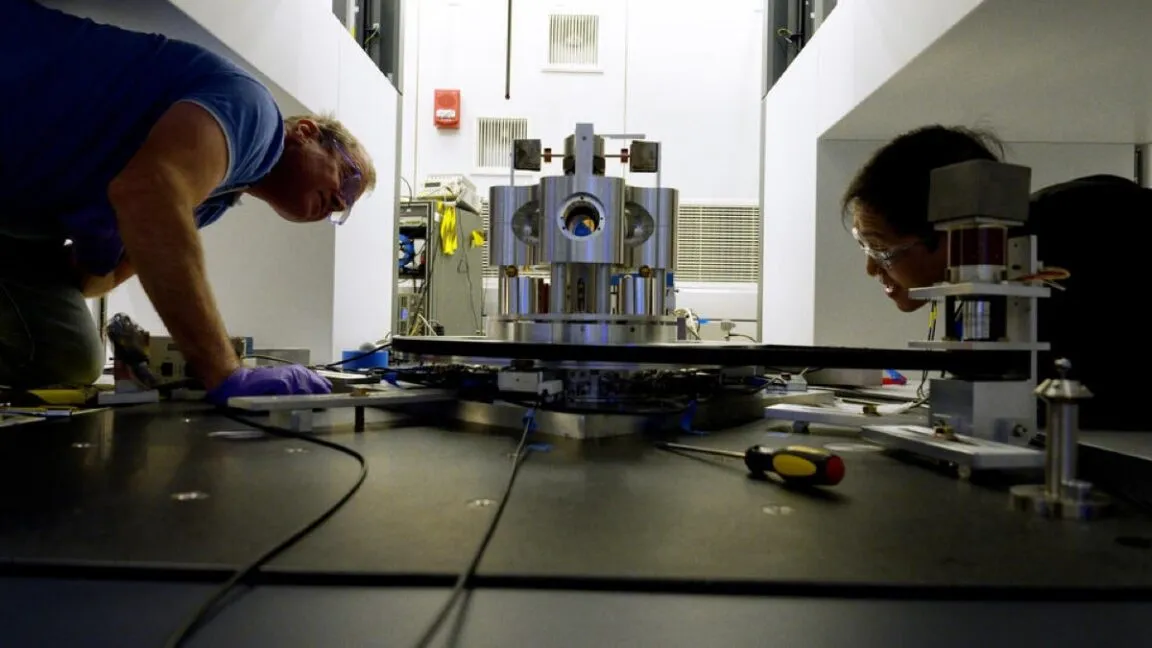
The latest attempt to settle the score comes from scientists at the National Institute of Standards and Technology (NIST) . They spent the last decade meticulously replicating one of the most controversial and divergent experimental measurements of Big G. Their findings, published in the journal Metrologia, do not resolve the long-standing discrepancy. But they do provide physicists with another crucial data point in the ongoing, painstaking quest to pin down a more precise value for this fundamental constant.
(Source: Ars Technica)