Safety Officials Assess Rocket Explosion Risks in New Study
▼ Summary
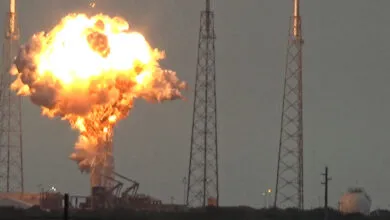
– The New Glenn rocket explosion at Cape Canaveral is a setback for Blue Origin and NASA but provides safety data for future high-volume launches.
– Multiple companies, including SpaceX, Blue Origin, United Launch Alliance, Stoke Space, and Relativity Space, are developing launch sites along the Cape Canaveral coastline.
– Methane and liquefied natural gas are replacing traditional rocket fuels like kerosene and hydrogen, but there was little real-world data on the damage from a methane rocket explosion until last week.
– The Space Force projects the spaceport could support up to 500 launches per year by 2036, creating tension between high launch forecasts and conservative safety protocols.
– Competitors of SpaceX worry that daily Starship launches and landings may force evacuations, as the Space Force applies strict safety rules for methane/liquid oxygen rockets.
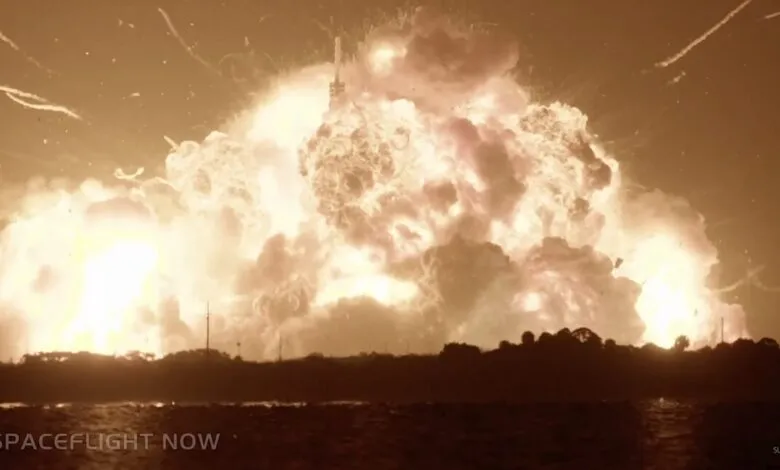
Safety officials are gaining critical insights from last week’s New Glenn rocket explosion at Cape Canaveral, Florida. While the incident dealt a clear setback to Blue Origin and NASA, it has become an unexpected learning opportunity for authorities preparing the spaceport for a dramatic increase in launch activity.
Florida’s Space Coast is bracing for an influx of new operations. SpaceX is constructing multiple launch pads for its super-heavy Starship rocket, situated just miles from pads used by competitors Blue Origin and United Launch Alliance. Two additional companies, Stoke Space and Relativity Space, are also establishing launch sites along the same narrow stretch of coastline at Cape Canaveral Space Force Station.
All these companies either currently use or will soon use rockets fueled by methane or liquefied natural gas, a shift away from legacy vehicles powered by kerosene, liquid hydrogen, or solid propellants. The engineering rationale for this transition is sound, but until last week, engineers lacked substantial real-world data on the destructive potential of millions of pounds of methane and liquid oxygen detonating on the launch pad or shortly after liftoff.
Looking ahead, the Space Force projects the spaceport could support as many as 500 launches per year by 2036,a fivefold increase over last year’s total. This ambitious forecast, combined with the Space Force’s conservative safety protocols, has created friction among stakeholders at the Cape.
Competitors of SpaceX have voiced concerns that daily launches and landings of the reusable Starship could force evacuations of nearby facilities for safety reasons. The U. S. Space Force, which manages the spaceport, enforces strict safety standards for methane/liquid oxygen (methalox) rockets, while kerosene and hydrogen are considered well-understood and predictable fuels.
(Source: Ars Technica)