Falcon Heavy returns, Russia’s Soyuz-5 rocket finally launches

▼ Summary
– Starship’s next test flight is expected in May, and its results, along with Blue Origin’s Moon landing attempt, will indicate NASA’s chances of a 2028 lunar landing.
– The US Space Force listed 12 companies developing Space-Based Interceptors for the Golden Dome defense initiative.
– The Golden Dome system aims to protect US territory from drone, ballistic, hypersonic, and cruise missile attacks.
– The companies will contribute to developing and testing SBI prototypes, with agreements totaling up to $3.2 billion.
– Contracts for full-scale production of the interceptors will come later, at a significantly higher cost.
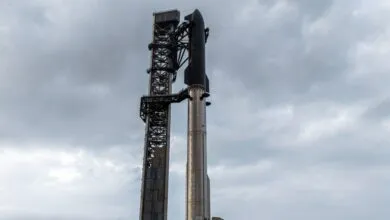
Welcome back to Edition 8.39 of the Rocket Report. This week brings a flood of developments across the heavy-lift landscape, from a long-awaited Russian debut to SpaceX’s next Starship milestone and a major Pentagon contract announcement. Starship, the largest rocket ever built, had a comparatively calm week as SpaceX eyes a potential test flight in May. Meanwhile, the outcomes of Blue Origin’s first lunar landing attempt with its Blue Moon cargo lander,expected in the coming months,and the upcoming Starship flight will heavily shape NASA’s timeline for returning astronauts to the Moon by 2028.
As always, we welcome reader tips and questions. To ensure you never miss an issue, subscribe via the form below (it won’t appear on AMP versions of the site). Each edition covers small-, medium-, and heavy-lift rockets, plus a preview of the next three launches on the calendar.
A dozen companies are now developing Space-Based Interceptors (SBIs) for the US Space Force. On April 24, the Space Force released a list of 12 contractors selected to work on the Pentagon’s Golden Dome initiative,a multilayered defense system designed to protect the US from drones, ballistic missiles, hypersonic weapons, and cruise missiles, as reported by Ars. The roster of Golden Dome Space-Based Interceptor (SBI) contractors includes Anduril Industries, Booz Allen Hamilton, General Dynamics Mission Systems, GITAI USA, Lockheed Martin, Northrop Grumman, Quindar, Raytheon, Sci-Tec, SpaceX, True Anomaly, and Turion Space. Each company will contribute specialized expertise to develop and deliver SBI prototypes for testing. The combined value of these initial agreements is capped at $3.2 billion. Full-scale production contracts will follow later, carrying a significantly larger price tag.
(Source: Ars Technica)