Jeff Bezos vs. China in Race to Shackleton Crater
▼ Summary
– Two spacecraft, Blue Origin’s Endurance and China’s Chang’e 7, will launch later this year to land near the Moon’s Shackleton Crater.
– The Endurance lander will be the largest lunar lander in history, bigger than the Apollo lunar module.
– The Chang’e 7 mission includes not just a lander, but also an orbiter, a rover, and a hopper drone to search for ice.
– The Endurance lander has been tested for lunar surface extremes and shipped to Cape Canaveral for launch on a New Glenn rocket.
– The Chang’e 7 spacecraft has arrived at its launch site in China to be prepared for launch on a Long March 5 rocket.
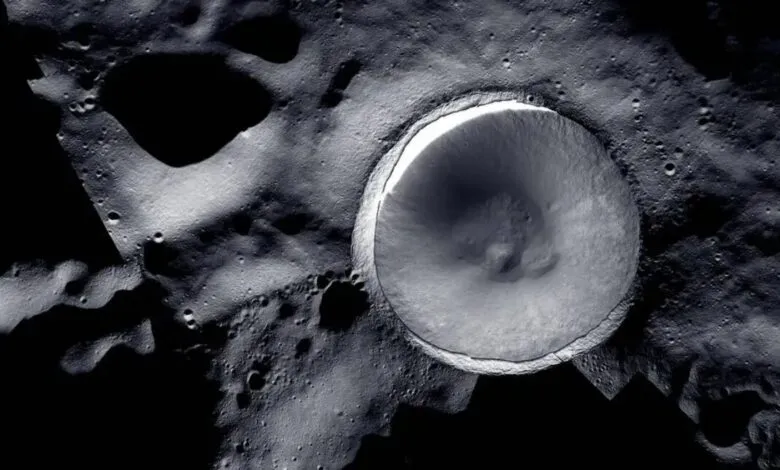
A high-stakes competition for the lunar south pole is set to begin later this year, with two separate missions targeting the rim of Shackleton Crater. This location is prized for its vast deposits of water ice, a critical resource for future exploration. The upcoming launches represent a new peak in robotic lunar ambition, pitting a commercial giant against a national space program in a race to access this frozen treasure.
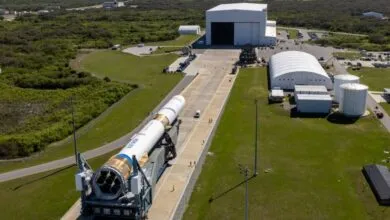
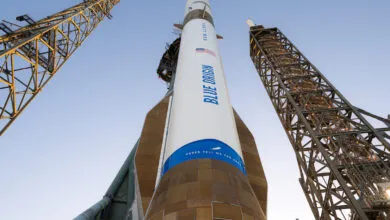
The first contender is Blue Origin’s Endurance lander, a vehicle funded by Jeff Bezos. Having just completed rigorous thermal testing at NASA’s Johnson Space Center, the spacecraft was transported by barge to Cape Canaveral for its final launch preparations. When it flies, Endurance will become the largest lunar lander in history, surpassing even the Apollo-era lunar modules that carried astronauts. Its ride to space will be Blue Origin’s powerful New Glenn rocket.
China’s parallel effort is the Chang’e 7 mission, a sophisticated multi-component spacecraft that recently arrived at its launch site on Hainan Island. While its lander is smaller than Endurance, the Chinese mission is far more complex in scope. The project includes an orbiter, a rover, and a unique hopper drone designed to scout terrain and pinpoint the best ice deposits. It will launch on China’s Long March 5 heavy-lift rocket.
This dual push toward the same lunar destination underscores the strategic importance of lunar water ice. The substance is not just a scientific curiosity, it is a potential source of drinking water, breathable oxygen, and rocket fuel for missions deeper into the solar system. The data returned by these landers will be invaluable, whether it comes from Blue Origin’s large-scale commercial delivery system or China’s comprehensive suite of exploration tools. The race is on to see which approach will first unlock the secrets held in the perpetual shadows of Shackleton Crater.
(Source: Ars Technica)