Honor’s Robot Phone Arrives Later This Year
▼ Summary
– The Honor Robot Phone, unveiled at MWC Barcelona, features a unique motorized camera arm with a 200-megapixel sensor and a miniature 4DoF gimbal for advanced mechanical stabilization.
– This camera system, enabled by a custom titanium micro motor, supports specialized video modes like AI tracking and automated rotations, with color science developed in partnership with ARRI.
– Beyond photography, the phone’s AI-driven arm can perform physical gestures like nodding or moving to music, framing these features under Honor’s “Augmented Human Intelligence” vision.
– Key specifications like the chipset, battery capacity, and price remain undisclosed, and journalists were not permitted to handle the device, raising questions about its durability and real-world performance.
– The phone is scheduled for release in China in the second half of 2026, with its global availability and final commercial form still uncertain.
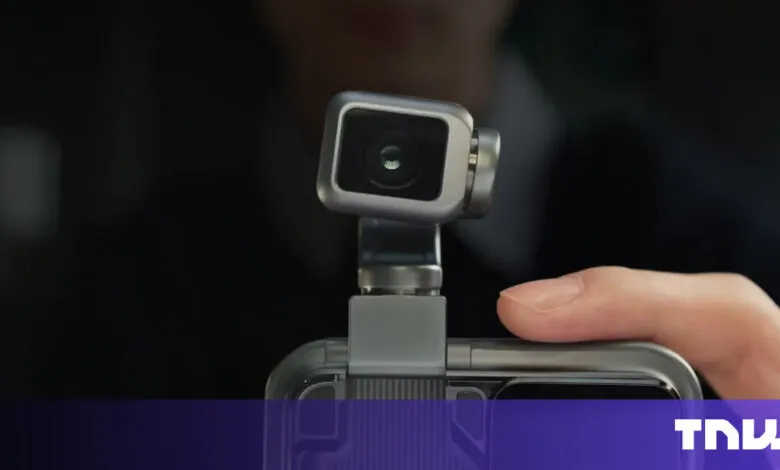
A unique robotic smartphone from Honor is officially slated to arrive in the second half of 2026, promising a novel approach to mobile imaging and interaction. The device, which made its formal debut at Mobile World Congress in Barcelona, features a motorized camera arm that folds into the phone’s body, powered by what the company claims is the industry’s smallest four-degree-of-freedom gimbal system. This mechanical core enables a range of movements and stabilizations previously unseen in a consumer handset.
The defining robotic element is a compact arm housing a 200-megapixel sensor. Its movement is driven by a custom titanium alloy micro motor, which Honor states is 70% smaller than existing micro motors, a feat of miniaturization credited to the company’s extensive experience in developing foldable phones. This system provides three-axis mechanical stabilization, allowing for precise camera motion that rivals external handheld gimbals in performance, though not necessarily surpassing them.
For videographers, the phone introduces several AI-assisted modes. Super Steady mode is designed for high-movement shooting, while AI Object Tracking locks onto subjects with a simple double-tap. A feature called AI SpinShot can execute automated 90-degree and 180-degree rotational movements, with the arm capable of a full 360-degree rotation. In a significant partnership for image quality, Honor has collaborated with ARRI Image Science, the renowned cinema camera manufacturer, to integrate professional-grade colour science and cinematic image processing into the mobile platform.
Beyond photography, the device introduces a curious layer of physical interaction. The robotic arm can nod, shake, and tilt in response to voice commands or touch inputs, effectively serving as a gesture-based interface. It can even detect music and move in rhythm. During the keynote presentation, the phone engaged in a scripted interaction with Honor’s CEO and a separate humanoid robot, showcasing its potential as an animated device.
Honor categorizes these capabilities under its “Augmented Human Intelligence” vision, suggesting AI that enhances human creativity rather than replacing it. While the concept is ambitious, the tangible hardware provides a concrete foundation for these claims.
Crucial details about the phone’s specifications, however, remain under wraps. The chipset, RAM capacity, battery size, and final pricing have not been disclosed. Although the battery uses a silicon-carbon anode to support the motor’s power needs, its capacity is unknown. Furthermore, no hands-on testing was permitted at MWC; all observations came from controlled demonstrations behind glass.
This leads to the paramount question of durability. Introducing complex moving parts into a device prone to drops and dust exposure presents a significant engineering challenge. Motorized mechanisms in smartphones have a mixed history. Honor engineers acknowledge the concern, stating they applied foldable-phone simulation and materials expertise to the design, but independent stress testing results are not yet available.
For now, the Robot Phone exists as a fascinating prototype: a functional device demonstrating capabilities no other smartphone offers, yet one that remains just out of reach for thorough evaluation. Its initial launch is planned for the Chinese market, with global availability still unconfirmed. Whether this represents the beginning of a new product category or a highly polished concept that will evolve significantly before launch will become clear in the latter part of 2026.
(Source: The Next Web)