Why the US gets the worst smartphones

▼ Summary
– Apple, Samsung, and Google have shifted from innovation to iteration, while Chinese tech giants have advanced, creating a growing gap between US phones and those available elsewhere.
– US phones lag in battery and camera technology; Chinese manufacturers widely use silicon-carbon cells for larger batteries, while US leaders have not adopted them, partly due to long-term performance concerns.
– Chinese brands like Oppo, Vivo, and Xiaomi push camera boundaries with larger sensors, custom lenses, and accessories like telephoto extenders, whereas US brands release phones with years-old camera hardware.
– The US market is dominated by Apple and Samsung, with limited competition; phones with features like huge batteries, RGB lights, or subwoofers are not widely available due to carrier resistance and skepticism of Chinese brands.
– New Apple CEO John Ternus may drive hardware innovation, but cost-cutting pressures, EU battery legislation risks, and design constraints make a spec war uncertain, though any Apple shift could influence Google and Samsung.
For years, Apple and Samsung have commanded the US smartphone market, shaping consumer expectations around mobile photography, processing power, and software ecosystems. Alongside Google, these three giants set the standard. But lately, that standard has felt more like a plateau. While American consumers have grown accustomed to iterative upgrades, China’s tech titans have been racing ahead. The result is a widening chasm between the phones sold in the US and those available globally. Simply put, US buyers are getting the short end of the stick.
Apple bears significant responsibility for this stagnation. As the market leader, its pace often dictates the industry’s rhythm. Under Tim Cook, that rhythm has been cautious, prioritizing profit margins over rapid innovation. However, a shift may be on the horizon. Come September’s iPhone 18 launch, longtime hardware executive John Ternus will take over as CEO. If his background signals a renewed focus on pushing specs forward, Apple’s conservative approach could finally loosen, dragging the rest of the US market along with it.
The most glaring gaps between US and international phones are in battery technology and camera hardware. On the battery front, Chinese manufacturers have embraced silicon-carbon cells, which replace some graphite in the anode with silicon. This chemistry packs significantly more energy into the same physical space. Regular-sized phones have seen battery capacities double in a few years, and thin or foldable models now outlast traditional US slabs. For example, Honor’s Magic 8 Pro Air rivals the thinness of Samsung’s Galaxy S25 Edge yet houses a larger battery than the S26 Ultra. Meanwhile, Apple, Samsung, and Google have yet to announce any silicon-carbon phones. Only a few Motorola and OnePlus models in the US use the chemistry, while virtually every major Chinese Android maker has adopted it.
Why the hesitation? One concern is long-term durability. Silicon-carbon cells may degrade faster over time, meaning a bigger battery on day one could shrink sooner than expected. Chinese manufacturers claim they’ve solved this, but proof will only come as first-generation devices age. Adding pressure, upcoming EU legislation requires phones to maintain 80 percent battery capacity after five years to avoid mandating user-replaceable cells. That regulatory hurdle makes manufacturers cautious about risking longevity.
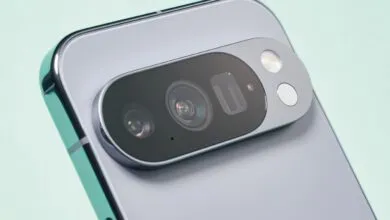
Cameras, however, offer no such excuses. Apple, Google, and Samsung have all led the photography race at different points, but none can claim the crown today. Iterative updates have left flagships with hardware that’s years old. Samsung is the worst offender: the S26 and S26 Plus cameras have barely evolved since the S22. Meanwhile, Chinese companies treat cameras as their primary battleground. Each year, their Ultra flagships push resolution, sensor size, and aperture further, and those innovations quickly trickle down to cheaper models. Partnerships with Zeiss, Leica, and Hasselblad bring custom lenses, color tuning, and film simulations. Accessories have also evolved: official camera grips with two-stage shutters and zoom wheels are now joined by telephoto extenders that dramatically boost range.
Of course, there are trade-offs. Bigger sensors and lenses require larger camera modules, often resulting in bulky circular protrusions that compromise sleek design. Apple’s design team has historically resisted such compromises, though the iPhone 17 Pro’s elongated camera “plateau” suggests a shift. Cost is another factor. Premium camera components eat into margins, and Tim Cook’s profit-focused strategy has long resisted such investments.
Consider Vivo’s X300 Ultra, which I’m currently testing. It packs multiple 200-megapixel sensors, a 6,600mAh silicon-carbon battery, and support for two external telephoto lenses plus a grip that transforms it into a compact camera. Each of its three rear cameras rivals the main sensors on current Apple, Samsung, and Google flagships. Yet it won’t launch in the US.
And it’s not just Ultra-tier devices. The Honor 600 costs less than an iPhone 17 but offers a 200-megapixel main camera, a 7,000mAh battery, and an IP69K dust/water resistance rating , all superior to Apple’s offering. Poco’s X8 Pro Max starts at $469 yet includes a 9,000mAh battery, 100W charging, and the same IP69K rating. Step up to the $769 F8 Ultra, and you get stereo speakers with a Bose subwoofer. Phones with RGB lighting, liquid cooling, color-changing designs, and secondary rear screens exist , but none have seen wide US release, thanks to skepticism toward Chinese brands and resistance from US carriers.
The US market is essentially a duopoly between Apple and Samsung. Google’s Pixels grab headlines but hold single-digit market share. Motorola sells mostly budget devices, and rumors suggest OnePlus may exit the US entirely. You may not want a phone with RGB lights or a subwoofer; I certainly don’t. But the point is that choice is absent. US consumers simply don’t get the option.
Hardware isn’t everything, of course. Apple has long compensated for spec deficits with polished software, seamless ecosystem integration, and refined design. Google’s Pixels and Samsung’s One UI also offer familiar, well-optimized experiences. But Chinese manufacturers are closing that gap. Oppo’s ColorOS now surpasses Samsung’s One UI in my view, especially on foldables where multitasking is superb. Bloatware is shrinking, interfaces are cleaner, and performance is improving. There’s still work to be done, but less than ever.
Combined with divisive updates like Liquid Glass or the iPhone 17 Pro redesign, it’s clear US brands can’t rely on software advantages indefinitely. As the hardware gap widens, the problem intensifies. My fiancée used iPhones for a decade until she saw the photos my Vivo flagship could capture. She switched to Android and never looked back. That was years ago; Vivo’s cameras have transformed since, while Apple’s remain largely unchanged.
Whether Ternus will ignite an iPhone innovation renaissance is uncertain. He has a reputation for pushing engineering boundaries but also a “Cookian eye for cost-cutting.” Rising component prices make it harder to justify bold investments while maintaining Apple’s profit machine. And Apple still commands the largest global smartphone market share; only Samsung poses a near-term threat. Xiaomi, in third place, holds just two-thirds of Apple’s share. Add the risks of silicon-carbon batteries clashing with EU rules and larger cameras compromising iPhone design, and a full-blown spec war seems unlikely.
But Ternus’s decisions will ripple beyond Apple. If he pushes hardware boundaries again, it will benefit everyone , especially US smartphone buyers who have been left waiting.
(Source: The Verge)