Orcas Coordinate Attacks to Blow Up Sunfish
▼ Summary
– Orcas in the Gulf of California were filmed ramming sunfish so hard the carcasses exploded into fragments, a newly observed behavior.
– Scientists believe the ramming may help younger orcas feed more easily or could be done for fun, as orcas are known to play with their food.
– The behavior is distinct from typical orca hunting, which involves a three-pronged strategy of targeting fins, slashing the body, and using the beak to remove tissue.
– Orcas engage in cooperative hunting strategies such as ramming whale sharks, herding rays, blocking escape paths, and producing waves to bump prey off ice.
– In the observed 2024 event, an adult female held a sunfish carcass while a male charged and fragmented it, allowing a juvenile to eat smaller pieces.
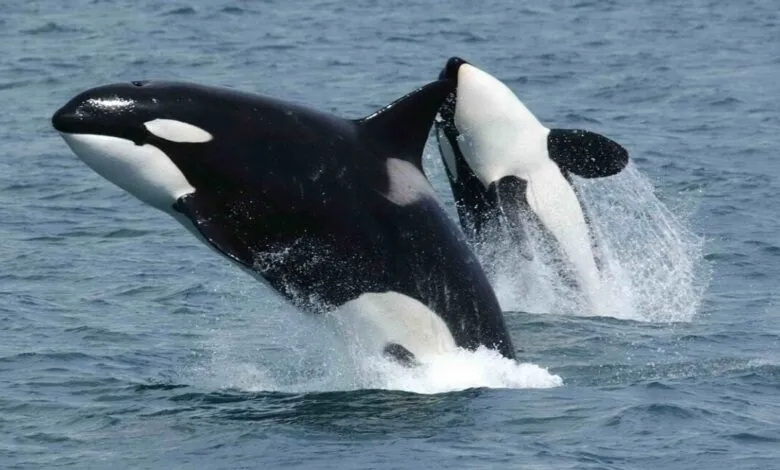
Multiple documented cases of orcas ramming boats, sometimes even sinking them, have emerged in recent years. Scientists suspect this behavior is a culturally learned trait passed through generations. Now, new evidence from the Gulf of California shows orcas collaborating to ram sunfish with such force that the carcasses burst into small pieces. While these predators are known to use brute strength to tear flesh from prey, this specific tactic appears distinct, according to a study published in Frontiers in Ethology.
“We think this may help younger orcas feed more easily, or it could also just be for fun,” said co-author Kathryn Ayres of Beneath The Waves, a nonprofit focused on ocean health. “Orcas are known for playing with their food.”
Orcas employ cooperative hunting strategies that sometimes involve striking or killing animals, whether or not they intend to eat them. This behavior can function as social interaction, play, or practice, serving as a form of social learning. Observations include orcas ramming whale sharks while another holds the prey steady. Other tactics include herding mobile rays, blocking escape routes while hunting white sharks, and deliberately creating waves to knock penguins off ice floes.
When targeting species like sunfish, orcas typically use a three-step approach. First, they attack the pectoral fins, then slash the body to remove the viscera. Finally, they use their beaks to access remaining tissue. The newly documented “ram-to-fragment” behavior may represent a more advanced version of this basic strategy.
The first observation occurred in July 2024 off San Jose del Cabo, Mexico. A tourism operator filmed three adult female orcas, one male, and one juvenile catching and eating a spine-tail devil ray. Shortly after, the same operator filmed an adult female holding a sunfish carcass in her mouth. The fish bore a large lateral wound, suggesting the viscera had already been removed. The male orca then charged the carcass as the female released it just before impact. An audible sound marked the collision as the carcass fragmented, scattering bits of flesh in the water. The juvenile fed on smaller pieces while the adults consumed the split-open remains.
(Source: Ars Technica)