Dr. Jill Lepore on the AI backlash and ‘Artificial State’
▼ Summary
– Harvard professor Dr. Jill Lepore’s new book “The Rise and Fall of the Artificial State” argues that systemic measurement and quantification are dehumanizing, flattening human concerns into artificial structures.
– Lepore defines the “artificial state” as a successor to the liberal nation-state where private multinational corporations have taken over functions like public discourse, prioritizing monetization over democratic deliberation.
– The book traces the evolution of the artificial state from 1930s polling to 1980s Silicon Valley culture, where microtargeting became commonplace for ads and political campaigns.
– Lepore criticizes tech billionaires like Elon Musk and Sam Altman for rejecting humanistic inquiry and past wisdom, instead fetishizing disruption and efficiency over democratic processes.
– Despite pessimism about the internet, Lepore finds hope in college students booing AI CEOs at graduations and local communities pushing back against data centers, seeing these as opportunities for democratic reassertion.
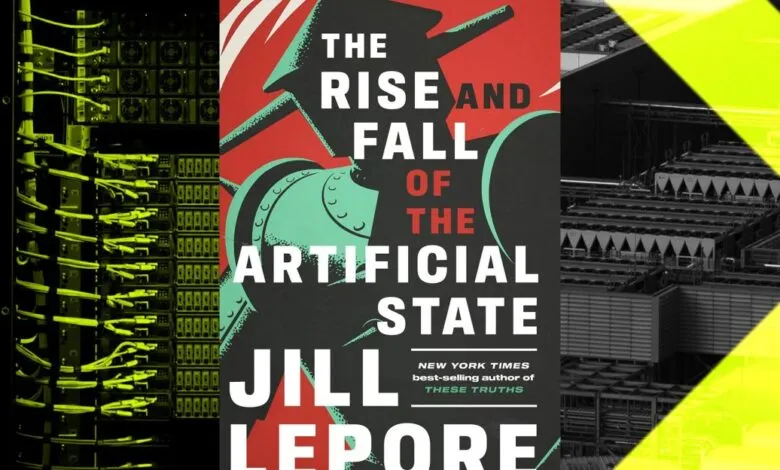
Harvard historian and New Yorker staff writer Dr. Jill Lepore joins the show to discuss her upcoming book, The Rise and Fall of the Artificial State, releasing August 25. She is among the sharpest minds when it comes to recognizing institutional patterns across history, and since Decoder is fundamentally about systems, this conversation hits squarely in our wheelhouse.
Building systems requires measurement: collecting information, turning it into data, and then acting on it. Lepore’s central argument is that this process of systemic measurement is inherently dehumanizing. It reduces complex human concerns into something artificial, stripping away nuance and lived experience.
These artificial structures extend far beyond obvious examples like apps or AI. They reach into politics and governance itself. Lepore’s analysis offers a revealing portrait of how Big Tech and its billionaire leaders have fundamentally fractured the concept of the state.
For Verge subscribers, remember you get exclusive ad-free access to Decoder wherever you listen to podcasts. Head here. Not a subscriber yet? You can sign up here.
Lepore admits she wanted to write a “kind of grumpy book.” But in my reading, it is a clear-eyed examination of the last 150 years of technological and social evolution, tracing how we arrived at a point where bots may be running everything.
Her concept of the artificial state begins with quantification itself. It stretches from the earliest attempts at a census thousands of years ago to the invention of modern political polling in the 1930s. The major pivot, and the era we discussed most, is the 1980s. That decade saw the emergence of today’s Silicon Valley culture, the rise of personal computers, and the moment when computer-aided targeting and microtargeting became both possible and routine for ads and political campaigns.
Where we disagreed was on her pessimism about the internet. The internet made jobs like mine possible. It enabled businesses like The Verge and shows like Decoder to exist. There was a genuine democratization of access in the late 20th and early 21st centuries as people got online. Not all of that was as illusory as the great hopes for Twitter after the Arab Spring turned out to be.
But Lepore thinks in systems. Her response about how systems of power continually adapt to how people use new technology was as illuminating as ever. Naturally, we also talked about the future, including where she still sees hope. Yes, that includes college students booing AI CEOs at graduation ceremonies.
Here is Dr. Jill Lepore on the artificial state.
This interview has been lightly edited for length and clarity.
Dr. Jill Lepore, you’re a staff writer at The New Yorker, a professor of history and law at Harvard, and the author of the new book The Rise and Fall of the Artificial State. Welcome to Decoder.
Thanks for having me.
I’m genuinely excited to talk to you. I’ve been a fan of your work for years. This book is one of the most Decoder-y, Verge-y, Nilay-Patel-strike-zone books I have ever encountered.
[Laughs] I’m not sure how to take that, but I guess it’s good.
The producers and I had a thrill ride reading it. It is essentially about how computers and measurement flatten us, and how systems can then exploit that flattening. So let’s start at the very beginning. The book is called The Rise and Fall of the Artificial State. Tell us what the artificial state is. Define it for us.
What I mean by the artificial state is a successor to the liberal nation-state, the constitutional democracy under which our freedom of speech, free discourse, and constitutional rights are central to our experience as citizens. We talk a lot about democratic decay and backsliding, but I don’t think we talk enough about the nation-state itself.
The artificial state is one where more and more functions of the nation-state have been taken over by private multinational corporations. The easiest example is what is euphemistically called the public square, where people get information about how to vote, what’s going on in the world, and how to exercise their rights and duties as citizens. Our public discourse is almost entirely privatized and owned by corporations. Its priority is not free expression or democratic deliberation; it is the monetization of attention and outrage.
More than that, these platforms are dominated by bots. From X to Facebook to TikTok, there are far more bots than humans. Many are owned by corporations with financial interests, but also by state actors, non-state actors, criminals, and terrorists. What we risk is losing the liberal constitutional democracy and having it supplanted by what I call the artificial state.
One thing that struck me is that America’s conception of itself is this messy, multi-part democracy. The Senate calls itself the most deliberative body in history. Your thesis is that we have automated away and numerically quantified away much of that. We are now run by bots on Twitter, or politicians are overwhelmed by bots and have outsourced their thinking to consultants turning us all into polling data. Is that the trajectory that ends the nation-state?
Yes. It has a long history, but the acceleration in the age of artificial intelligence is considerable. Take two examples from the 1930s. We see the invention of so-called scientific polling. George Gallup starts the American Institute of Public Opinion Research in 1935. Polling gradually replaces door-to-door precinct walking. If I’m running for election, I used to have to go talk to people at baseball games and the public library. Increasingly, that became less necessary because campaigns could subcontract out polling and data mining.
You might say that makes politics more efficient. But each one of those conversations a campaign volunteer used to have at a PTA meeting or a basketball game was the civic glue that holds civil society together. Replacing that chatting under a street lamp with just extracting data is a much more artificial politics.
There has been great coverage of emerging trends for the 2026 election in the US. Many people report asking ChatGPT, “How should I vote in the primary?” Meanwhile, campaign messages are crafted by AI, and the decision to send them to you is made by AI. It is AI versus AI in these elections. You can see how you could fall into that step. I wanted to write a grumpy book to say, “Let’s pause. What’s at the bottom of that hill? Is it an icy pond where we all drown, or is it a beautiful new political world?” It looks pretty perilous.
The book traces this evolution step by step. You point out that science fiction authors in the ’50s and ’60s drew pictures of computer-aided utopias and dystopias. Everyone has heard the Torment Nexus meme. You use it in the book. Our modern industrialists have read dystopian science fiction and decided that is the model they are trying to build. Why do you think they have all gotten it wrong, from Elon Musk to Peter Thiel? Is that an inflection point for us to pick a different future?
Starting in the ’30s, people imagined a future where the president is chosen by a machine. There is a classic Isaac Asimov story from 1955 called “Franchise,” set in 2008. A machine called the Multivac uses polling data to pick the most representative man in the United States. That is the only person who votes. Sam Altman was on Joe Rogan talking about how great it would be if AI chose the president. He was fucking around, but he was also serious. “Wouldn’t that be great? It’s so efficient.”
That premise, “Why would we bother to do something a machine can do for us?” misses the realization that there are some things we want to do, including meaningful work like writing and making art. These are very smart people, but they are not humanists. The capacity for humanistic inquiry, reading, and reasoning is not in great evidence in that culture. It has been bred out of Silicon Valley culture. The celebration of the serial entrepreneur as the new man of progress involved a disavowal of the past. You don’t study taxis or traffic patterns. You just start new and destroy what came before.
The posture of the humanist is one of humility. It’s, “Isn’t it magisterial how Homer wrote The Odyssey so long ago and it’s still powerful?” The tech ethos is, “No, we’ll do it better. It doesn’t matter what anybody did before. We’re innovating, we’re disrupting.” That makes for a very poor reading of literature. I’m not going to ask Sam Altman what a short story means.
Well, he would just ask ChatGPT.
That’s right.
There is something interesting about this cast of characters falling back to Catholicism as a moral foundation, even when they are in fights with the Pope. There is an entire culture of first principles thinking that often feels like a choice about what to ignore from the past. Deciding what to set aside is the big decision. There is something messy about democracy that is very important. The decision we are making now is to set that mess aside in the name of efficiency or happiness. Is that happening by accident or on purpose?
I think of these guys as really instrumental. They are not pursuing knowledge for its own sake. They are interested in exploration and wonder, but harnessed to militarization and commercial projects. The sense that you might want to know about the world just because it is worth knowing, rather than to extract money, is not part of that tech culture. A humanist commitment to knowledge for the sake of wisdom, leading a better life, and understanding the world with greater clarity and compassion is largely mocked as “woke” or “feminine.” It is purposeful. “This kind of knowledge is not worth having because we can’t make money off it. If we had it, it might slow us down. What we are trying to do is win the AI race and determine the future of humanity.” The lack of curiosity about the bigger world is bizarre. Many of these people are my former students. What happened? Do you not have a sense of obligation to the human condition?
Walk us through some markers, from “the internet will cause an outbreak of democracy” to where we are now in 2026.
That began in the 1980s. The launch of the Apple Macintosh in 1984 and that famous ad promised the personal computer would be revolutionary. The celebration of the personal computer as emancipation came out of the counterculture. There is a great book, From Counterculture to Cyberculture, about the “California ideology” that marries counterculture libertarianism to computer utopianism. The promise was that the personal computer would advance liberty and democracy. But at the end of the day, it was just an ad campaign.
By the ’90s, the internet was going to democratize societies. It didn’t. That was an ad campaign. Then in 2004, social media said, “We’re going to connect everybody.” That also didn’t happen. Now the ad campaign is that AI is going to do it. “What we need is democratic AI.” That doesn’t mean the polity has a say; it means democratic countries should lift regulations so they can have AI before authoritarians. It’s an old story.
Can I push back? There is not a world previous to the internet where a guy like me from Wisconsin with no connections ends up interviewing you. Publishing needed to be democratized. Gatekeepers fell away. Young people style themselves as creators and know they can start a business on these platforms. The flip side is that the men who own these platforms realized they could turn the knobs. Elon Musk bought X and changed it. Mark Zuckerberg started a Supreme Court for Facebook moderation and then turned it off. How do you put that in the context of the artificial state?
I’ll grant that you have a point. Up until the 1980s, very few newspaper reporters had college degrees. They started out delivering newspapers, working the press, climbing their way up. A new medium emerges, and there is an explosion in the democratization of access. That happens with the penny press, the telegraph, the telephone, radio, and TV. Each transformation reshapes the party system. The people get more power. But the elites always regain power. They turn the dial and consolidate their power over the medium.
The tricky thing about this moment is that the emerging technologies are not restoring power to the people. They just keep going the other way. I teach undergraduates. There are no jobs for them. The whole culture industry is imploding. I don’t think this is a magnificent time to be an influencer. You still don’t have health insurance. You can’t buy a house. We are continuing to rotate in the direction of billionaires having power over our culture.
Let’s talk about targeted advertising. In the book, you say identity politics as we know it is made possible by computer-run sorting and targeting. Algorithms put us together, and then we say, “Here’s an identity. We’re a bloc. Deal with us.” Identity politics certainly existed before. Is the identity politics of today defined by the fact that we exist on platforms, or just shaped by it?
I remember reading an article from 1968 by Ithiel de Sola Pool, an MIT political scientist. He speculated that by the year 2000, we would have personal newspapers. He said, “There really won’t be party politics if you have your own newspaper. A political party is the organization of shared political priorities. We will only have personal politics. Our system of representative government will be incompatible with our technology of communication.” Smart people saw this 50-60 years ago.
Now, campaign consultants say, “I really do not want to use these tools. I don’t want to do micro-targeted messaging with deep-fake AI ads. But I have to because there is no moratorium.” It’s a sad moment.
The entire model of the internet is targeted advertising. The big tech companies have gotten in trouble for over-sorting people. Meta got sued for creating ad categories that were protected classes. How do you see that connecting to the artificial state? We are going to measure everybody, quantify everybody, and subsume our politics into capitalism.
It’s helpful to remember that this is not an invention of the internet. There is a great book, Consumers’ Republic, that argues the consumer replaced the citizen in the 1950s. Consumption was what was going to save the country. That has been the way we live. But the system of targeted advertising is effectively what the internet is. I remember the day I noticed it. In 2000, I had a baby, and Google started sending me ads for breast pumps. I said, “Fuck this.” Remember when you were outraged? Now we just accept it.
Everyone’s phones are listening to them. It’s whatever. But the privatization of the public square is a long time coming. When you walk down a city street, there is City Hall and there is the JCPenney. Those were different places. Now it is all corporatized. I read increasingly that the internet is just going to be for bots. Machines talking to machines. That might offer some prospect for restoring the real world as a place for engagement. But where we are now, I don’t see how democracy endures the corporatization of all public discourse.
We have asked many tech CEOs, “What happens when no one uses your app anymore, when it’s just bots and agents doing my bidding?”
What do they say?
It breaks down in two ways. Anyone with a physical service says, “Go ahead and try to disrupt me with bots. You won’t.” The CEO of Uber says, “Try to find an army of people to hang up your TV. That’s our labor supply.” Anyone running a virtual business is freaking out. Amazon is basically freaking out. They are suing Perplexity. Perplexity says, “Our software is the new labor.” Do I believe that agentic AI is equivalent to my labor? That is an open question.
Yeah, I totally don’t know the answer. I look at the height of the techlash, and it keeps getting higher. But I don’t see it manifesting effectively. The other piece is that “the internet will go away” is wishful thinking on the part of companies. They want this internet to go away because of gatekeepers like Apple. Saying, “We can build a new internet of bots,” gets you away from the iPhone. But people like Instagram. They are not going to give up their phones.
I’ll connect this to the fact that you are a college professor. I am watching college students boo AI at graduation ceremony after graduation ceremony. That seems like if there is any market pushback that leads to political change, that is where it comes from. And that still came from the internet itself.
No, it came from those people in a quad sweating in their caps and gowns making noise together. It came from an actual group of humans in physical space. I wouldn’t look to college administrations for help. They are all making deals with OpenAI. Institutions have to have positions of moral integrity, and I don’t see a ton of evidence of that.
I gave lectures at Yale last year. The faculty told me the first meeting of the AI task force was about how to brand AI at Yale. “Are we going to call it YaAI?” The faculty said, “What are you talking about?” I said to the students, “What about a two-week moratorium to discuss our community policy?” The students said, “Let’s do that. Why can’t we?” That’s why the students are mad. They are paying all this money to be replaced by machines and have no capacity to be a scholar or citizen. That gives me hope. But Yale did not do that. They branded their relationship with OpenAI.
Let me connect that lack of agency to our politics. People go to town meetings where a data center is proposed. They say no, and it happens anyway. Little “D” democratic politics are failing people. If you can’t even keep the data center out of your backyard, what else is there to believe in?
Yeah. I don’t know, man. That is really grim.
No, you are supposed to depress me. [Laughs]
I love that people are showing up and having those arguments. If you were a smart community development board, you would say, “Let’s have an open forum.” The fact that this is happening and is likely to influence elections is meaningful. But structurally, is there any going back? The US Constitution hasn’t been meaningfully amended since 1971. The example I give is jury service. People believe in jury duty. Imagine it was abolished in 1971. There is no way we would bring it back because trust in one another has evaporated. That is what is worrying about the decay of representative government.
I want to end by asking about a phenomenon I see more and more. After AI got booed at college graduations, the industry decided they need a new tack. OpenAI executives say, “We have a marketing problem.” Google’s CEO said, “We have to prove the products are useful.” They all say the democratic process should be trusted to put guardrails on them. Your entire book is about technology fraying democracy to its core. Is this self-serving on their part? Or is this the moment for democracy to reassert itself?
Yes to both. It is self-serving. OpenAI had a democratic inputs project. The individuals involved cared about it, but they knew nothing about the political process. The way it worked was just turning people into data points. “We’ll do hyper-scaling. Every American can point and click and vote.” That is not deliberative democracy. People have to be in a room together. There need to be rules, a parliamentarian, votes. When they talk about “democracy will save us,” what they mean is unrecognizable as a democratic process. It is a buzzword.
That said, this is a moment for people who care about involving ordinary people in discussions. “What do we want? I want to hear what my neighbors think.” That is the chief argument in my book. That can still happen. It has to still happen.
That seems like the next step. Getting the college kids together to boo might be the thing that solves democracy. As a college student who booed the Iraq War, I still want to believe that. Dr. Lepore, this has been amazing. Thank you.
A lot of fun. Thanks so much for having me.
(Source: The Verge)