Naked mole-rat queens suppress rivals with chemical signal
▼ Summary
– Naked mole rats are eusocial, with only one breeding queen per colony, and possess unusual traits like cancer resistance, pain insensitivity, and a lifespan over 30 years.
– Researchers discovered that the queen suppresses breeding in other females through sophisticated olfactory signaling, not just bullying as previously hypothesized.
– Naked mole rats have around 1,200 olfactory receptor genes, more than mice, and rely heavily on smell due to being blind.
– The team collected odor bouquets from individual mole rats using absorbent plastic tubes to capture volatile molecules.
– Mass spectrometry analysis of the scents separated them into approximately 100 distinct chemical compounds.
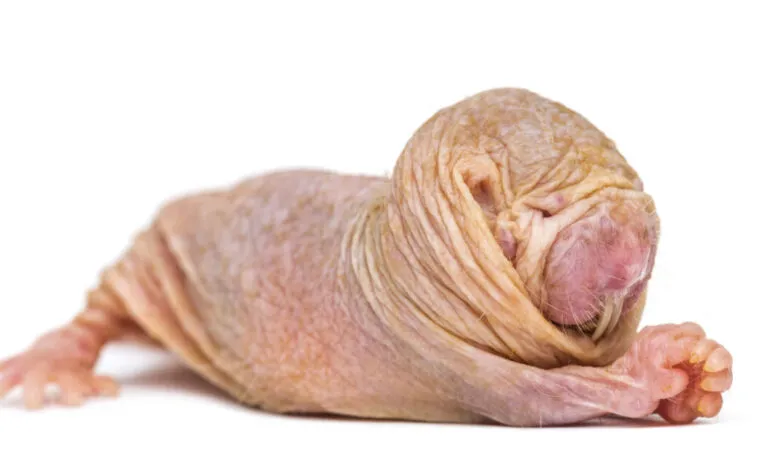
In the strange world of naked mole-rats, social structure is extreme. These bizarre rodents live almost entirely underground, show little sensitivity to certain types of pain, survive without oxygen for extended periods, rarely develop cancer, and can live past 30 years, far longer than most rodents their size. But perhaps their most unusual trait is eusociality, a system once thought exclusive to insects like ants, bees, and termites. In a single colony of over 100 animals, only one female, the queen, reproduces.
For years, scientists assumed that the queen used bullying and physical aggression to suppress breeding in other females. That hypothesis made sense, but it also seemed impractical. Naked mole-rat colonies live in vast tunnel networks stretching up to three kilometers, making constant physical intimidation difficult. Now, researchers from the Lewin Lab at the Max Delbrück Center for Molecular Medicine in Berlin have uncovered a more sophisticated mechanism: chemical signaling.
The key, it turns out, is smell. Naked mole-rats possess around 1,200 olfactory receptor genes, significantly more than mice (which have roughly 1,000) and far more than humans, who have only a few hundred. Since these animals are also blind, their sense of smell is critical for navigation and communication. “It’s very clear that mole rats actually have quite big noses and smell a lot,” says Gary Lewin, a neurobiologist and senior author of the study. “They have to be able to navigate and move around without vision, so smell is one of those things that’s enhanced.”
To investigate how heavily mole-rats rely on olfactory cues, the team collected odor bouquets from individual animals. They held an absorbent plastic tube near each mole-rat for about 30 minutes, capturing the volatile molecules released from its body. These scent samples were then analyzed using a mass spectrometer, which separated the chemical components into roughly 100 distinct compounds. The findings reveal that the queen’s chemical signature plays a central role in maintaining her reproductive monopoly, offering a far more efficient and practical method of control than physical violence in the sprawling, dark tunnels of the colony.
(Source: Ars Technica)