Made by Google 2026: Pixel 11, Pixel Fold, Watch 5, Gemini news

▼ Summary
– Pixel Watch 5 is rumored to keep the Snapdragon W5 Gen 2 chipset rather than the new Snapdragon Wear Elite, which is praised for better battery efficiency compared to the Elite’s poor performance in the Galaxy Watch Ultra 2.
– The article hopes for improved fitness tracking in Pixel Watch 5, like Garmin’s detailed workout routines and rep/set tracking, which could eliminate the need for a separate fitness watch.
– Pixel Watch 5’s base price may increase by $50 to $399 for the 41mm variant, reflecting an industry-wide trend of rising smartwatch costs.
– Googlebook, a high-end Chromebook successor, features a Magic Pointer for contextual Gemini information, and will offer both x86 and Arm models, with Arm promising better battery life.
– Android 17 introduces several features, including Bubbles multitasking, Rambler AI voice typing, 3D emojis, Create A Widget, Pause Point, and Screen Reactions, plus enhanced security like Live Threat Detection and verified financial calls.
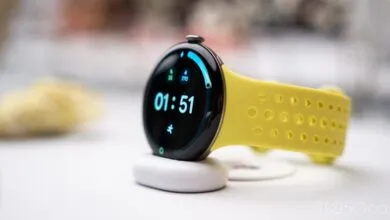
Google’s annual hardware showcase is right around the corner, and the rumor mill is already working overtime. While some of the speculation centers on the Pixel 11 series and the next-generation Pixel Fold, the chatter around the Pixel Watch 5 has sparked a particularly interesting debate. The news that the wearable might skip the new Snapdragon Wear Elite chipset has drawn some criticism, but honestly, it might be the smartest move Google could make.
I have spent the last two weeks with the Galaxy Watch Ultra 2, which runs on that very same Snapdragon Wear Elite processor. The performance is undeniably snappy, but the battery life is a significant step backward compared to the older Snapdragon Wear chips. The W5 series, which has powered Pixel Watches for years, offers a far better balance between speed and efficiency. Every Pixel Watch model I have tested still feels responsive, so why chase raw power when it comes at the cost of daily endurance? I would much rather see Google stick with a proven, efficient platform than adopt something that is unnecessarily powerful.
Beyond the chipset, my biggest hope for the Pixel Watch 5 involves fitness tracking. Garmin remains my go-to for workouts because it allows me to set detailed routines and track reps and sets. As someone who lifts weights regularly, that data is invaluable. It is the sole reason I swap my Pixel Watch for a Garmin Venu 4 when I hit the gym. If Google can finally bring that level of granularity to its own wearable, I might be able to consolidate down to a single smartwatch. That said, I am not holding my breath.
Unfortunately, it looks like even Google cannot avoid the industry-wide trend of rising prices. Rumors suggest the Pixel Watch 5 could see a $50 price increase, pushing the base 41mm model to $399. That is a tough pill to swallow for a smartwatch, but if the fitness tracking gets a major overhaul, it might just be worth it.
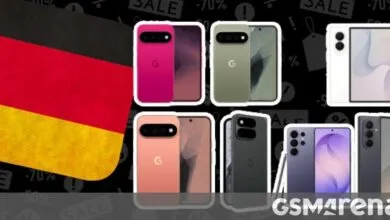
The Pixel 11 series is also on my radar, though I have been using the base Pixel 10 for about a year now, and it has been a solid upgrade over the Pixel 9. The cameras are phenomenal, and I love the Qi2 wireless charging support. For the Pixel 11, I would love to see more base storage and faster charging speeds. A thinner chassis would also be welcome, perhaps achieved through a denser silicon-carbon battery, though I am not going to get my hopes up.
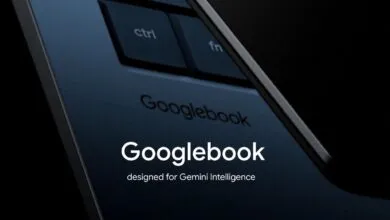
One of the most intriguing developments this year is the Googlebook, a bold new product category that aims to replace Chromebooks. It is a high-end machine with tight integration with Gemini, but it is entering a market dominated by the Windows ecosystem and MacBooks. The defining feature is the Magic Pointer, which lets you hover your cursor over anything on screen to get contextual information from Gemini. It is a fascinating concept, and I am eager to see how it holds up in real-world use. The software integration between Android and ChromeOS will ultimately be the deciding factor, and with major hardware vendors on board, there is real potential here.
Speaking of software, Android 17 is shaping up to be a major release. The new Bubbles multitasking mode is a standout feature, offering floating windows that provide much greater flexibility, especially on a foldable like the Pixel 10 Pro Fold. It is also good to see the stable build arriving earlier this year, with Google releasing it on June 16 to align with its August phone launches.
Android Auto is finally getting the attention it deserves. The updated interface features an immersive, edge-to-edge Google Maps experience with a robust 3D view. It now proactively tells you what to keep an eye out for, like traffic lights and lanes. It is no longer generic; it is actually helpful.
Security is also a major focus. Google’s upgraded Live Threat Detection is expected to roll out in the second half of 2026, providing warnings about suspicious app behavior. There is also verified financial calls, which aims to protect your banking apps from fraud. If a call is deemed suspicious, Android will tell you to hang up.
Another Android 17 feature I am particularly excited about is Rambler, Google’s new AI-powered voice typing system. Instead of speaking carefully, you can talk naturally, and it will ignore your “ums” and “ahs,” understand corrections, and format everything properly. It is similar to what we have seen with Gemini on macOS, but it is coming to Android smartphones.
The new 3D emojis are another highlight, even if they are not quite on par with Apple’s designs yet. They are a significant improvement over what Android has had for years.
One of the more creative additions is the Create A Widget feature, which lets Gemini act as a coder to build custom home screen widgets on demand. The concept is simple: if you cannot find a widget in the Play Store, just ask Gemini to create one. It is a feature that Nothing pioneered, and I expect Google to take it even further.
For me, the most interesting aspect of Gemini Intelligence is its ability to interact with apps that are not traditionally deemed compatible. Say you take a photo of a poster for an upcoming event, Gemini can help you create a shopping list in your favorite note app without manual typing. This level of automation is impressive, and it is expected to be expanded across the Pixel 11 series.
Google’s rebranding of Android as an “intelligence system” rather than an “operating system” sounds like marketing fluff, but the idea has merit. The newer Gemini Automation features can navigate entire apps and websites with a single command. I tested it by ordering food from two different restaurants, and all I had to do was hit confirm. While having Gemini order lunch for me is a bit silly, watching it navigate complex interfaces without error is genuinely impressive.
Finally, the Pause Point feature is a thoughtful addition that reminds you to take breaks from distracting apps with timers and breathing exercises. It is a feature I never expected from Google, but it is exactly what we all need. Combined with Screen Reactions, which makes it easy to record yourself over another video, Android 17 is shaping up to be a more social and mindful update. The Pixel 11 launch event is sure to be packed with announcements, and I cannot wait to see which of these features make the final cut.
(Source: Android Central)