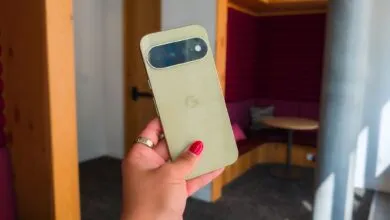
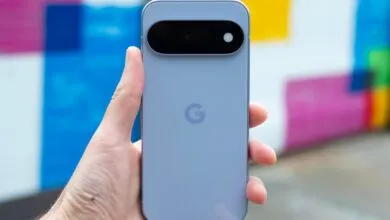
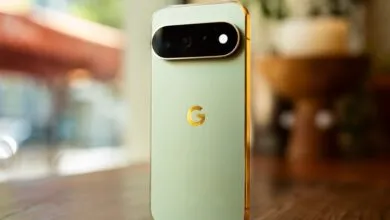
Pixel 11 pre-orders open; Galaxy Z8 and S26 prices drop

▼ Summary
– Google launched the Pixel 11 series, including vanilla, Pro, Pro XL, and Pro Fold models, with 256GB storage standard and RAM starting at 12GB on most models.
– The vanilla Pixel 11 uses the same Tensor G6 chipset as higher models but lacks the HiLight RGB LED and features a larger 48MP main camera, 25W wireless charging, and unchanged 30W wired charging.
– The Pixel 11 Pro adds HiLight, a sharper LTPO display, and a new 48MP telephoto camera, while the Pro XL has a 6.8-inch display, 45W wired charging, and a slightly smaller battery than its predecessor.
– The Pixel 11 Pro Fold is slimmer and lighter than the 10 Pro Fold but has a reduced 4,806mAh battery, and Amazon offers trade-in bonuses, including a €100 extra for old Pixels on the Pro XL and Fold.
– Samsung competitors, like the Galaxy S26 Ultra with a €500 discount and the Z Fold8 Ultra, undercut Pixel prices, while the Pixel Watch 5 and Buds Pro 2 receive minor upgrades like 64GB storage and new software features.
Google officially unveiled its Pixel 11 lineup earlier this week, introducing a standard model, two Pro variants, and a new foldable. The only gap left in the portfolio is an affordable A-series device, which fans will have to wait for.
The current surge in RAM prices has forced Google to adjust its storage strategy. Every phone in the Pixel 11 series now comes with 256GB of storage as the baseline, which is welcome. However, the Pixel 11 Pro and 11 Pro XL start at 12GB of RAM, a step down from the 16GB that was standard on the Pixel 10 Pro and 10 Pro XL. To get 16GB on the new models, buyers must step up to the 512GB or 1TB configurations. The vanilla Pixel 11 is capped at 12GB, while the foldable model comes exclusively with 16GB.
Pre-orders for the Pixel 11 series are live now, with general availability set for August 20. Amazon is sweetening the deal during this window with a trade-in bonus, adding extra credit on top of whatever your old device is worth.
The entry-level Google Pixel 11 runs on the same Tensor G6 chipset found in the pricier models, though it skips the HiLight RGB LED feature. That trade-off comes with a silver lining: the main camera sensor is larger than the Pixel 10’s, jumping to a 48MP 1/1.56″ unit from the older 1/2.0″ size. The 5x/112mm 10.8MP telephoto and 13MP ultra-wide cameras remain unchanged.
Charging gets a modest bump on the standard model. The new Pixelsnap magnetic wireless charging hits 25W, up from 15W, but wired charging stays at a somewhat sluggish 30W. Battery capacity is unchanged, with Google banking on the more efficient G6 chip to stretch endurance.
Moving up to the Google Pixel 11 Pro brings the HiLight feature into play. It’s an RGB LED mounted beside the rear cameras that functions as a notification light and integrates with Gemini AI. The Pro sports a 6.3″ OLED panel, matching the vanilla phone’s size but offering a sharper 1280p+ resolution on an LTPO display, compared to the standard 1080p+. Battery capacity is nearly identical to last year, and wired charging remains at 30W, while wireless has been upgraded to 25W.
The Pro’s camera setup is largely carried over from its predecessor, with a 50MP main sensor on a 1/1.3″ unit and a 48MP ultra-wide with autofocus. The telephoto lens, however, is new: a 48MP 1/1.95″ sensor with a 5x/106mm lens, replacing the older 48MP 1/2.55″ with a 113mm equivalent. Whether this shift translates to better shots is something we’ll need to test.
The Google Pixel 11 Pro XL is essentially a stretched Pro, featuring a 6.8″ LTPO display at 1334p+ and a 5,115mAh battery. That capacity is actually 85mAh smaller than the 10 Pro XL’s pack. Charging specs are familiar: 45W wired and 25W wireless. The wired charging does appear slightly quicker, reaching 75% in 30 minutes versus 70% before, though we’ll verify this in our full review.
Amazon is offering an extra €100 trade-in bonus for the Pixel 11 Pro XL and the Pixel 11 Pro Fold, provided you’re trading in an older Pixel device. If you send in a different brand, you still get a solid €400 bonus. Details on the full terms are available through the offer page.
The new Google Pixel 11 Pro Fold has slimmed down considerably. It measures 10.1mm folded and 5.0mm unfolded, weighing 239g. That’s still heavier and thicker than rival book-style foldables, but it’s a clear improvement over the previous 10 Pro Fold, which came in at 10.8mm folded, 5.2mm unfolded, and 258g.
That slimming came at a cost. The battery now sits at 4,806mAh, which trails the Z Fold8 Ultra’s 5,000mAh and the Pixel 10 Pro Fold’s 5,015mAh. Wireless charging has been boosted to 25W, but wired charging remains at 30W. The foldable also picks up the vanilla Pixel 11’s 48MP 1/1.56″ main camera, replacing the smaller 1/2.0″ sensor from last year. That older module was acceptable on the Pixel 10 but felt out of place on a premium foldable.
The Google Pixel Watch 5 is more of a refresh than a redesign. It shares the same chassis, display, and Snapdragon Wear W5 Gen 2 chipset as the previous model. Storage has doubled to 64GB, while RAM stays at 2GB, and the battery is largely unchanged. The headline additions this time are Gemini Intelligence and upgraded health tracking features.
The Google Pixel Buds Pro 2 are getting a new Olive colorway along with software updates that include Dynamic ANC and an improved Live Translate mode. These features will roll out to all existing Pro 2 buds via a firmware update, so current owners aren’t missing out.
A Pixel 11a is in the pipeline, but it won’t arrive for a few months. In the meantime, the Pixel 10a remains the budget option, now with a €200 discount on the 256GB version. That device runs on the older Tensor G4 chip with 8GB of RAM, and its cameras rely on the smaller 48MP 1/2.0″ sensor with no dedicated telephoto.
Google’s new foldable faces stiff competition from three Galaxy Z models. Samsung has introduced the wide Galaxy Z Fold8 this generation, a form factor Google briefly explored with the original Pixel Fold before moving away from it.
Both the Galaxy Z Fold8 and Z Fold8 Ultra are already seeing small price cuts, which is notable since they’ve only been on shelves for under a month.
The Samsung Galaxy Z Fold8 Ultra succeeds the larger Z Fold7. It measures 8.9mm folded and 4.1mm unfolded, weighing 215g, which makes the Pixel 11 Pro Fold feel bulky by comparison. It packs a larger 5,000mAh battery with 45W wired and 20W wireless charging, though the wireless option is non-magnetic. Camera hardware differs by model: the wide Z Fold8 uses a mid-range 50MP wide and 50MP ultra-wide setup, while the Ultra steps up to a 200MP main sensor (1/1.3″), a 3x/67mm 10MP telephoto, and a 50MP ultra-wide.
Since Google has no flip phone, the Samsung Galaxy Z Flip8 goes up against the Motorola Razr series. Keep in mind that trade-in bonuses for the Z Fold8 Ultra and Z Flip8 have been reduced compared to last week.
Samsung’s Galaxy S26 series has been available for months, and prices have dropped significantly since launch. The Galaxy S26 Ultra, which competes with the Pixel 11 Pro XL, now carries a €500 discount, putting the base model under €1,000. Even the 1TB version, the only one with 16GB of RAM, comes to €1,450, just €50 more than the base 12/256GB Pixel 11 Pro XL.
Similarly, the 6.3″ Galaxy S26 is under €800 for the base 12/256GB configuration, while the Pixel 11 Pro runs €1,200. Even the vanilla Pixel 11 is priced at €1,000. Interestingly, the Galaxy S26+ is now cheaper than the standard S26, making it the most affordable option in the S26 lineup.
We may earn a commission from qualifying purchases made through links in this article.
(Source: GSMArena.com)