OpenAI’s Codex Update Challenges Anthropic with Desktop Control
▼ Summary
– OpenAI and Anthropic are competing in the AI coding tool space, with Anthropic’s Claude Code currently seen as a leader by many businesses.
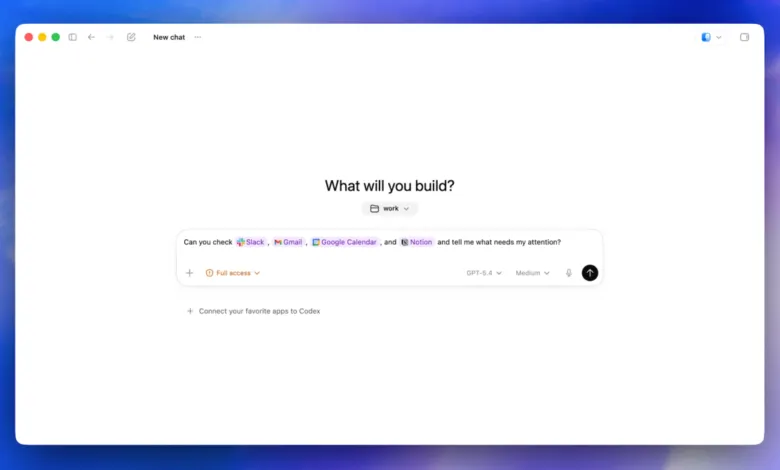
– OpenAI has revamped its Codex tool with a major update allowing it to operate in the background on a Mac, running multiple agents to perform tasks without interrupting the user.
– A key new feature is an in-app browser that lets users command Codex to carry out actions on specific web applications, aimed at frontend and game development.
– Other updates include a “memory” feature for recalling work sessions, image-generation capabilities, and 111 plugin integrations for tools like GitLab and Slack.
– OpenAI also introduced a new pay-as-you-go pricing option for Codex, targeting enterprise and business customers with more flexibility.
The competition for dominance in the AI coding assistant market is intensifying. While recent reports positioned Anthropic’s Claude Code as a preferred tool for many businesses, OpenAI has responded with a substantial update to its own platform. This week’s announcement of a revamped Codex introduces a suite of new features, directly challenging the current landscape.
A central upgrade is the ability for Codex to operate as a background agent on a user’s Mac computer. This functionality allows the AI to open desktop applications and perform tasks using a simulated cursor that can click and type. Critically, this runs in parallel without disrupting a user’s active work in other apps. OpenAI positions this as providing a coding buddy that handles auxiliary duties, such as iterating on frontend changes, running application tests, or working within software that lacks an API. This move into desktop control appears to mirror a capability Anthropic unveiled for Claude Code just last month, which also allows for remote control of a Mac.
Further expanding its utility, Codex now includes an in-app browser. Users can issue commands to the agentic tool, which will then execute them within specific web applications. OpenAI highlights this as particularly useful for frontend and game development, with plans to eventually extend the browser command capabilities beyond localhost environments.
Several other significant updates are rolling out. A preview feature dubbed memory enables Codex to recall details from prior work sessions, building context around an individual user’s patterns. New image-generation abilities have been added for creating product concepts, slide visuals, and mockups. To enhance task execution, OpenAI announced 111 plugin integrations with tools like CodeRabbit and Gitlab Issues. These plugins allow Codex to automate minor clerical work, such as reviewing Slack channels and a Google calendar to compile a daily to-do list.
A new pay-as-you-go pricing option for ChatGPT Enterprise and Business customers has also been introduced, offering greater flexibility. This aggressive push with Codex reflects OpenAI’s broader strategic shift. The company is concentrating more intently on enterprise capabilities and competing directly with rivals like Anthropic, while stepping back from certain consumer-focused initiatives. This focus comes amid a period of increased scrutiny for the firm, which has faced various controversies and legal challenges in recent months.
(Source: TechCrunch)