Cadence and Nvidia Accelerate Robotics Simulation
▼ Summary
– Cadence Design Systems and Nvidia announced an expanded partnership at a Cadence conference.
– The partnership aims to make robot training data more accurate.
– Its goal is to accelerate the real-world deployment of physical AI systems.
– It specifically targets closing the gap in robotics simulation for AI training.
– The collaboration focuses on improving physics simulation for robotics.
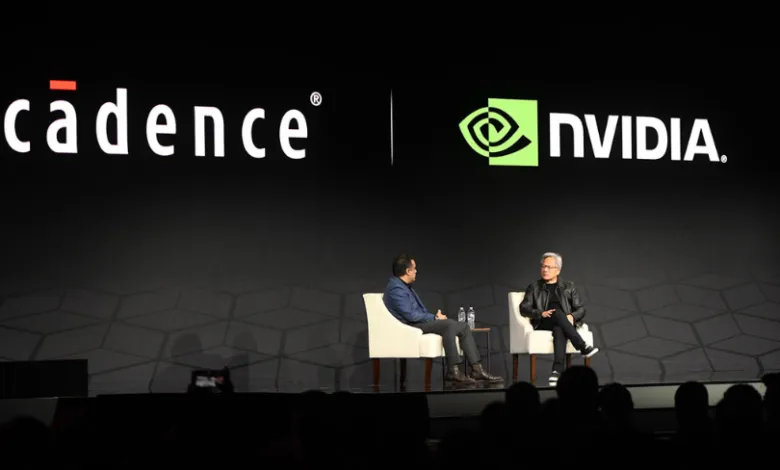
A significant new collaboration between Cadence Design Systems and Nvidia was unveiled this week, targeting a fundamental bottleneck in robotics development. The partnership, announced at a Cadence event in Santa Clara, is squarely focused on improving the accuracy of robot training data. This enhancement is critical for accelerating the path from simulation to functional deployment for physical AI systems.
The core challenge, often called the simulation-to-reality gap, has long hindered progress. Robots trained in virtual environments frequently struggle when encountering the unpredictable complexities of the physical world. The collaboration aims to bridge this divide by integrating Nvidia’s advanced computing platforms with Cadence’s sophisticated simulation software. The combined solution is designed to create more physically accurate digital twins, providing AI models with higher-fidelity training environments.
By generating more realistic simulation data, developers can train robotic control systems more effectively before costly physical prototypes are ever built. This approach promises to drastically reduce development cycles and improve the reliability of robots intended for manufacturing, logistics, and other real-world applications. The initiative underscores a broader industry push to solve the data generation problem for embodied AI, where acquiring vast amounts of real-world training data is often impractical or prohibitively expensive.
The expanded partnership leverages Nvidia’s hardware for accelerated computation alongside Cadence’s expertise in multiphysics simulation. The result is a workflow capable of modeling intricate real-world variables, from fluid dynamics and material stress to complex object interactions, with unprecedented precision. This level of detail is essential for developing robust robotic control algorithms that can adapt to unexpected scenarios outside a controlled lab setting.
Ultimately, the goal is to enable a faster, more efficient development pipeline. More accurate simulations mean robots can be trained to a higher standard of competence virtually, leading to fewer failures and shorter adjustment periods once they are deployed. For companies investing in automation, this translates into reduced risk and a quicker return on investment. The collaboration represents a strategic move to address one of the most persistent technical hurdles in bringing advanced, reliable robotics into mainstream commercial and industrial use.
(Source: The Next Web)