Simulation Startup Aims to Be Cursor for Physical AI
▼ Summary
– Current robotics development is hindered by a lack of real-world data, requiring costly physical mock-ups or surveillance of workers to train AI models.
– Simulation offers a scalable alternative, with startups like Antioch working to close the “sim-to-real gap” by making virtual environments realistic enough for reliable robot training.
– Antioch recently raised $8.5 million in seed funding to build a platform that allows robot developers to test hardware and software in high-fidelity simulated environments.
– The company’s initial focus is on sensor and perception systems for vehicles and machinery, as generalized human-like robots are a more distant goal.
– Experts believe advanced simulation tools are critical for safety and scaling, potentially creating a data feedback loop similar to those used by leading autonomous vehicle companies.
The vision for physical AI is a future where programming machines to interact with the physical world becomes as straightforward as writing software. Today, that reality is constrained by a fundamental lack of data. Training robots often requires constructing expensive mock environments or deploying extensive surveillance in factories and warehouses. A more scalable path forward lies in high-fidelity simulation, creating detailed digital twins where machines can learn and be tested virtually.
Startup Antioch is tackling the core challenge known as the sim-to-real gap, the difficulty of making virtual environments so realistic that a robot’s training translates reliably to the messy, unpredictable real world. The company recently secured an $8.5 million seed round, led by A* and Category Ventures, achieving a $60 million valuation. This funding will fuel its mission to build simulation tools that feel indistinguishable from reality to an autonomous system.
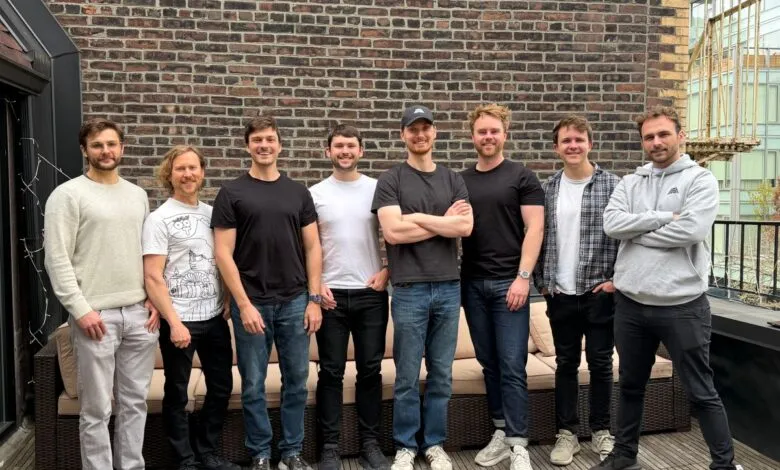
Founded in New York last May, Antioch’s team brings together experience from security startup Transpose, which was sold to Chainalysis, as well as Meta Reality Labs and Google DeepMind. The company positions its platform as the Cursor for physical AI, analogous to the popular AI-powered coding assistant. It enables developers to spawn multiple digital instances of their hardware, connecting them to simulated sensors that feed data identical to real-world inputs. This allows for testing edge cases, running reinforcement learning, and generating training data at scale.
The critical hurdle is achieving sufficient simulation fidelity. Accurate physics are paramount to ensure a model trained in a virtual sandbox can safely control a physical machine without catastrophic error. Antioch builds upon base models from providers like Nvidia and World Labs, creating domain-specific libraries to enhance usability. By working with multiple customers, the company gains a broader context for refining its simulations than any single robotics firm could achieve independently.
This need for robust simulation is acute across autonomy sectors. Waymo, for instance, uses Google DeepMind’s world models to test its driving algorithms, reducing the costly data collection required to enter new markets. For smaller companies lacking the capital to build physical test tracks or log millions of real-world miles, a platform like Antioch could be essential. Most of the industry still does not use simulation in a meaningful way, a gap that must close to accelerate development.
The stakes for these tools are uniquely high. As Category Ventures partner Çağla Kaymaz notes, the risks in software development are generally contained to the digital realm. In physical AI, a flawed model can have dangerous real-world consequences. Antioch currently focuses on sensor and perception systems, which are crucial for autonomous vehicles, agricultural equipment, construction machinery, and drones. While the dream of general-purpose humanoid robots remains distant, the immediate demand from both startups and large multinationals is significant.
Industry veteran Adrian Macneil, who built data infrastructure at Cruise and now runs robotics tooling company Foxglove, is an angel investor in Antioch. He emphasizes that simulation is indispensable for building safety cases and handling high-accuracy tasks where real-world testing is impractical. Macneil envisions a future where a suite of off-the-shelf tools, similar to the platforms that powered the SaaS revolution, becomes available to physical AI developers.
Antioch’s founders believe the industry is on the cusp of a transformation. They predict that within a few years, the primary development of real-world autonomous systems will occur in software, enabling a rapid feedback loop where AI agents can continuously iterate and improve. Early experiments hint at this future. Researchers at MIT’s CSAIL are already using Antioch’s platform to have large language models design robots and then test them in simulated competitions, creating a novel paradigm for benchmarking AI capabilities.
Closing the sim-to-real gap is the essential next step. Success would allow more companies to create the powerful data flywheel that leaders like Waymo have built, where each iteration of a model is confidently more capable than the last. For the broader ecosystem to replicate that success, developers will need to either construct these sophisticated simulation tools themselves or turn to platforms that provide them.
(Source: TechCrunch)