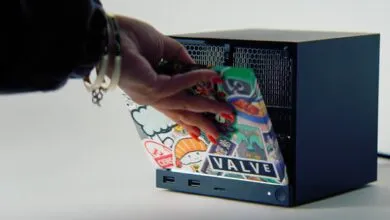
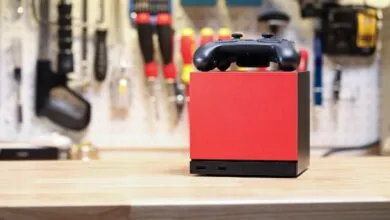
Valve Steam Machine Sales Reportedly Hit 12-15K Weekly
▼ Summary
– The Steam Machine is selling 8,700–15,600 units per week, with supply constraints limiting sales rather than demand.
– Sales are driven by people wanting an easy, friction-free way to access their Steam library on a TV, not by performance-focused PC enthusiasts.
– 35% of buyers purchased the $1,300 version, which includes a controller.
– Some commentators argue the sales numbers are low compared to consoles like the Dreamcast or Wii U, while others see the machine as a successful niche product.
– Valve learned from the failed 2015 Steam Machine project by controlling hardware and improving SteamOS and Proton, making this version more viable.
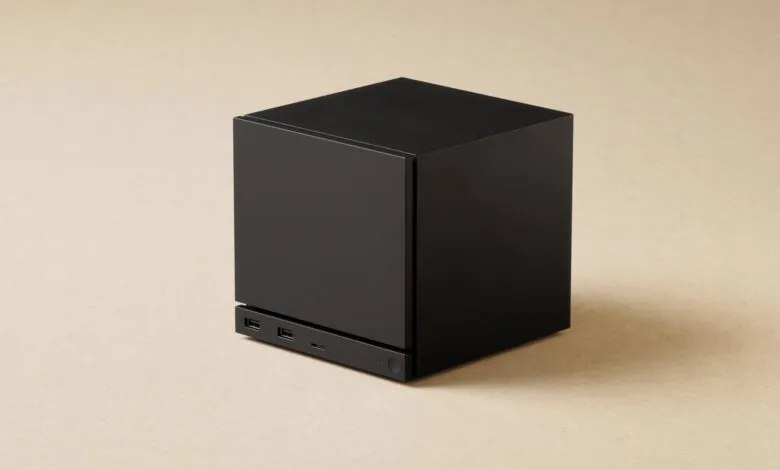
Reports suggesting Valve’s Steam Machine is moving between 12,000 and 15,000 units per week have sparked a lively debate about whether the device is a quiet success or a niche curiosity. Given the current climate of sky-high RAM and SSD prices, along with persistent supply constraints, these numbers are far from embarrassing. In fact, at this pace, Valve could cross the one million units sold mark in roughly a year and a half. That’s no small feat for a device many industry watchers had already written off as dead on arrival.
The conversation among enthusiasts reveals a clear split. On one side, you have the hardware-focused crowd who point out that you can build a more powerful PC for the same money, especially when factoring in the premium pricing driven by expensive memory and storage. On the other side, there’s a growing demographic of users who simply want a plug-and-play console-like experience for their Steam library on the living room TV. They don’t care about tweaking settings or chasing frame rates. They just want low-friction access to their games, and the Steam Machine delivers that.
Some commenters note that a significant portion of early sales likely comes from scalpers, but even accounting for that, the demand is real. The fact that the machine is often supply-limited, with reservation queues stretching out for weeks, suggests that actual interest exceeds the current production capacity. This is a far cry from the massively overpriced label critics slapped on it at launch.
A recurring point of discussion is whether Valve should release a higher-spec variant. With RAM and NAND prices so high, the argument goes, the company could slot in a better CPU or GPU without dramatically increasing the bill of materials. However, thermal constraints and the commitment to a silent, compact form factor make that tricky. More cache on both the CPU and GPU side might help hide the performance limitations of the single-channel memory configuration, but that would require custom silicon.
The bigger picture, however, is about market positioning and strategy. Valve’s primary goal isn’t to sell millions of Steam Machines. It’s to get people using Steam and, ideally, SteamOS. The device is a gateway product for Linux gaming, offering a curated, hand-holding experience that eases the transition away from Windows. With Microsoft increasingly focused on AI integration and a user interface that feels more like a tablet than a desktop, many users are looking for an exit ramp. The Steam Machine provides one, albeit at a premium.
Critics argue that 15,000 units a week is a fraction of what successful consoles like the Dreamcast or Wii U sold, and that calling this a success is an exaggeration. They point out that PC gaming is already massive, larger than all consoles combined, and that the Steam Machine’s sales are too small to influence port quality or game development. But supporters counter that any additional PC sale is good for the ecosystem, especially if it brings in new users who might otherwise have stuck with consoles.
The reservation queue system also muddies the sales data. It’s unclear whether the reported weekly numbers reflect units shipped to customers or units entering the queue. If it’s the latter, then the real demand could be much higher, constrained only by Valve’s production capacity. That would make the Steam Machine a supply-bound success rather than a demand-limited one.
Looking ahead, the next logical step for Valve is to expand SteamOS support to custom PCs. If the operating system reaches a point where it can run on any hardware with minimal friction, the Steam Machine itself becomes less important. The hardware is just the vehicle. The real prize is breaking Windows’ monopoly on PC gaming.
For now, the Steam Machine is selling better than many expected, and it’s clearly finding its audience. It’s not for the enthusiast who wants to tweak every setting or the budget builder looking for the best price-to-performance ratio. It’s for the person who wants a simple, console-like experience with access to thousands of PC games. And in a hardware market where prices are through the roof, that’s a value proposition that resonates with more people than the critics anticipated.
(Source: Techpowerup.com)