Robotaxis Still Face Widespread Public Skepticism
▼ Summary
– A new poll shows persistent public skepticism toward autonomous vehicles, with 53% of respondents unwilling to ride in a robotaxi.
– Even when assured of perfect safety, most consumers still prefer a human-driven taxi, and price discounts only modestly increase interest.
– A significant portion of the public, about one in three, states no incentive would make them use a robotaxi, preferring a human driver.
– Public opinion polls indicate declining support for self-driving cars, partly due to ongoing incidents that undermine confidence in the technology.
– Tesla’s marketing and robotaxi service are a major source of public concern, with most consumers viewing its safety claims and practices as misleading or unsafe.
After more than ten years covering the evolution of self-driving technology, a single, stubborn fact remains: public trust in autonomous vehicles has failed to materialize. Despite operational expansions and technological claims, a deep-seated skepticism persists among a majority of consumers, casting a long shadow over the future of robotaxi services.
This enduring reluctance is powerfully illustrated by recent data. A March survey of over 2,000 U. S. consumers found that 53% would outright refuse a ride in a robotaxi, with another 26% not currently considering it. Even more telling is the reaction to hypothetical safety guarantees. When presented with a 100 percent safe robotaxi, 42% of respondents stated they would never consider using one. Faced with a choice between this perfectly safe autonomous option and a human-driven taxi, only 12% selected the robotaxi.
Financial incentives also fail to sway opinion significantly. Offering a $5 discount on a safe robotaxi only increased its selection to 19%, while nearly half of consumers still preferred a more expensive human driver. For a substantial portion of the public, no price point is low enough. One in three respondents stated no amount of money would convince them to take a robotaxi ride, and 32% said they would always prefer a human behind the wheel, regardless of safety or cost.
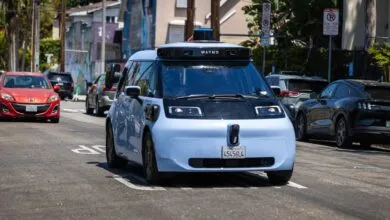
This poll reflects a broader, troubling trend for the industry. Public opinion on autonomous vehicles has not warmed with time, instead hardening into resistance and, in some cases, outright hostility. Incidents where robotaxis have blocked intersections or, more alarmingly, driven past stopped school buses, reinforce public apprehension just as companies work to resolve earlier operational flaws.
A significant source of this widespread public skepticism can be traced to Tesla. The automaker’s marketing of its Autopilot and Full Self-Driving systems has been ruled misleading by a judge, a decision with which 81% of poll respondents agreed. Furthermore, 63% of consumers believe Tesla drivers using FSD are not paying adequate attention, undermining confidence in the company’s approach to automation.
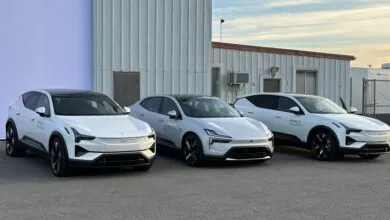
Tesla’s own robotaxi service, currently limited to Austin, is generating profound doubt. When shown comparative safety data between Tesla and Waymo, an overwhelming 87% of consumers expressed concern about Tesla’s robotaxi safety. The company’s controversial move to remove human safety monitors from its autonomous vehicles has exacerbated these fears, with 84% of people stating they are uncomfortable with that decision. A full 81% believe Tesla should not be permitted to offer fully driverless rides without a safety monitor present.
The collective message from consumers is clear. Technological capability and corporate ambition are running far ahead of public acceptance of robotaxis. Until companies can bridge this critical trust gap, the road to a driverless future will remain obstructed by durable human doubt.
(Source: The Verge)