White-Collar Automation in 18 Months: What Sets You Apart?
▼ Summary
– Microsoft AI CEO Mustafa Suleyman predicted that most professional white-collar work, including marketing, accounting, legal, and project management, will be fully automated by August 2027.
– Nvidia CEO Jensen Huang told Carnegie Mellon graduates that careers in skilled trades like electricians and plumbers are a strong opportunity, driven by a surge in data center construction.
– A philosopher reviewing Joanna Stern’s book “I Am Not a Robot” questioned what remains distinctively human as AI systems become capable of simulating reasoning, judgment, and personality.
– The philosopher invoked Mary Everest Boole’s idea that humanity must anchor its identity in empathy and moral judgment, not just rationality, once reasoning is mechanized.
– The article concludes that for professionals, the key differentiator from AI is not a skill set but a perspective formed through actual experience, failure, and presence in the work.
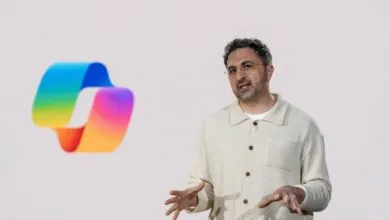
Mustafa Suleyman, the CEO of Microsoft AI, has set a startling deadline: by August 2027, most professional white-collar work will be fully automated. He explicitly named marketing, accounting, legal, and project management as the fields facing the most immediate disruption.
Just a day earlier, I came across a very different kind of advice. At Carnegie Mellon’s commencement, Jensen Huang told 5,800 graduates from one of the nation’s top engineering schools to seriously consider becoming electricians. On the same Sunday, a philosopher’s review of a new tech book, “I Am Not a Robot,” in The Boston Globe posed a question neither the tech CEOs nor the journalists had fully answered: if machines can now reason, what exactly is left for us to do?
Huang’s message was clear: build things. According to Moneywise, he stood in the rain and told the crowd that AI gives America a chance to rebuild. “Electricians, plumbers, iron workers, technicians, builders – this is your time,” he said. “AI is not just creating a new computing industry; it is creating a new industrial era.” This wasn’t just a rhetorical flourish. U. S. tech companies are projected to spend $700 billion this year on data center construction alone. A March analysis by Randstad of over 150 million U. S. job postings showed demand for skilled trades growing three times faster than for traditional desk jobs. Someone has to pull the wire and lay the pipe.
But Huang also made a crucial distinction that often gets lost in the headlines: “Yes, AI will change every job. But the task and the purpose of a job are not the same.” He acknowledged that many tasks will be automated and some jobs will vanish, but entirely new industries will emerge. That distinction between task and purpose is the one every SEO professional needs to internalize.
Suleyman’s timeline is even more aggressive. He told the Financial Times that AI is approaching “human-level performance on most, if not all professional tasks” within just 12 to 18 months. Since he made that prediction in February 2026, the deadline falls on August 2027. He named marketing explicitly. The problem is that this prediction has been repeated so often it has become background noise. Search itself has changed more in the last 18 months than in the previous five years. The professionals feeling the most pressure aren’t those who have lost their jobs; they are the ones whose daily workflows have been disrupted faster than their strategic thinking has evolved.
Kaag’s review of Stern’s book completes the picture. John Kaag, a philosophy professor at UMass Lowell, reviewed Joanna Stern’s “I Am Not a Robot” and found the deeper question. He traces the arc back to Alan Turing’s imitation game, where machines tried to pass as human. For decades, we were the judges. Then, the roles flipped. CAPTCHAs started asking us to prove we are human, checking the box that says “I am not a robot.” Machines no longer seek our approval; we adapt to their standards of verification.
Kaag argues that Stern’s book reveals a deeper crisis. If an algorithm can convincingly reproduce our tone, style, and professional output, the real question is no longer whether AI can think like us. It is whether we understand what makes human thinking meaningful at all. He invokes 19th-century thinker Mary Everest Boole, who speculated that once reasoning becomes mechanized, humanity must anchor its identity in empathy, moral judgment, and human connection. That idea hits harder in 2026 than it would have a decade ago. The more machines approximate reasoning, the more pressure there is on us to articulate what cannot be automated: lived experience, accountability, intuition shaped by failure, and genuine care for consequences.
That is the tension running through modern knowledge work. The challenge is no longer proving that machines can imitate us.
So, what makes you different?
Three independent sources,a commencement speech, a tech interview, and a book review,converge on the same argument.
- Huang says the purpose of a job survives even when its tasks are automated.For SEO professionals, this is the most practical question in the field. When your content, strategy memo, or keyword analysis could have been generated by a system that approximates you well enough, what makes yours different? The honest answer is not a skill set or a process. It is the irreducibly personal quality of a perspective formed through actual experience, actual failure, and actual presence in the work. That is what cannot be checked in a box.