Decathlon Boosts Warehouse Output With Exotec Robots
▼ Summary
– Decathlon has automated seven European warehouses with Exotec’s robots, resulting in significant productivity gains across multiple countries.
– The automation has doubled order output in Portugal and nearly doubled store replenishment capacity in France, while drastically reducing worker walking distances in the UK.
– The system uses specialized wheeled robots called Skypods that climb shelving to store goods vertically, allowing for a much smaller warehouse footprint without losing capacity.
– While automation reduced the number of pickers at one site from 50 to 12, the company reassigned workers and cites labor shortages as a key driver for adopting robotics.
– Exotec focuses on pragmatic, single-task machines rather than humanoid robots, arguing this approach better solves core warehouse inefficiencies.
The world’s largest sporting goods retailer is achieving major gains in its European logistics network through a large-scale robotics partnership. Decathlon has reported substantial productivity improvements across seven automated warehouses in five countries after deploying systems from French robotics firm Exotec. Early data from the multi-site rollout shows dramatic increases in output and significant changes in warehouse operations.
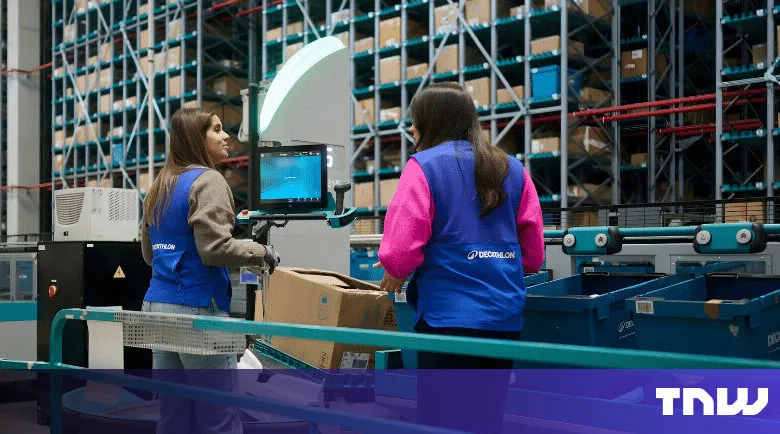
At a key facility in Setúbal, Portugal, daily order preparation has surged from 57,000 to 114,000. A French warehouse now replenishes 73 stores, nearly double its previous capacity of 37. In Northampton, England, the physical strain on workers has plummeted. Pickers who once traversed over 10 kilometres per shift now walk less than one, and workplace incidents linked to order picking have been cut in half. These results stem from Exotec’s Skypod system, a fleet of wheeled robots that retrieve and transport storage bins. Each installation typically uses 150 to 200 of these units, which can climb proprietary shelving to heights around 14 metres. The system is integrated with automated depalletisers, carton openers, and RFID tunnels, all orchestrated by Exotec’s Deepsky warehouse execution software.
According to Exotec’s leadership, a core advantage is vertical storage density. Traditional warehouses limit shelving to roughly two metres for human accessibility, forcing companies to expand their physical footprint as sales grow. The average warehouse covers about 18,000 square metres. By utilizing vertical space, Exotec claims its system can achieve the same storage capacity in approximately 6,000 square metres. This allows retailers to use smaller, cheaper buildings or reallocate freed-up floor space for other functions. For a global retailer like Decathlon, this enables a standardised warehouse design that can be rapidly replicated. Exotec states it can deploy a new automated facility every four months.
A persistent question around warehouse automation concerns workforce impact. Exotec’s data from one site shows the number of designated pickers dropped from 50 to 12 following installation. The company frames this shift as a reassignment, not a reduction, with workers moving to roles in returns processing and repairs. Exotec cofounder Romain Moulin emphasizes improved working conditions, citing reduced walking distances and lower injury rates. He also points to a structural labour shortage in logistics across Europe, Japan, and the United States, where companies consistently struggle to recruit pickers. This shortage is a primary driver behind the warehouse robotics market, which is growing over 18 percent annually.
The technology represents a pragmatic alternative to more futuristic concepts. While some manufacturers experiment with humanoid robots for similar tasks, Moulin is skeptical of applying a human form to a problem automation should eliminate, like pushing a cart long distances. Exotec focuses on single-task machines enhanced by AI for optimization. This specialized, European approach has fueled significant growth. Founded in 2015, Exotec attained unicorn status in 2022 and now reports annual revenue near €300 million. Its Skypod system is operational at over 200 sites for clients including Uniqlo, Carrefour, and Gap.
Decathlon’s ambitious Skyfleet programme stands as Exotec’s largest multi-site deployment. Its success as a potential template for European retail logistics will hinge on maintaining these productivity gains at scale. For the workers who have transitioned from picking to other roles, the change in their daily routine is already a tangible result.
(Source: The Next Web)