Helion in Talks to Sell Fusion Power to OpenAI
▼ Summary
– Sam Altman is stepping down as board chair of the fusion startup Helion, which he backs, amid reported partnership talks between Helion and OpenAI.
– A potential deal could guarantee OpenAI 12.5% of Helion’s power production, targeting five gigawatts by 2030 and 50 gigawatts by 2035.
– Helion’s reactor design aims to convert fusion energy directly into electricity using magnets, differing from most startups that use heat and steam turbines.
– The company is developing its Polaris prototype and recently generated 150 million-degree Celsius plasmas, nearing its target for commercial operation.
– Helion raised $425 million last year and aims to build a commercial-scale reactor ahead of competitors targeting the early 2030s.
Sam Altman is stepping down from his role as chairman of the board at Helion Energy, the fusion power startup he has backed for years. This strategic move coincides with early-stage discussions for OpenAI to purchase a significant portion of Helion’s future power output, a deal that would mark a major commitment to clean energy for the artificial intelligence sector. According to a report, the potential agreement could secure OpenAI 12.5% of Helion’s projected production, translating to five gigawatts by 2030 and scaling to 50 gigawatts by 2035.
This framework mirrors a previous power purchase agreement Helion signed with Microsoft in 2023. The scale of the reported figures indicates Helion’s ambitious roadmap for rapidly scaling fusion power production. Given that each of its planned reactors is designed to generate 50 megawatts, meeting the 2030 target would require deploying 800 reactors, with an additional 7,200 needed to fulfill the 2035 commitment.
While Helion did not confirm ongoing negotiations with OpenAI, a company spokesman stated no new customer agreements beyond those with Microsoft and Nucor have been announced. The company did, however, verify Altman’s departure from the board chairmanship. Helion CEO David Kirtley framed the move as enabling future collaboration, stating the decision “enables Helion and OpenAI to partner on future opportunities to bring zero-carbon, safe electricity to the world.”
The startup is in a race to deploy its first commercial-scale reactor by 2028. Success would position it ahead of many competitors targeting the early 2030s for commercial operation. Helion’s approach diverges from most fusion efforts, which aim to use reactor heat to drive steam turbines. Instead, its design uses magnetic fields to directly convert fusion energy into electricity.
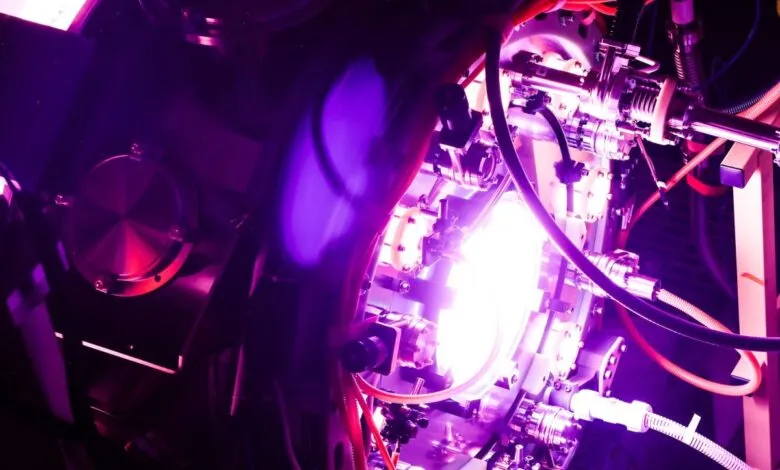
In its prototype reactor, named Polaris, fuel is turned into plasma at both ends of an hourglass-shaped chamber. Magnetic fields propel these plasmas toward each other to collide at the center, where further magnetic compression triggers fusion. The energy from the reaction pushes against the system’s magnets, enabling direct electricity conversion. Recently, the company achieved plasmas of 150 million degrees Celsius in tests, nearing the 200 million degrees required for commercial viability.
Altman’s board recusal follows a similar pattern. Last year, he stepped down as board chair of Oklo, a small modular nuclear reactor company, to facilitate potential partnerships with AI firms, including OpenAI. His latest move at Helion appears designed to clear a path for a strategic energy partnership between two companies central to his vision, blending advanced AI with next-generation power infrastructure.
(Source: TechCrunch)