OpenAI’s ‘Master of Disaster’ Tackles AI’s Reputation Crisis
▼ Summary
– OpenAI faces a mounting public relations crisis as negative sentiment toward AI grows, including violent acts like a Molotov cocktail thrown at CEO Sam Altman’s home.
– Chris Lehane, OpenAI’s chief of global affairs, aims to convince the public to embrace AI while lobbying for regulations that do not hinder company growth.
– Lehane criticizes the “artificially binary” public narratives about AI, arguing that neither a utopian nor dystopian future is realistic.
– OpenAI plans to communicate a more “calibrated” message and proposes solutions like a four-day work week and a tax on AI labor to address public concerns.
– The AI industry has launched super PACs, including Lehane’s Leading the Future, to support pro-AI candidates, but critics say this has backfired by motivating opposition.
Three months ago, OpenAI cofounder Greg Brockman told me he was growing uneasy about a mounting public relations crisis facing the AI industry. Despite the popularity of tools like ChatGPT, a growing share of the population was viewing AI negatively. Since then, the backlash has only deepened.
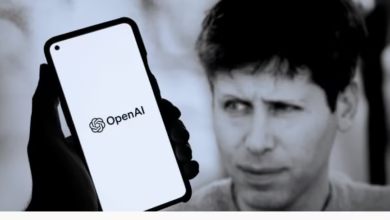
College commencement speakers are now being booed for speaking optimistically about AI. Last month, someone threw a Molotov cocktail at OpenAI CEO Sam Altman’s San Francisco home, accompanied by a manifesto calling for crimes against AI executives. No company has more to lose from this reputation crisis than OpenAI.
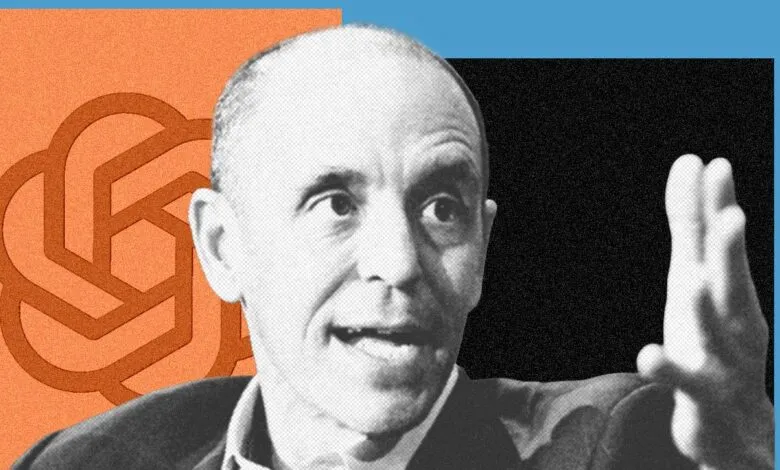
The person charged with trying to fix it is Chris Lehane, OpenAI’s chief of global affairs and a veteran political operative. I spoke with him this week about what I’d argue are his two biggest challenges yet: convincing the world to embrace OpenAI’s technology while simultaneously persuading lawmakers to adopt regulations that won’t stifle the company’s growth. Lehane sees these goals as inseparable.
“When I was in the White House, we always used to talk about how good policy equals good politics,” Lehane says. “You have to think about both of these things moving in concert.”
After working on crisis communications in Bill Clinton’s White House, Lehane earned the nickname “master of disaster.” He later helped Airbnb fend off regulators in cities that viewed short-term rentals as operating in a legal gray area, or as he puts it, “ahead of the law.” Lehane also played a key role in forming Fairshake, a powerful crypto industry super PAC that worked to legitimize digital currencies in Washington. Since joining OpenAI in 2024, he has quickly become one of the company’s most influential executives, now overseeing its communications and policy teams.
Lehane tells me that public narratives about how AI will reshape society are often “artificially binary.” On one side is the “Bob Ross view of the world” ,a future where nobody has to work anymore and everyone lives in “beachside homes painting in watercolors all day.” On the other is a dystopian vision in which AI becomes so powerful that only a small group of elites can control it. Neither scenario, in Lehane’s opinion, is very realistic.
OpenAI itself has contributed to this polarizing rhetoric. CEO Sam Altman warned last year that “whole classes of jobs” will disappear when the singularity arrives. More recently, he has softened his tone, declaring that “jobs doomerism is likely long-term wrong.”
Lehane wants OpenAI to start delivering a more “calibrated” message about AI’s promises, avoiding either extreme. He says the company must present real solutions to the problems people are worried about, such as potential widespread job loss and the negative impacts of chatbots on children. As an example, Lehane pointed to a list of policy proposals OpenAI recently published, which include creating a four-day work week, expanding access to health care, and passing a tax on AI-powered labor.
“If you’re going to go out and say that there are challenges here, you also then have an obligation,particularly if you’re building this stuff,to actually come up with the ideas to solve those things,” Lehane says.
Some former OpenAI employees, however, have accused the company of downplaying the potential downsides of AI adoption. WIRED previously reported that members of OpenAI’s economic research unit quit after they became concerned it was morphing into an advocacy arm for the company. The former employees argued that their warnings about AI’s economic impacts may have been inconvenient for OpenAI, but they honestly reflected what the company’s research found.
Packing Punches
With public skepticism toward AI growing, politicians are under pressure to prove to voters they can rein in tech companies. To counter this, the AI industry has launched a new group of super PACs that are boosting pro-AI political candidates and trying to shape public opinion about the technology. Critics say the move backfired, and some candidates have started campaigning on the fact that AI super PACs are opposing them.
Lehane helped set up one of the biggest pro-AI super PACs, Leading the Future, which launched last summer with more than $100 million in funding commitments from tech industry figures, including Brockman. The group has opposed Alex Bores, the author of New York’s strongest AI safety law, who is running for Congress in the state’s 12th district.
(Source: Wired)